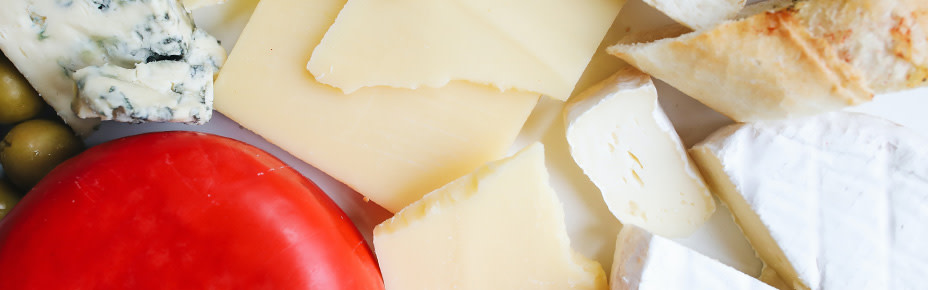
Can dogs eat cheese?
Does your dog stand behind you hoping for a bite as soon as you rustle the cheese packet in the kitchen? There’s really nothing wrong with giving your dog a small cube of cheese, as long as it’s a variety that’s low in lactose and salt. In short: Yes, dogs can eat cheese. But the much more important question is:
Which cheese is suitable for dogs?
You look away for a moment and—bam—your dog has swiped a piece of cheese from the breakfast table. Don’t panic! Most types of cheese are safe for your dog. The “problematic” thing about cheese is that it contains lactose, or milk sugar. Many of our dogs don’t tolerate lactose very well because they lack the enzyme lactase needed to break down milk sugar. For this reason, you should choose cheese varieties that are as low in lactose as possible. Too much salt and fat is also not very healthy for your four-legged friend.
The following types of cheese are well tolerated by most dogs:
Hard cheeses
Leerdammer
Maasdammer
Butterkäse
Emmental
Goat cheese
Cottage cheese
Harzer cheese
But even with these varieties: moderation is key! In large quantities your dog’s digestive system may react sensitively to the lactose and →stomach pain, gas, or →diarrhea may result.
If you want to be on the safe side, it’s better to feed special cheese snacks for dogs such as our →Cheese Tasties with chicken and Emmental.


Every now and then a piece of cheese is a tasty treat for your dog, but it should remain an exception.
Which types of cheese are toxic to dogs?
Here’s the good news: cheese poisoning is quite rare. However, you should be especially careful with blue cheese. During production, a mold called Penicillium Roqueforti is added. During the ripening process, metabolic by-products such as Roquefortine C develop in the cheese. This by-product is toxic to dogs! If your dog has eaten blue cheese, it’s best to contact a veterinarian just to be safe!
Also, cooked cheese, processed cheese, and spreadable cheese are unsuitable for many dogs’ stomachs. The reason is that during processing, sodium phosphate is added to keep the cheese together. Since this is an artificial sodium phosphate, dogs cannot metabolize it properly.
You should completely avoid feeding cheese if your dog has trouble tolerating lactose. This is indicated by diarrhea, gas, and colicky stomach pain.
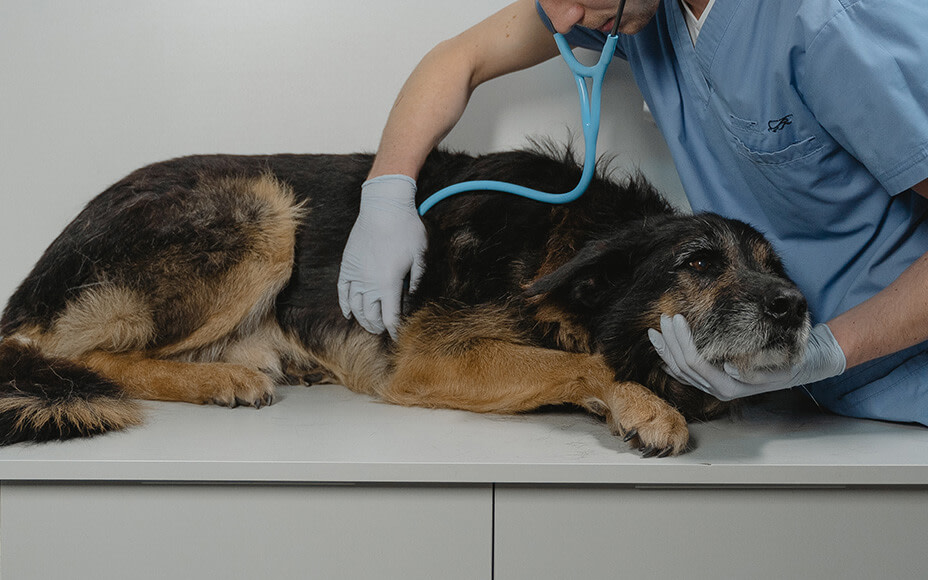
Blue cheese contains a substance that is toxic to dogs. If your dog has eaten too much of it, it's best to see a vet!
How much cheese is okay?
Even if you give your four-legged friend a cheese variety that’s lower in salt and lactose, cheese is not actually a regular part of a →healthy and species-appropriate diet for dogs.
An occasional small piece of cheese as a very special treat won’t hurt. However, it shouldn’t become a regular habit, because, no matter the variety, cheese contains a lot of salt and fat. If you’re looking for especially tasty treats for training or to reward your dog, it’s better to choose high-quality dog snacks. Our →beef bites for example are very flavorful and easy to chew. Give them a try!
Great rewards for hardworking dogs – our snacks
Can puppies eat cheese?
The same rule applies to puppies as to older dogs: If your puppy tolerates lactose well, you can occasionally give them a small piece of cheese. But even for your little four-legged friend, it should be something special and not become a habit. If you’re looking for something tasty for →puppy training , →special puppy snacks are a better choice.