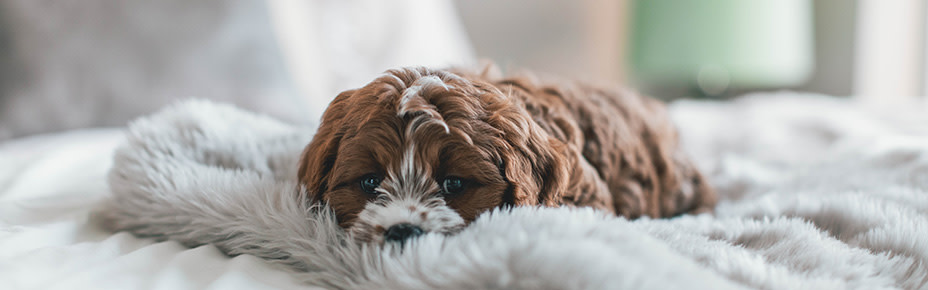
Does your dog have diarrhea? Here's what you can do!
Digestive and gastrointestinal problems can happen from time to time. Often, there's nothing serious behind your dog's diarrhea and it usually goes away after 1-3 days. Still, you should of course keep an eye on your furry friend and if it doesn't get better, go to the vet. Only medication prescribed by a veterinarian will provide quick relief for acute or even chronic diarrhea. But if it's not too severe, you can try to help your four-legged friend with these 5 remedies for diarrhea in dogs and tips to support them.
For digestive issues, flatulence & more
Our food for dogs with sensitive digestion
Tip #1: Activated charcoal tablets
As a quick first-aid measure for diarrhea, you can give your dog activated charcoal tablets. They bind toxins in the gastrointestinal tract and help remove them more quickly.
But how many charcoal tablets are the right amount for dogs? The number of charcoal tablets or the amount of activated charcoal needed to achieve a noticeable effect depends on your dog's body weight. According to a general rule of thumb, that's 0.5 to 1 gram x your dog's body weight. So if your dog weighs 10 kilos, that would be about 5 to 10g of activated charcoal you would need to give. For larger dogs, that can sometimes be a whole pack that your dog would need to eat. That's because a standard charcoal tablet contains only 250mg of activated charcoal.
A little tip: At your next vet visit, just ask how much activated charcoal would be necessary for your dog and stock your home pharmacy accordingly.
Tip #2: Fresh, clean water
Huh? Just give fresh, clean water? Sounds so simple, but it usually isn't. With diarrhea, your dog loses a lot of fluids, which in the worst case can lead to dehydration so it's important that your dog drinks plenty. But as you might know from yourself, you often don't feel like drinking exactly when it's most necessary.
Alternatively, you can also brew some chamomile tea and give it to him. Of course, not boiling hot, but cooled to room temperature.

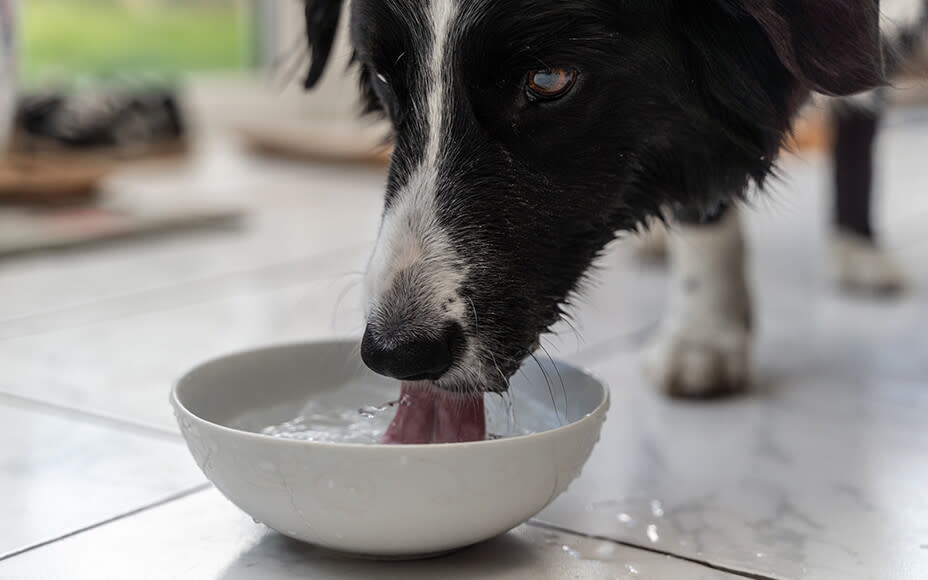
Make sure your dog drinks enough when he has diarrhea!
Tip #3: Fasting for one day
Even though it sounds tough, fasting can help. That means: no food for 24 hours. And by no food, that means no treats or other snacks either, even if your dog begs you with big hungry eyes. Fasting relieves your dog's irritated gut and prevents the body from losing water and the diarrhea from getting worse .
Afterwards, you can give him special bland food, which brings us directly to tip #4:
Tip #4: Give bland food
If your dog has fasted for 24 hours, he can eat something again. But not a full meal and not his usual food. But what should you feed your dog when he has diarrhea?
Anyone with an upset stomach gets special bland food (which is also tasty). Oat flakes mixed and soaked in water to make oat porridge are rich in fiber and can help your dog if he has diarrhea. Even small (!) amounts of →banana have a binding effect and are suitable in moderation when dogs have diarrhea.
Generally, a healthy bland diet consists of cooked chicken meat, very soft →cooked rice and a bit of cottage cheese, if your dog tolerates lactose. Our special VET Stomach & Intestine Fit wet food soothes an upset tummy and supports bowel function with valuable fiber from carrot and psyllium husks.

Tip #5: Rest and relaxation
Anyone who's sick needs bed rest – and that goes for our furry friends too! So keep walks a bit shorter and calmer and adjust to your dog's pace. Often, the body is weakened by diarrhea and your dog just needs a bit more time for everything. If there are also children in the household, explain to them that the dog is sick and they should leave him alone and maybe play a bit more quietly.
When should you go to the vet?
If you're unsure, you can of course visit a vet at any time. Sometimes a phone call is enough. If your dog is not better after 3 days, you should definitely go to the practice.
Also, if your dog is a puppy or senior you should see a vet right away. For puppies, if they have diarrhea, don't try home remedies first. The reason: their gastrointestinal tract is not yet fully developed and can't handle acute fluid loss as well. In this case, diarrhea can quickly become dangerous, so you shouldn't wait a few days. The same applies if your dog shows the following symptoms along with (watery) diarrhea:
Blood in the stool
Dog appears apathetic
Shivering
doesn't drink enough or is already dehydrated
In any case: If you are unsure, it's better to visit the practice once too often than too little! While the above-mentioned remedies for diarrhea in dogs can help, they do not replace a veterinary assessment of the situation.
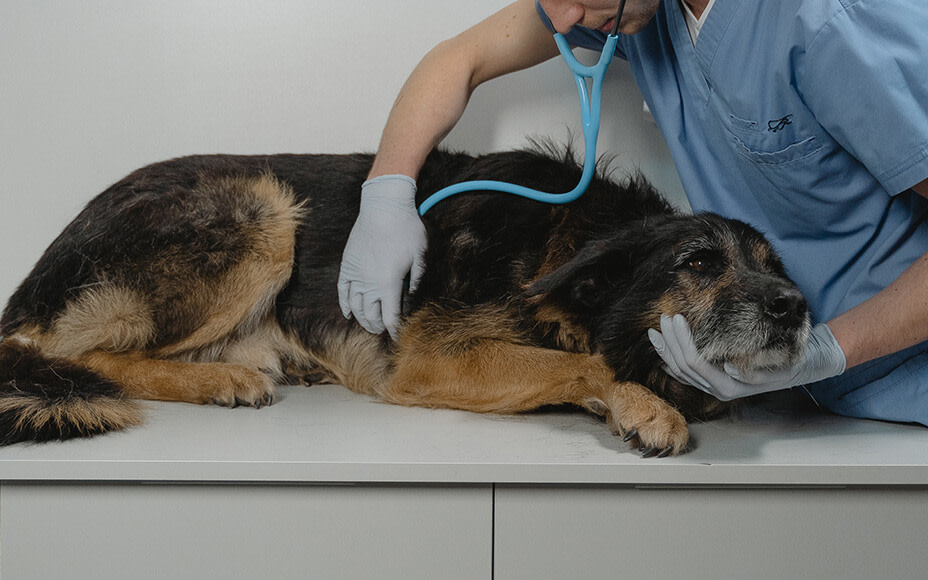
For older dogs and puppies, you should go straight to the vet if your dog has diarrhea!
Causes: Where does diarrhea in dogs come from?
What actually causes diarrhea in dogs? Diarrhea in our dogs can be triggered by many causes. Often it's harmless and your four-legged friend has eaten something outside again or stolen something from the kitchen, his food upsets his stomach or he caught something from his dog buddies. Medications, vaccinations or contaminated water (e.g. from puddles) can also be reasons for diarrhea in dogs.
Sometimes, however, an underlying illness is the cause, such as a gastrointestinal virus, →giardia or worms. Stress or extreme heat, especially in the →summer months, can also upset a dog's stomach.
Attention: You should be especially careful with →poison baits! Did your dog pick something up outside and you couldn't tell what it was? Keep a close eye on him! Some poisonings only show symptoms after 1-2 days, others immediately. If your dog has →eaten something toxic, quick action on your part and even faster treatment by medical professionals is required.