Common causes of vomiting in dogs
There are many reasons why your furry friend might suddenly start vomiting. Not every vomiting is a major drama, but there are certainly also dangerous causes of vomiting. In this article, our veterinarian presents 6 common reasons for vomiting in dogs.
Symptoms: How do you recognize vomiting?
Vomiting is one of the body's own defense mechanisms. When your dog's stomach senses that something is wrong, it alerts the vomiting center and vomiting begins. It is divided into 3 phases:
Nausea: This phase is characterized by increased smacking, drooling and swallowing, yawning, restlessness.
Retching: In this phase, the abdominal muscles tense up, the back is arched and the stomach contents are moved toward the mouth.
The vomiting itself: In this phase, the stomach contents are expelled.

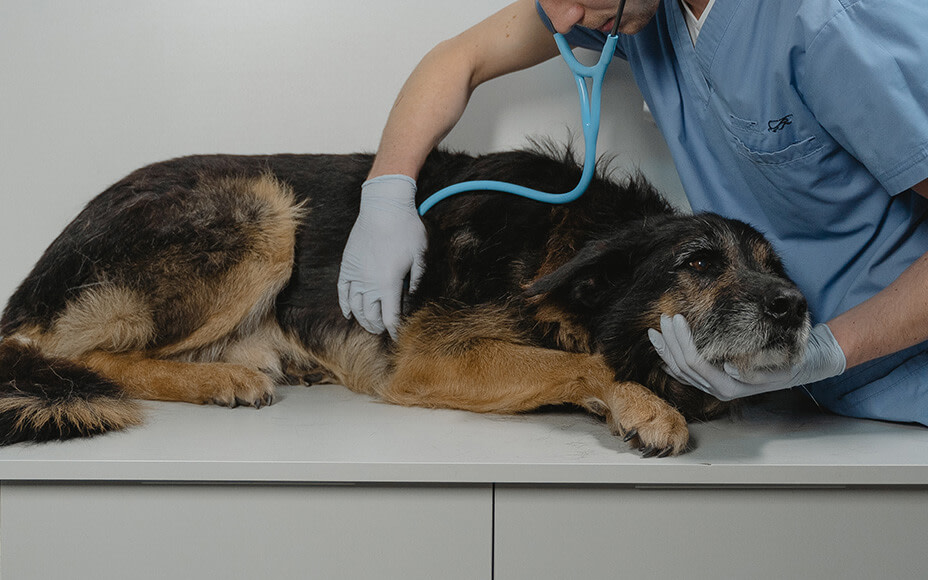
To respond correctly when your dog vomits, you need to know what might be causing this behavior.
Causes: Why do dogs vomit?
Eating too fast
You barely put the food bowl on the floor and your dog has already devoured everything and licked the bowl clean? Shortly afterward, all the food comes back up just as quickly?
If this behavior happens more often and you see a clear connection between eating too quickly and vomiting, it could be that your dog is simply swallowing the food too fast. That's just too much for the stomach. What can you do about it?
Divide the daily food ration into 2-3 small meals. Avoid giving too much food at once. There are also special anti-gulp bowls that slow down fast eating and also provide some entertainment. This way, your dog eats more slowly and the stomach is not overwhelmed.
Poisoning or food intoxication
Looked away for a moment during a walk and your dog ate something unknown? Unfortunately, there are people who mean harm to our furry friends and place →poison baits in dog parks or other green areas. These baits can contain all sorts of things. So there may be other symptoms besides vomiting. Does your dog tend to eat anything he finds? Then if you notice sudden vomiting after a walk you should keep poisoning as a possible cause in mind.
But even at home, your dog can find some foods that are not suitable for him at all. Grapes, raisins, onions, garlic, alcohol, and certain spices are strictly off limits for your dog. Household items like cleaning products or antifreeze should also be stored out of your dog's reach. All these things are toxic to dogs and, besides vomiting, can cause many other symptoms. Do you enjoy sweet fruit and want to treat your furry friend too?

Get informed beforehand: Some fruits are a healthy snack for your four-legged friend, while other foods are toxic!
Eating grass
Eating grass is a natural behavior in dogs. It is still not scientifically clear what benefit eating grass brings to dogs. Not all dogs who eat grass vomit. Some eat grass when they have a bit of an upset stomach. The question always arises: which came first? Do dogs vomit because they ate grass, or do they eat grass because they feel sick?
If your dog sometimes vomits after eating grass, you usually don’t need to worry. However, if this happens frequently and regularly, you should have your dog thoroughly checked by your veterinarian to rule out possible medical causes.
Gastritis
Gastritis or gastroenteritis is an inflammation of the stomach or stomach and intestinal lining. Possible causes can be:
Eating spoiled food
Medications
Stress
Infections with gastrointestinal parasites
Bacteria or viruses
Other symptoms besides repeated vomiting can include loss of appetite or diarrhea . If you suspect gastritis, please contact your veterinarian!
Stomach ulcer
A stomach ulcer, also called gastric ulcer, can also lead to vomiting. With a stomach ulcer, the stomach lining is damaged and is therefore easily attacked by stomach acid. The result: your dog reacts with nausea, vomiting, and abdominal pain. In this case as well, we recommend contacting your veterinarian!
Gastrointestinal obstruction
Gastrointestinal obstructions are often caused by swallowing foreign objects. Is a toy (or even just part of one) missing, or are you missing a sock? If your dog has swallowed a foreign object and is vomiting, quick action and immediate contact with your veterinarian is advised. Especially if your dog's general condition is poor, for example if he seems very lethargic, has little energy or shows other unusual symptoms, you should be on high alert.

Regardless of ingesting a foreign object, vomiting can also be a symptom of gastric torsion. The typical vomiting in this case is retching and the attempt to vomit without anything actually coming out.
Most dogs in this situation already have a reduced general condition. A gastric torsion is life-threatening and in this case, every minute counts to save your dog.
What can I give my dog for vomiting?
Of course, there are many other causes of vomiting, but those mentioned here are among the most common.
In general, vomiting is a common problem. If it happens once, you usually don’t need to worry. It's best to give your dog no food for 12 to 24 hours, so that the digestive tract can calm down. After that, you can slowly start feeding →easily digestible food in small portions and divide the daily ration into several small meals. Particularly recommended is the so-called →Moro’s soup, which thanks to the power of the orange super-vegetable carrot and the valuable findings of its namesake, Prof. Ernst Moro, is a real miracle cure for acute digestive problems and vomiting.
Supporting you during treatment: Pets Deli VET
As you have read, the causes can range from harmless grass eating to life-threatening gastric torsion. You know your dog best. Especially if, in addition to vomiting, other symptoms such as diarrhea, fever, reduced general condition, or weakness occur, or for example if there is blood in the vomit, you should quickly seek veterinary advice. Even if you are unsure, it's better to call once too often than not enough. Often, vomiting can be treated symptomatically and after a bit of medical support your beloved dog will feel better. Please note that medications intended for humans can be toxic to our dogs and should only be prescribed by professionals!