
Common emergencies and what you can do
Sometimes it's just a little scare, sometimes a real emergency – the important thing is that you know what to do. Here are the most common emergencies in dogs and how to respond correctly:
Poisoning: If your dog has eaten a →poison bait, call your vet immediately. Activated charcoal can help bind toxins – but it's best to ask beforehand how much you can give.
Cuts: Carefully rinse the wound with clean tap water or boiled, cooled water to remove dirt. Then gently treat with an appropriate disinfectant. Afterwards, apply a loose bandage. Attention: For deeper wounds or heavy bleeding, you should see your vet immediately. It's also a good idea to do so even for minor cuts, to clarify whether further wound care or treatment with painkillers or antibiotics is necessary.
Insect stings or allergic reactions: Carefully remove the stinger and cool the affected area. If swelling develops around the head – that is, on the lips, eyes, or snout – or if your dog is having trouble breathing, you should contact your vet immediately.
Gastric torsion (bloat): If your dog is restless, panting heavily, and the belly becomes hard, every minute counts – contact the emergency vet service.
Heatstroke: Move your dog to a cool place and moisten the paws with water. Then contact your vet.
For all emergencies: it's better to seek professional help one time too many than one time too few!


A well-applied paw bandage can make a big difference in an emergency – especially for injuries caused by heat or asphalt.
How to apply bandages correctly
Sometimes all it takes is a small bandage to help your dog quickly and relieve pain. Here's what to do:
Clean the wound: Carefully rinse the affected area with sterile saline solution to remove dirt and germs. If you don't have saline solution on hand, you can use boiled and cooled water.
Disinfect: A mild wound disinfectant protects against infection.
Apply the bandage:
For paws: Place a sterile wound dressing or compress, wrap loosely, and secure with tape or a self-adhesive bandage.
For head or ears: Do not wrap the bandage too tightly and make sure your dog can still breathe freely.
Check: Make sure the bandage is not too tight. Regularly check if it is still in place or needs to be changed.
If you're unsure how to do this, it's best to ask at your vet's office. That way your dog will be well cared for even in an emergency!
What belongs in your first aid kit
A well-equipped first aid kit is worth its weight in gold when something happens. Here are the most important things you should always have on hand:

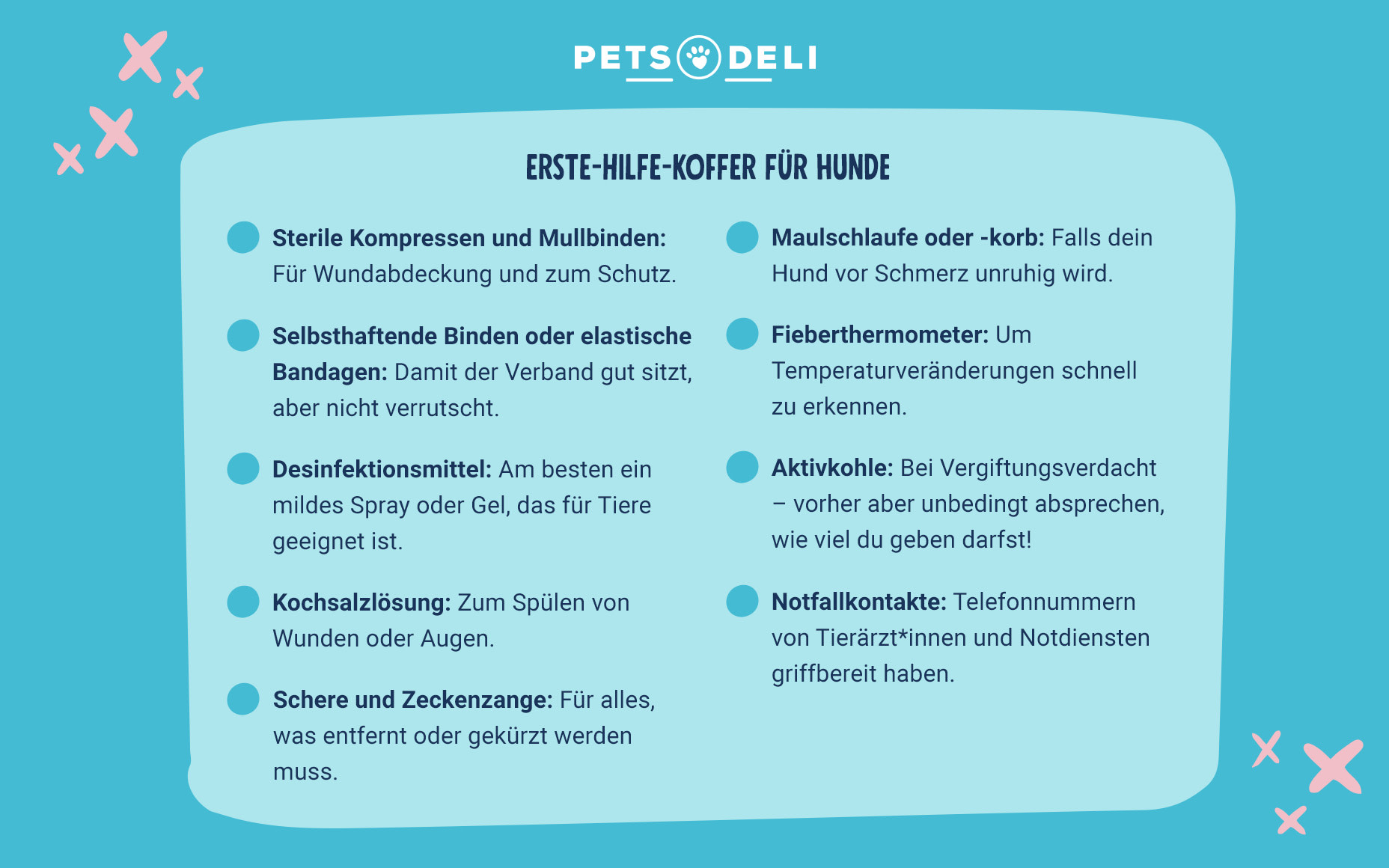
First aid kit for dogs: These essentials you should always have on hand – for minor and major emergencies with your doggo.
Tip: Regularly check that everything is complete and ready to use – so you're always prepared.
Stay calm and act in time
No matter how serious the emergency looks – staying calm is the most important thing now. Your dog will notice immediately if you panic, and that can make the situation even more difficult.
Take a deep breath, assess the situation carefully, and then decide what to do. If you're not sure, it's better to call the vet one time too many – that way you're on the safe side.
For you: A well-equipped first aid kit and a clear head are essential. And if things get serious, don't hesitate to seek professional help. That way your dog will always be well cared for!