Recognizing and properly treating stroke in dogs
A →broken leg, a →mild stomach upset and a bit of a cold are things most dogs can usually handle well. But when it comes to serious illnesses, that affect the brain, like a stroke, every minute counts, and just in case, you should be well equipped with the necessary information at hand. Here you can learn more about the causes, symptoms, diagnosis, and treatment options of a stroke in dogs.
What is a stroke and what are its causes?
Just like in us humans, our four-legged friends’ brains are supplied with oxygen through the blood. During a stroke, this supply is interrupted, because a vessel is damaged or a blood clot forms. The result: oxygen can no longer be transported. From this point on, nerve cells continuously die off, which is why every second counts with this condition and your dog should be taken to a veterinary practice at the first signs or to a clinic immediately.
The cause is usually a circulatory disorder in the brain. Deposits or clots narrow the path until they eventually block it completely and trigger a stroke. High blood pressure can also cause an artery to rupture or burst, leading to a brain hemorrhage and stroke. Risk factors that increase the likelihood of a stroke in dogs include:
old age
overweight
too little exercise
heart defects
poor diet (too much fat, sugar, spices)
accident or blow to the head

Healthy nutrition is not only important for us humans to live a long life. At Pets Deli, we have made it our mission to bring →healthy food to every bowl. With fresh meat, crunchy fruits and vegetables, select herbs, and rich oils, we always strive to create the best meal and help dogs live long and healthy lives. Unhealthy additives like grains, sugar, as well as artificial colors and flavors have no place in our products.
Our dog food: healthy, honest, delicious.
Symptoms: How to recognize a stroke in your dog
If you notice the following symptoms in your dog, a stroke may be the cause and you should have them checked by your veterinarian immediately:
apathy
balance disorders
weakness
restless pacing
impaired vision and uncoordinated movements
vomiting and urinating
twitching eyes
tilting of the body, especially the head
The symptoms are very similar to those in humans – but unfortunately, your dog can't tell you when something feels off. Especially if your dog is older or has pre-existing heart and/or vascular conditions, you should keep a close eye on him.
Easily confused: The vestibular syndrome
A stroke is often mistaken for vestibular syndrome. The symptoms are very similar, but the loss of balance is caused by problems in the inner ear. In terms of effect, the syndrome can be compared to sudden hearing loss in humans. This is very unpleasant for your dog, but usually treatable.
If your dog shows these symptoms, you should not waste any time and head straight to the vet.
First aid measures if your dog has a stroke
With the following steps, you can support your dog until you arrive at the veterinary practice:
stay calm
lay your dog comfortably on his side
supervise during transport

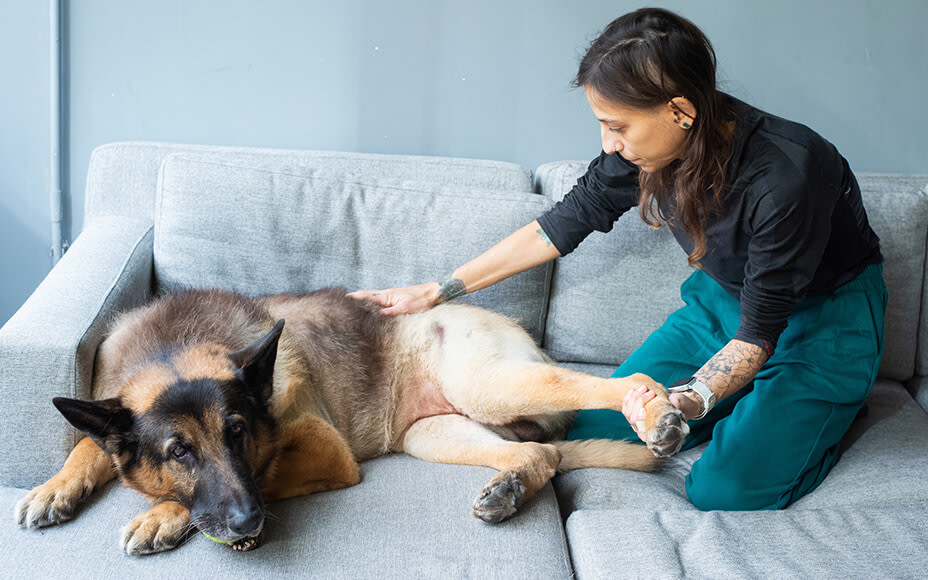
If your dog has a stroke, quick but sensitive action is required. Make your dog comfortable and stay by their side while you remain calm.
Diagnosis and therapy of stroke or vestibular syndrome
At the clinic, the veterinarians will first check whether your furry friend is suffering from a stroke or if vestibular syndrome is behind the symptoms. If a stroke is diagnosed, measures are taken to clear the blocked vessels. Unfortunately, there is currently no way to restore dead nerve cells, and depending on how much time has passed, paralysis and cognitive impairments may remain. In addition to medication, physiotherapy is often helpful to mobilize paralyzed body parts.
In almost all cases, however, the symptoms are due to vestibular syndrome, which is easily and quickly treatable. Due to circulatory disorders in the dog’s balance organ, dogs show dizziness, vomiting, circling, and staggering. The main treatment here is a home remedy: rest. Your dog needs a quiet place to recover, where he is free from stress and noisy children. In addition, medications with cortisone and B vitamins promote circulation and reduce inflammation. However, you should rely on your veterinarian’s assessment and never use your own medicine cabinet.
Is your dog not a fan of little pills and needs a bit of convincing? Our liver pâté is the best assistant when it comes to making medication more palatable for your dog!


Preventing stroke in dogs
To prevent a stroke, the following measures can help reduce the risk:
enough exercise
healthy diet
follow precise feeding recommendations to avoid overweight
avoid chronic stress