Roundworms in dogs: infection, symptoms and treatment
Worms, along with →fleas, →ticks and mites, are among the most common parasites. About 1 in 10 →puppies and young dogs carry the roundworm, which makes up the largest part of its category. If your four-legged friend's stomach is rumbling, if there are recurring digestive problems and especially if your young puppy seems sickly, it could possibly be a roundworm causing trouble.
What are roundworms in dogs?
The roundworm (Toxocara canis, rarely also Toxascaris leonina) is a nematode (Nematoda) and part of the endothermic parasites. So, unlike ectothermic parasites such as ticks, fleas, and mites, it affects internal areas of the body - mainly the intestines. With a length of up to 20 cm these worms are transmitted through their extremely resilient eggs, which can be found in a significant portion of many parks. Every day, the female worms lay about 200,000 eggs, from which the larvae hatch.
How can my dog get infected with roundworms?
Any four-legged friend who loves to roam through woods and meadows, is at risk of getting infected with roundworms. Since long walks are a must and the favorite hobby of many dogs, the rule here is: prevention is better than cure. Infection occurs through your dog's mouth, by sniffing, licking, or eating something that is contaminated. Risk sources include feces, animal carcasses, carrion, and also soil.


Sniffing, licking, eating: During walks, roundworms can be transmitted when the eggs enter the intestine through the mouth.
Once your dog has ingested the eggs, the larvae develop in the intestines. What's special here is that the parasite doesn't necessarily stay in the intestines, because through migration via your dog's blood vessels they can reach other body parts like the lungs and muscles. Sounds gross? It is – especially for your four-legged friend. Not infrequently, some of the larvae encyst in organs and can be activated even years later. This is especially common in pregnant females, as their puppies are usually infected directly, which is why young dogs often suffer from worm infestations.
Does your dog like to eat things off the ground and gobbles up anything as soon as you look away? Such behavior not only increases the risk of a worm infestation, but also the risk of encountering a →poison bait. With targeted training you can teach your dog, for example, to only eat on command or only from your hand when you're out and about. Give it a try – our delicious Pets Deli snacks are here to help. Guaranteed free from sugar, grains, and artificial flavorings!
Great rewards for hardworking dogs – our snacks
Symptoms: How to recognize roundworms
Dogs don't always show symptoms when they are infected with roundworms. Especially in adult dogs, roundworms are more of a random finding than an infection that is specifically looked for. In puppies and young dogs, however, the infestation usually comes with symptoms such as:
severely bloated belly
weight loss
worms in the stool or vomit
delayed growth
lethargy
fatigue
Especially if your dog is frequently vomiting or coughing, you may notice white threads that look like spaghetti. This is a clear sign of a roundworm infestation and means: Head to the vet, and fast!

Young dogs in particular often show severe symptoms when infested with roundworms. In addition to diarrhea, vomiting, and coughing, fatigue is among the most common symptoms.
Diagnosis and treatment of roundworms in dogs
In addition to troublesome digestive issues, roundworms can also lead to increased susceptibility to infections and even weaken the effect of a vaccination . Here, the entire immune system is affected, so a quick diagnosis and treatment is important if your dog has been infected with the parasites.
To do this, the →veterinarian examines the collected stool of your dog. For this, samples from three days are necessary, to reliably determine if worms are present. If your dog is coughing or vomiting, a sample is also helpful here, which is examined more closely under the microscope.
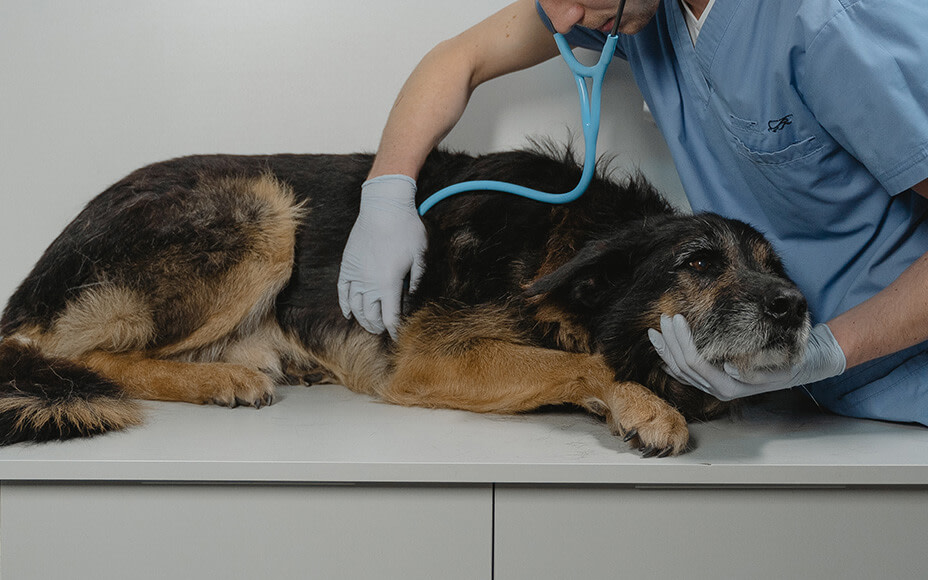
When diagnosing roundworms in dogs, an examination is performed along with an analysis of stool or vomit. This allows you to reliably determine whether your dog is infected.
What does roundworm therapy look like for dogs?
Once the diagnosis is confirmed, a deworming agent is sufficient and is administered to your dog. Most often, these are (chewable) tablets, rarely creams or pastes that are given orally. Usually, this treatment works well, but in severe cases, additional medications or infusions as well as injections may be given. As you can see: As scary as the "spaghetti worm" is, vets can quickly get rid of the parasite for good.
Most dogs aren't fans of swallowing the little pills just like that. That calls for a bit of persuasion – how convenient that our Pets Deli liver pâté is a very popular helper when it comes to getting your furry friend to take medication.

How to prevent roundworms in dogs
The be-all and end-all of preventing roundworms in dogs is regular deworming. You can't completely avoid these parasites for sure, but deworming ensures early elimination of any worms in your dog. These products are usually free of side effects and very well tolerated by your dog.
Many owners skip regular administration of "worm treatments" and instead have the stool of their beloved four-legged friends regularly checked for worms . This way, you can react quickly to an infestation and only give medication when an infestation is present.
Can roundworms be transmitted to humans?
Yes – that's why it's important, if your dog is infected, to maintain impeccable hygiene and wash your hands thoroughly. Sleeping and feeding areas should be cleaned with hot water frequently, until the infestation has been eliminated. For children, public sandboxes are also a source of danger. An infection rarely causes symptoms, but immunocompromised people can develop symptoms ranging from headaches and allergies to eye and liver damage . Regular deworming is also recommended if people with relevant pre-existing conditions live in the household.