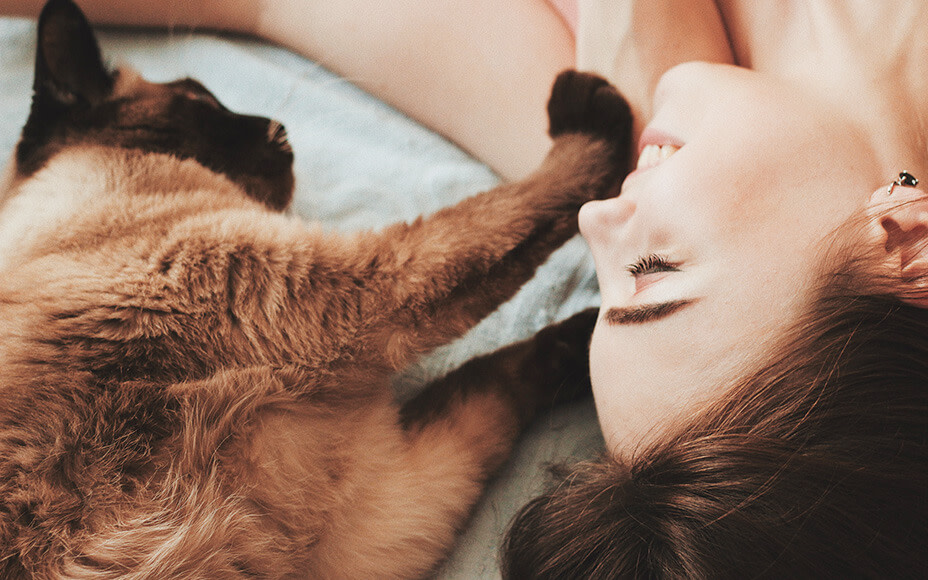
Recognizing, understanding, and interpreting cat body language
Unlike us humans, cats can't simply tell us what they like, what bothers them, or whether they are happy, angry, or stressed. Yet hardly any other animal has such a distinct and diverse body language as cats. Learning this requires a good deal of know-how, practice and a trained eye. Show your cat love and learn their language—you'll see that it will benefit your harmonious life together in every way.
How does communication work in cats?
Cats communicate through every little detail of their body language. Whether it's a brief blink, a slight twitch of the tail or the arching of the back: if you want to understand cats, you have to look closely. Thanks to the special attentiveness of our feline friends, they can react in a flash and that's why cats are sometimes known for their particularly quick mood swings . The combination of eyes, ears, tail, facial expressions, and overall body posture expresses a cat's mood.
Everyone knows the hissing cat, who signals resistance through its scrunched-up face and crouched body posture. That's the basic course in communication—but there's much more to understand. No matter if you want to get to know your cat better or →want to be perfectly prepared for your future cat, with our overview you'll have important information about cat language at your fingertips.
Body language with the tail: What cats want to express
The position of a cat's tail can tell you a lot when it comes to their mood . For example, a tucked tail means your cat is submitting. An upright, twitching tail can mean joy or nervousness, while a vertically bushy tail expresses anger and readiness to be aggressive. The differences can be subtle, and for laypeople, aggression can sometimes be mistaken for happiness.
A relaxed, horizontally held tail signals goodwill and your cat is open to contact with you. Even if your cat holds their tail diagonally upward, they're happy to see you. However, you should be careful if they are sitting and gently swishing their tail back and forth. Your cat is on alert.


Pay attention to your cat's tail, as it says a lot about their mood.
Understanding your cat's mood: Here's how
First, observe your cat closely. Certain behaviors and looks indicate a specific mood that you can "read" in your cat.
Joy and affection
There's nothing better than your cat being in a cuddly mood. If they're happy to see you and want to →show you their love you can recognize it by...
an upright tail
frequent blinking and purring
showing their belly
pacing back and forth, accompanied by "Meow!"
rubbing around your legs and head-butting ("head rubbing")
relaxed, forward-pointing ears
kneading with their paws on your body
licking your hand

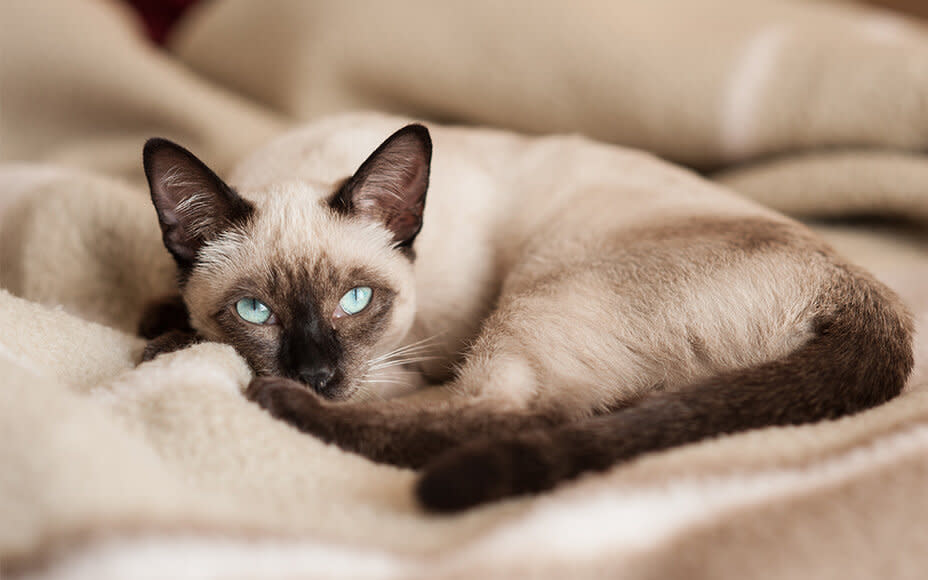
Gentle blinking, perked-up ears, and a relaxed posture: your cat is happy to see you and is in a cozy mood.
Receiving love, giving love —the best thing you can do for your cat is to give a little love back, by having a suitable snack ready in such moments. When choosing, pay attention to a healthy composition with a short ingredient list. Sugar, grains, and artificial additives have no place in a tasty snack.
Give Love - with our Snacks for Cats!
Come play with me!
Your cat wants to play and is really in the mood to chase the next toy mouse. Preferably with you! You can tell your cat wants to play when...
they quickly dart back and forth
they roll around
they come to you and tap your leg or your hand with their paw
they sit up on their hind legs and try to catch something
Fear and fright
In some situations, your cat may become anxious. That's completely natural and can even save their wild relatives' lives. To avoid pressuring your cat when they're scared, watch for these signals:
crouched body posture
sideways pointing, "drooping" ears
drooping, bushy tail
tucked, bent tail
dilated pupils
Aggression
If a mild fear turns into anger and aggression, caution is advised! The difference is easy to spot between fear and aggression by looking at the pupils. Your cat is ready to defend itself by any means if...
they bristle their fur
they snap at you or →bite
they arch their back ("cat arch")
their tail is down and bristled
their tail is rigidly horizontal
they have narrow, slit-shaped pupils
they stare at you without blinking
they flatten their ears and hiss
they show their teeth


The ears are slightly drooping, the gaze is fixed, and the teeth are ready for action: your cat is angry and ready to attack at any moment.
Stress
Is your cat stressed? Stress is more than just unpleasant for your cat and a risk factor when it comes to →frequent urinary tract infections in cats. If you pay attention to the following signals, you can easily recognize stress in your cat:
drooping tail that swings back and forth
Yawning can indicate insecurity and restlessness
lowered body posture and ears
scratching furniture instead of the scratching post
frequent hiding
excessive grooming
Cat body language: Often ambiguous
For example, the position of the tail and ears in cats doesn't always stand for just one mood. Likewise, staring can mean happiness or aggression depending on the intensity . The overall situation often gives clues about what your cat really means. Misunderstandings are normal and sometimes your cat will interpret a behavior or mood in you that isn't actually there.
However, if you listen to your cat and observe them closely, you can quickly get a feel for when they want to tell you something. Just because you don't speak the same language doesn't mean you can't communicate. And if you really know your kitty, you'll know how sociable and talkative our four-legged friends really are.