
What is chronic kidney insufficiency in cats?
Chronic kidney insufficiency (CKI) is one of the most common diseases in older cats, although unfortunately young cats can also develop kidney diseases. But what is behind this tongue-twister of a disease? Just like in humans, the kidneys are very important detoxification organs in the body. If their function is impaired, waste products of metabolism and toxins are no longer properly excreted and accumulate in the body. If such a kidney disease goes undetected for a long time, it can not only become chronic but even life-threatening.
Learn now how to recognize the symptoms early and how you can give your cat a good life despite chronic kidney insufficiency! The rule here is: prevention is the best treatment, because through regular check-ups at your veterinarian, the disease can be detected and treated early. With a →healthy and balanced diet and a high-quality food you pave the way for your four-legged friend to have a happy and long life. And healthy doesn't have to be complicated: Whether dry food, wet food, or BARF – our Pets Deli food is packed with high-quality meat as well as essential vitamins, minerals, and oils. Sugar, grains, or artificial additives? Not a chance!
Our cat food: honest, healthy, delicious.
Cause: How does kidney insufficiency develop in cats?
The causes of kidney damage in cats are varied and trigger chronic kidney insufficiency at different speeds. The most common causes include:
Inflammation of the kidneys and →urinary tract
kidney stones
so-called polycystic kidney (hereditary disease in which numerous cysts in both kidneys gradually replace the functional tissue)
tumors or cancer
feline leukemia virus infection (leukosis)
high blood pressure
As you can see, kidney insufficiency is often a secondary disease. The primary disease damages the kidney and causes the remaining kidney tissue to work harder, leading to a kind of overload. As a result, the kidneys become increasingly damaged and the kidney function becomes more and more restricted. If kidney insufficiency is not treated, it ultimately leads to kidney failure and other organs or systems are affected.

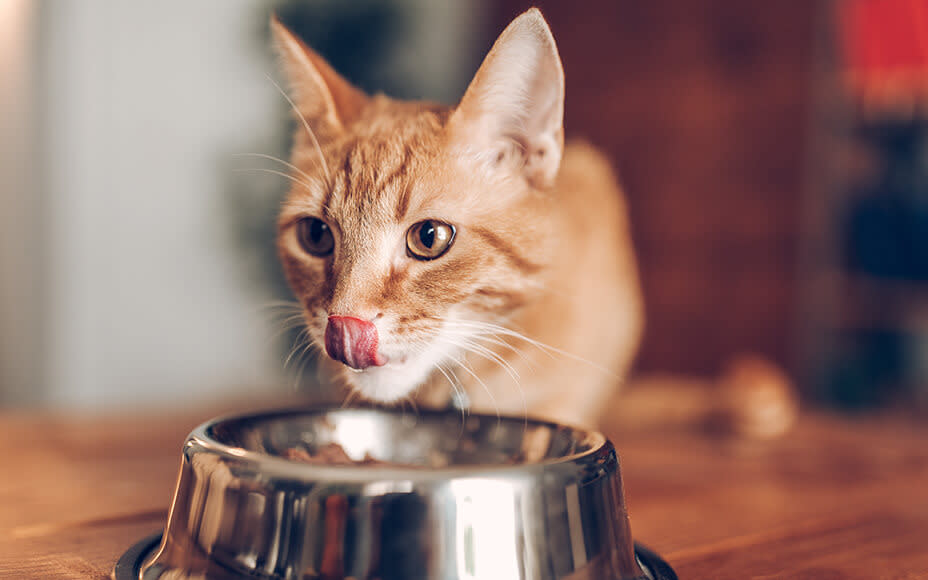
Your cat runs to the freshly refilled food bowl, sniffs it briefly, and then walks away? That could be a sign that something is wrong!
Symptoms of kidney insufficiency in cats
So that you can recognize the disease early and have it treated, you need to observe your cat closely. Unfortunately, visible symptoms only appear quite late, so the kidney damage is already quite advanced. Therefore, watch for the following behavioral changes in your cat:
Loss of appetite or →lack of appetite up to weight loss
lethargy, less activity than before
increased drinking and urination
nausea and vomiting
in more advanced stages: severe →bad breath, loose teeth, pale mucous membranes
If you notice one or more of these behaviors in your cat or observe other abnormalities, you should not hesitate to see a veterinarian. Even if it may not be a kidney disease right away, the rule here is: better to have one check-up too many than too few. Because the earlier kidney insufficiency in cats is detected, the better it can be treated.
How is kidney disease diagnosed in cats?
During the diagnostic process, your cat will be thoroughly examined. This includes both physical examinations as well as a comprehensive blood test, urine analysis, and blood pressure measurement. Here, the attending vets may notice initial changes in the kidneys or cardiac arrhythmias. In cats with kidney disease, proteins in the urine as well as uremic substances in the blood are clear indicators.
If chronic kidney insufficiency is suspected, ultrasound and X-rays are also helpful to make changes in the kidneys and bone structure visible. This also helps rule out that it is not "just" an acute kidney insufficiency.
To ensure the most suitable therapy can be started, the severity of the kidney insufficiency is classified into different stages from I to IV, with I involving only a few symptoms and IV involving massive changes.

One full check-up, please! If kidney disease is suspected, your cat will receive a complete physical examination and undergo several additional tests.
Acute or chronic kidney insufficiency?
A distinction is made between chronic and acute forms of kidney insufficiency, but their causes and symptoms are hardly different. In acute kidney insufficiency the kidney damage is recent and can be fully healed with timely treatment. In chronic kidney insufficiency the damage to the kidney tissue has unfortunately been present for longer and is therefore incurable. This means your cat will have ongoing kidney problems. But even here, with targeted treatment and a special kidney diet, the disease can be slowed down or even stopped and your cat's quality of life improved.
Therapy: How can kidney insufficiency be treated?
The treatment of kidney disease in cats is quite individual and depends on the stage of the disease. Acute kidney insufficiency can be treated with medication completely treated and cured.
In chronic kidney insufficiency, while treatment does not achieve a complete cure, with a consistent and cat-specific therapy a stable condition can be achieved, allowing your pet to have a good life.
Treatment includes three essential points:
Administration of medication: Depending on the stage of the disease, medications for regular use are prescribed. These may include remedies for nausea, pain, or to lower blood pressure.
Adequate fluid intake: Access to fresh water should always be ensured, and you should make sure your cat drinks enough. If your cat is a →poor drinker, feed especially moist wet food like our →“Sauce Menu” or spoil your cat with our →soups.
A special kidney diet: Feeding a special food is also very important to relieve the kidneys. Special kidney food contains less phosphorus and has a low protein content of high-quality, easily digestible proteins, resulting in fewer uremic substances.
By your side throughout treatment: Pets Deli VET
Important! Special nutrition for cats with kidney disease
In chronic kidney disease, your cat's kidneys have been ill for a while, so healing of the diseased kidney tissue is then no longer possible. It is therefore important that you give your cat →high-quality and healthy food without sugar or other added flavorings and make sure she drinks enough.
The good news: If your cat already suffers from chronic kidney disease, by switching to a special kidney diet, such as by feeding our →"Vet" Liver & Kidney Fit you can relieve the already damaged kidneys and support your cat's well-being. You should also ensure adequate fluid intake and regular check-ups by veterinarians.
If your cat's illness has spoiled her appetite, you can also try cooking yourself. Some cats especially enjoy being served something home-cooked. For this, you should consult with nutrition experts beforehand, so that you cover all the necessary nutrients.
Life expectancy of cats with kidney insufficiency
Even though chronic kidney insufficiency is not curable, here is the good news: With individual treatment and adapted nutrition your cat can lead a long and happy life. Acute episodes are unfortunately always possible, but the earlier they are detected and treated and the more consistently the overall therapy is followed, the more comfortable your pet will be.