
Understanding your cat's heat cycle
Maybe your cat is an outdoor cat and has already been spayed as a precaution to prevent uncontrolled breeding. Cats from animal shelters are also often already spayed. However, this is not always the case for indoor cats, adopted strays, or breeding cats, and the heart-wrenching meowing sound your cat makes might push you to your limits on more than one night.
But what is behind all this caterwauling? We’ll help you better understand your cat during her next heat cycle, so you both can get through this time stress-free.
What exactly is heat in cats?
In principle, heat serves the purely biological purpose of reproduction for your cat. However, it differs greatly from a dog's estrus cycle.
While a dog's heat follows a regular pattern at certain intervals, ovulation—that is, the fertile phase in a cat's cycle—only occurs when mating actually takes place.

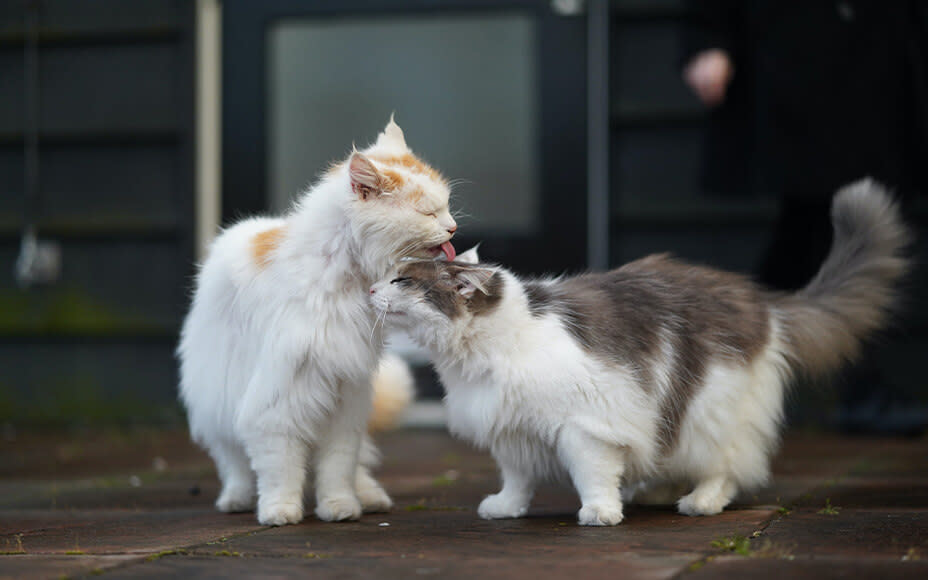
During heat, cats are especially affectionate and in need of love.
How can you tell if a cat is in heat?
The signs of heat can vary. A cat in heat often behaves as follows:
meows almost non-stop
rolls around a lot
rubs against objects or you
turns into a real cuddle bug
She is now hungry—hungry for love and she’ll let you know 24 hours a day. During this time, she would love to live on nothing but air, love, and cuddles. Many cats also lose their appetite and refuse to eat—this is often called "lovesickness."
Your cat won't eat?
Tips for more appetite!
When does a cat's first heat start and how often does a cat go into heat?
Usually, a cat goes into heat for the first time between the fourth and twelfth month of life. Per year, cats go into heat about twice if they are mated. However, since mating (the pairing of male and female) usually does not occur, she will go into heat again after about 3 weeks and the cycle starts all over again.
A heat cycle lasts either 2–4 days (if mating occurs) or up to 15 days if the cat is not mated. Your cat may even go into a state of persistent heat. Another interesting fact: how often your cat goes into heat depends greatly on daylight. If she is an indoor cat and has light all day, she will often go into heat regardless of the season.
How can I help my cat when she is in heat?
Of course, a heat cycle is not only stressful for you, but—perhaps even more so—for your cat. The good news: there are a few tips to help you calm your cat during this time.
If your furry friend likes being outside, keep her indoors or in the apartment. That way, she can't meet any tomcats and unwanted offspring can be avoided.
Some cat owners report that warmth helps, such as a lukewarm grain pillow for your darling to snuggle up on.
If you are a fan of homeopathy and believe in its effects, there are →various oils that may help relax your cat in heat.
Another calming option is →catnip which has a captivating effect on many cats.
Give your cat plenty of distraction by →playing with her and providing a scratching post where she can let off steam.
Keep in mind that all these tips only provide short-term relief, because sooner or later the only real solution for cats is spaying.
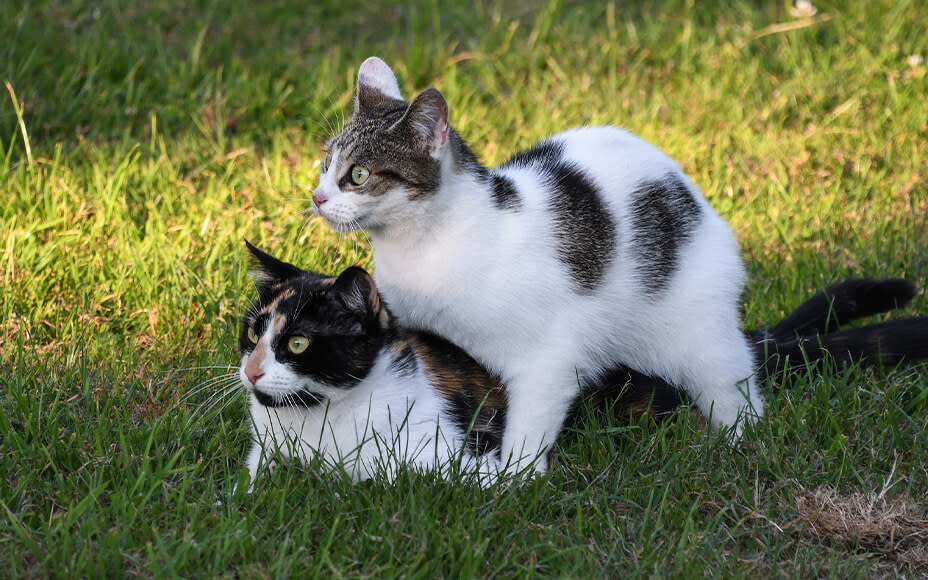
If your cat is looking for her mate, she will go into heat and usually announce it loudly.
Should I have my cat spayed?
If you notice that your furry friend tends toward persistent heat, the crying for a handsome tomcat never ends, and she starts marking in the house, you can seriously consider spaying. The more often your indoor cat goes into heat without mating, the higher the risk of
ovarian cysts, which can develop into tumors. An increased hormone level, as is the case with persistent heat, can promote uterine diseases in your cat.
If you know from the start that there will be no offspring, it is best to have your furry friend spayed from a veterinary perspective even before her first heat cycle.
Have your cat neutered:
The right age & more information
Spaying can also make sense for your male cat. If he is an outdoor cat, you reduce the risk of unwanted pregnancies. If your indoor cat is neutered, he won't wander miles from home in search of a mate and will therefore be less at risk.
The risk of fights for dominance with other unneutered males also decreases. That means: fewer injuries for your four-legged friend and less stress for both of you. One more tip for your neutered indoor cat: After the procedure, your darling is more likely to gain weight, which you can counteract with a low-energy, low-fat, healthy diet.
Frequently asked questions about heat in cats
Do you still have more burning questions about your cat’s heat cycle? Then maybe we have the answers for you: