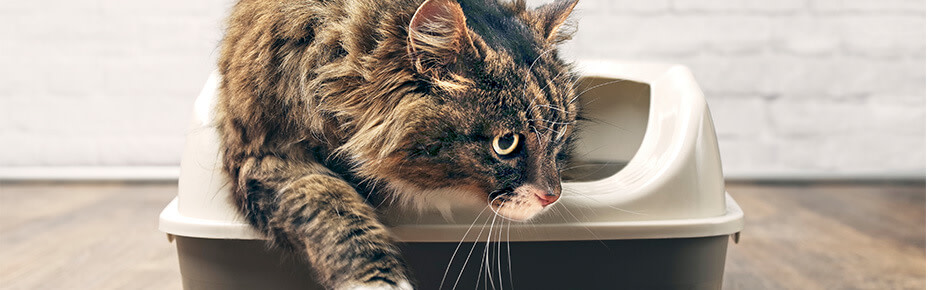
Urinary tract infections in cats
If your cat gets a urinary tract infection, usually the lower urinary tract is affected. When the bladder and urethra cause problems, symptoms such as frequent trips to the litter box, discolored urine, and frequent grooming can occur. Here you can find out what urinary tract diseases exist, how they are treated, and whether there are any home remedies for them.
Most common urinary tract diseases & symptoms
FLUTD (feline lower urinary tract disease)
FLUTD affects the lower urinary tract in cats and is grouped under one term because it is a disease complex with various causes and risk factors. About 1% of cats suffer from FLUTD. The reasons for FLUTD are diverse, with stress often being a contributing factor.
If bladder stones or urinary grit form, which consist of struvite or calcium oxalate, the urethra or bladder outlet can become blocked and urine can no longer pass through properly. The reason for this is an imbalance of salts, which under normal conditions would simply be excreted.Small stones and crystal-like bodies can still pass through the urethra. However, if there is too little fluid to dissolve the salts, larger stones accumulate and can, in serious cases, lead to a complete blockage. The stones that form are called urinary stones (urolithiasis).
If the urinary stones or bacteria are in the bladder and cause pain in the bladder wall, this is called a bladder infection (cystitis). In most cases, FLUTD occurs as a bladder infection without blockage of the urinary tract.
Symptoms of FLUTD include:
frequent urination
long visits to the litter box
visible pain when urinating, such as meowing
increased grooming, especially in the genital area
frequent scratching in the litter box
bloody or highly colored urine
sensitivity to touch
urinating outside the litter box
straining to urinate, which is sometimes mistaken for constipation
Diseases of the upper urinary tract in cats: kidney stones
In addition to the lower, the upper urinary tract in cats can also be affected. When the ureters become blocked, this usually happens due to kidney stones. Composed of calcium and oxalate, the stones are often only discovered by chance, as many cats show no symptoms. If the stones do not move, they cause no problems and cats are then simply monitored. If the cat's condition changes and the stones move into the ureters, treatment is required. If action is taken too late and the stones block the upper urinary tract, this can result in acute kidney failure because waste products can no longer be excreted.

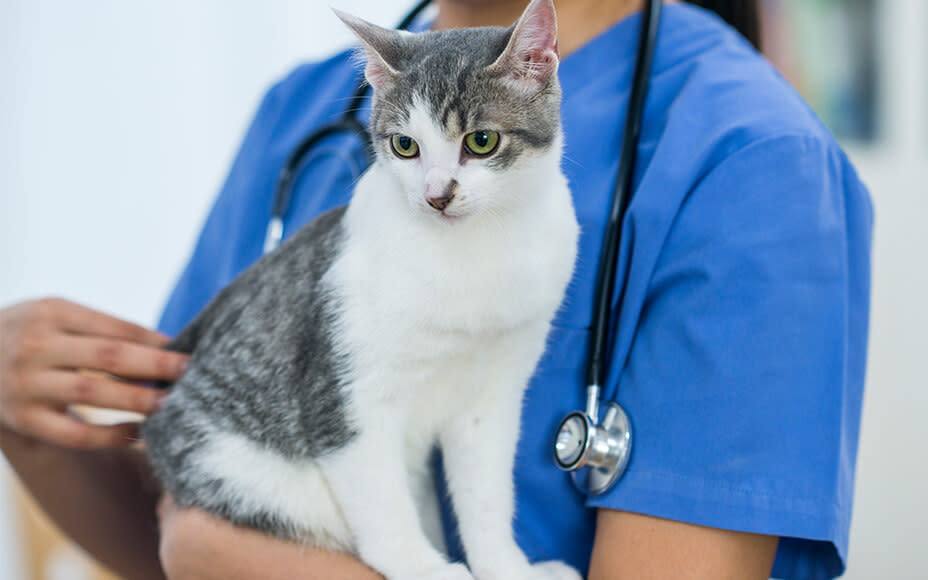
Diseases of the upper urinary tract are complex and treatment may sometimes take longer.
Treatment of urinary tract infections in cats: surgery or medication?
If you suspect urinary stones, a bladder infection or kidney stones you should seek veterinary advice immediately. If there is a blockage of the urethra and urine backs up, this can have serious consequences for your cat. During diagnosis, the urinary stones are examined in detail and it is determined what material they are made of. For example, struvite stones can be prevented through diet. If a blockage is already present, the veterinarian will place a catheter under sedation or anesthesia, to ensure urine can drain and maintain kidney function.
If the upper urinary tract is affected, often a major procedure is necessary, as access is complex. Flushes and medications are sometimes successful - but if not, surgery is required. In just less than half of all cases the kidney and ureter stones return after about a year.
As the preferred method, after medication or surgery, a suitable special diet is used to help prevent future urinary or bladder stones.
Treating urinary tract infections with homeopathy?
When using homeopathic remedies, unlike conventional medications, no exact effect can be predicted and proof of actual effectiveness is lacking. What is relied upon are the experiences of other owners and veterinarians can use these as a guide.
Homeopathy can be used as a supportive measure to alleviate symptoms. Supportive means that these remedies are not prescribed as the sole therapy, but rather alongside medications. The homeopathic remedies Belladonna and Cantharis can, in the first case, reduce bloody urine and in the second case reduce the number of trips to the litter box. It is important to know that a urinary tract infection in cats should never be treated on your own. Home remedies or homeopathic remedies do not replace a visit to the veterinarian nor do they compete in their effectiveness with medications - they only accompany the improvement of symptoms.
Homeopathy as a natural remedy for urinary tract infections? These remedies are used as support for certain conditions, but a direct effect has not been confirmed.
Preventing urinary tract infections: housing, nutrition, and water intake
In addition to nutrition, there are several things to consider in your cat's environment to help prevent common diseases like FLUTD. If cats are stressed, urinary tract infections often recur and a kind of cycle develops. The goal here is to reduce stress and provide a cat-friendly environment, where your feline friend has places to retreat, a relaxed atmosphere and plenty of opportunities for activity. Stress factors for cats include multi-cat households with conflicts, moving, new pets or people in the home, and dirty litter boxes. Also, if you are stressed yourself, you can transfer this to your cat.
When it comes to your cat's water balance, adequate fluid intake is important. Cats that drink little have a higher risk of developing urinary tract infections. To increase fluid intake, feeding wet food is one option,another is providing drinking fountains.Drinking fountains.Cats like to drink
from running water
not where they eat.
A fountain far from the food therefore provides good conditions for water intake.
Our wet food range stands out with various textures and supports in a delicious way to balance your cat's water intake. We always avoid grains and sugar as well as artificial colors and flavorings. Natural, tasty, and species-appropriate.
Discover our wet food consistencies now!
When it comes to nutrition, nutrition can help support affected cats and prevent issues in healthy cats. Dry food contains less moisture and cats that only receive it, under certain conditions, have a less optimal fluid balance than cats fed wet food. Dry food is for dental cleaning and for snacking in between ideal, but when fed exclusively, it can promote stone formation due to lower water intake.
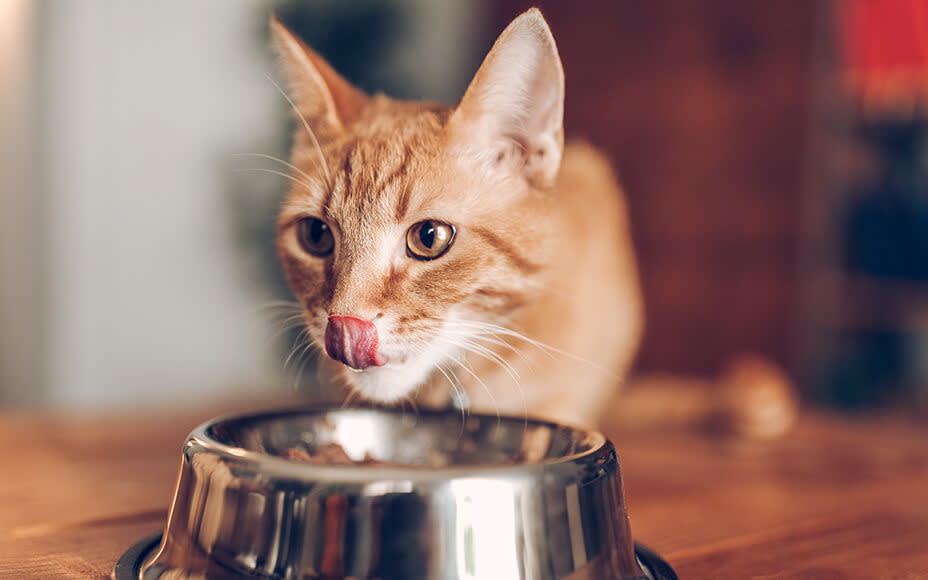
A healthy diet is essential – whether your cat is already ill or healthy: fluid intake and the composition of the food are important.
If the urinary stones are struvite stones, a special diet can help prevent them.Pets Deli VET Anti-Struvit wet food is a supportive option for treating urinary stones. The special formula is characterized by a reduced content of stone-forming substances - that is, less protein, magnesium & phosphorus. The special amino acid DL-methionine supports the very important acidification of the urine. The selected addition of fenugreek can stimulate urine excretion. Has your feline friend had kidney problems in the past?Pets Deli VET Liver and Kidney Fitcomes with reduced phosphorus and protein content, which is important for the affected organ.
Our wet food range stands out with various textures and supports in a delicious way to balance your cat's water intake. We always avoid grains and sugar as well as artificial colors and flavorings. Natural, tasty, and species-appropriate.