
The Analytical Components in Pet Food Explained Simply
If you take a look at the can or packaging of your furry friend's food, you will surely notice the table that provides information about the so-called analytical components in the food.
This globally standardized procedure is called Weender Feed Analysis and makes various feed types comparable in terms of their nutritional values. How high the individual values should be and what a percentage indicates depends on the type of food. We explain the 5 values very simply.
Crude Protein
This component includes not only pure protein but also all nitrogen-containing compounds in your pet's food, including substances that are not protein in nature, such as free amino acids, peptides, or alkaloids.
These compounds indicate something about the amount of protein contained, but not about the quality and digestibility. To determine whether these are animal or plant proteins, you can take a look at the listed composition.
Crude Ash
Ash in your pet's food? No need to worry. Crude ash includes the inorganic portion of the feed and contains, among other things, the major and trace elements that are so important for your animal.
Since pet food is heated during the analysis, organic components burn away. The inorganic ones remain - and these are vital for your pet. A higher crude ash content indicates a high amount of minerals in the food, which is especially true for mineral feeds (like our →Mineral Mix for Dogs).

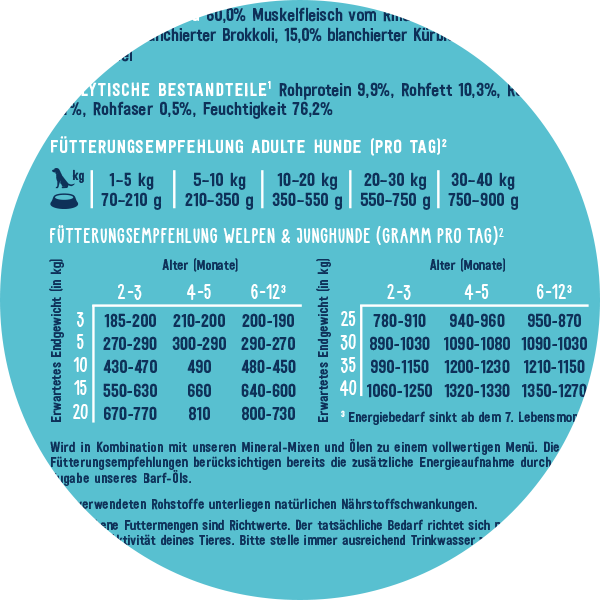
Example: BARF Fresh Menu for Dogs
Probier's doch mal hiermit!
Crude Fat
Crude fat includes not only pure fats (triglycerides) but also fatty acids. Your pet needs these for meeting energy requirements, for supplying essential omega-3 and -6 fatty acids, and for the absorption of fat-soluble vitamins in the intestine. The body can gain about twice as much energy from fat compared to carbohydrates or proteins.
The crude fat value is therefore particularly suitable for roughly estimating the caloric content of a food.
Crude Fiber
Crude fiber contains the insoluble organic components of a feed and is mainly made up of plant structural substances. These fiber substances, also known as roughage, are indigestible components of the food for the animal and are important for healthy intestinal function and the maintenance of the "good bacteria" in the gut that aid in digestion.
Fiber also supports the natural movement of the intestine, protects against constipation or diarrhea, and thus ensures good stool quality.
Conclusion
The analytical components in the food are an important key to optimally meeting your pet's nutritional needs. However, not all types of food are the same. Those who choose →Quality Dog Food benefit from a balanced composition and high-quality ingredients that contribute to the health and vitality of their dog.