
Why is calcium important for my dog?
Most calcium is found in the bones and is particularly important for bone stability and strong teeth. Additionally, calcium plays a central role in blood clotting and muscle contractions and also promotes the stability of cell membranes. So you can see that calcium must not be missing from your dog's diet.
What happens with a calcium deficiency?
The calcium level in the blood is regulated by hormones. When there is too little calcium in the blood, the parathyroid gland releases the hormone parathyroid hormone, which causes more calcium to be released from the bones. A long-term calcium deficiency leads to bone demineralization and hyperfunction of the parathyroid gland. In severe deficiencies, it can also lead to spontaneous bone fractures, lameness, muscle tremors, weakness, and cramps.

Can there be a calcium excess?
While your furry friend should not get too little calcium, too much calcium is also not good. It can lead to lameness, kidney problems, and calcification of the bones.
How much calcium does my dog need?
The recommended calcium requirement for an adult dog is 130 mg per kilogram of metabolic body weight. Different requirements apply for dogs with health issues, puppies, and pregnant or nursing females.
With our delicious and →healthy food, you can be sure that your dog is adequately supplied with all the important nutrients.
Our Wet Food Varieties - the True Gourmet Menus!
Calcium-rich feed
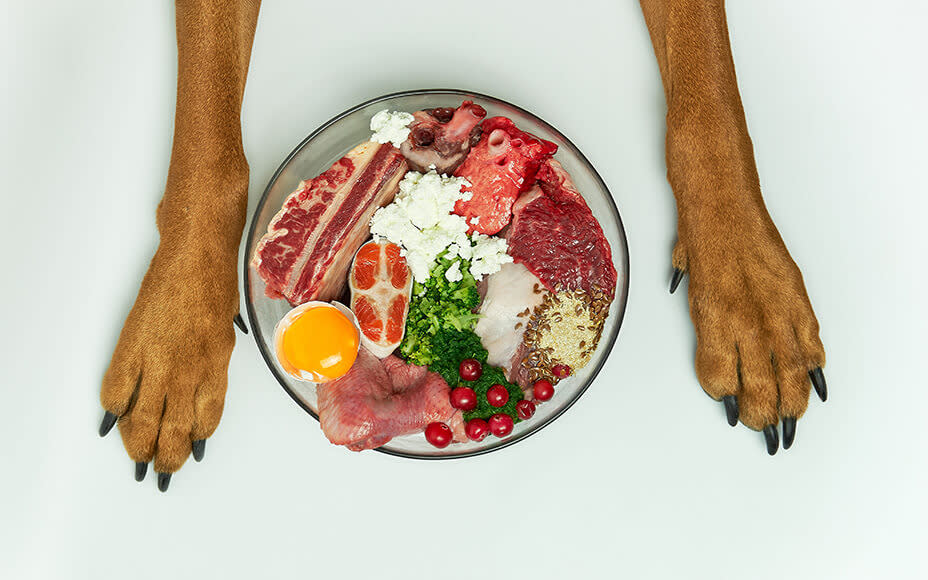
Calcium-rich foods are primarily bones. But also, for example, green tripe, dairy products, egg yolk, or amaranth contain a lot of calcium.
Wet and dry food are complete feeds. This means that your four-legged friend is adequately supplied with all nutrients and minerals.
BARF rations are usually supplemented with a mineral mix for sufficient mineral supply.
Our →BARF fresh menus become a complete menu by adding oil and the →mineral mix. Our new BARF complete menus make barfing even easier, as they already contain all the minerals, and your furry friend can enjoy the food immediately after thawing.
You'll love to try BARF!
Connection between calcium and phosphorus
When we talk about calcium, we must also talk about phosphorus. These two minerals are connected. Simply explained, the body withdraws phosphorus with increased calcium intake, and with increased phosphorus intake, calcium absorption in the body is inhibited. Therefore, the calcium-phosphorus ratio is important. This should be between 1:1 and 2:1 for adult dogs, ideally at 1.3:1.