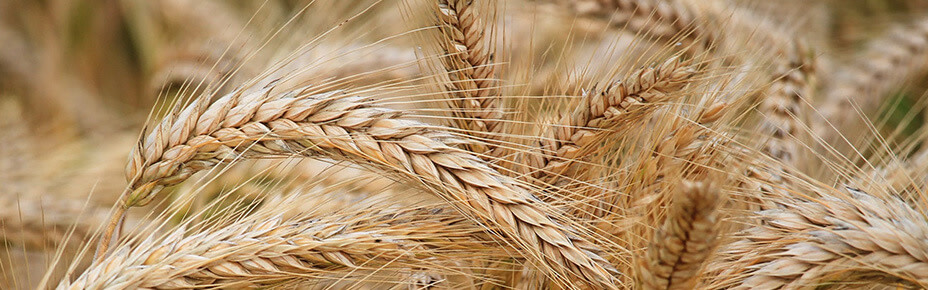
Grain in dog food – good or bad?
You take a look at your furry friend's food and notice that a significant portion of grain can be found in it? The controversies about grain in dog food have been going on for a long time, as have the debates about whether grain is actually not that harmful or just a cheap meat substitute that could really threaten your pet's health of your beloved companion.
First of all: Not only do countless dog owners argue about the benefits or harms of grain, veterinarians don't always agree either.
Fact check: Why is there grain in dog food?
Grain is a popular source of carbohydrates for us humans. Whether it's wheat rolls, spelt bread, or oat cookies – we consume carbohydrates in our daily lives and thus gain energy for the day from starchy grain products.
Grain serves exactly this purpose in conventional dog food as a carbohydrate-rich ingredient: in addition to the meat content, it provides energy. Besides carbohydrates, grain products also contain protein, although compared to animal protein, it is of significantly lower quality.
How to Feed Correctly!
Get our free feeding guide delivered straight to your email now
Saving costs in food production
However, grain has another decisive advantage, though not for your furry friend: it is inexpensive to produce. Manufacturers of conventional dog food therefore save on production costs by using a high proportion of grain in their food. According to the species-appropriate and healthy nutrition for dogs, dogs also rely on carbohydrate sources. These can even make up a share of up to 55%, but should always be of high quality, easily digestible, and above all, highly usable.
So, if you assume that a high-quality composition of dog food also comes with higher costs, it's easy to see why premium food comes at a corresponding price.
Grain and allergies in dogs
Our furry friends' digestive systems have changed over time. Due to their close relationship with humans and thus human food, the digestive enzymes of dogs have adapted to a starchy diet – making them very different from the digestive tract of wolves.
This enzyme adaptation in favor of starchy products is not equally pronounced in every dog. Differences can be seen between different breeds, but also between individuals within a breed. So dachshund lady Lilly may be better equipped than Labrador male Max when it comes to digesting starch.


Not every furry friend has trouble digesting grains in dog food. However, particularly sensitive dog breeds are at higher risk.
Now, it's not just us, but also our four-legged friends who can develop allergies to certain food ingredients. In most cases, proteins are the main triggers. A German study (Becker, 2009) found that food allergies are attributable to grain in 38% (including rice). That makes grain the number one most common allergy trigger in dog food.
Grain, sugar, and artificial flavors or colorants? You won't find that at Pets Deli. Our short, transparent ingredient lists show you at a glance what you're feeding your dog: fresh meat, crunchy fruits and vegetables, rich oils, and fresh herbs!
Our dog food: healthy, honest, delicious.
Is there an alternative to grain in dog food?
Our mission has one main goal: to create food for dogs that is suitable for every breed, every age, every size, and every coat color. To achieve this, we leave out the ingredient that causes the most allergies in dogs: grain.
To still ensure optimal carbohydrate supply, we use sweet potatoes, quinoa, amaranth, buckwheat (no, not a grain), and potatoes in our food. Occasionally, we also use rice and millet – these contain far fewer potentially allergenic substances compared to, for example, wheat, spelt, and oats. All these starch sources in our dog food, except for rice, are considered hypoallergenic – meaning they cause food allergies much less frequently than others.
This way, we always strive to produce food that all our furry friends can tolerate as well as possible – and by avoiding grain we're on the right track.