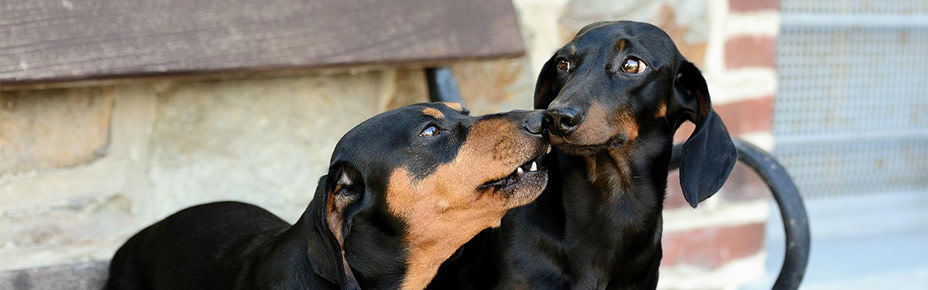
Why doesn't my older dog accept the new puppy?
Your furry friend is your best buddy and gets along well with all the other four-legged friends on your walks? You might be even more surprised when your dog acts up when →the new puppy arrives. That first dogs may not accept a puppy in the household can happen - even with friendly dogs. The reasons for this can vary widely. It could be that...
- ...the increased energy level and the lively nature of the puppy annoy your long-established dog.
- ...your dog is confused because routines have suddenly changed, nights are more restless, and walks are shorter.
- ...he is jealous because you are now giving your puppy much more attention and he is getting less than he is used to.
- ...the puppy does not respect your dog's personal space, but you are not helping him, and he is therefore handling it himself.
- ...the →puppy is quite cheeky and constantly challenges your first dog with rude behavior.
- ...your dog shows territorial behaviors and wants to defend food, toys, and sleeping spots.
A new puppy in the household can cause quite a stir, and some dogs need a little time to adjust. Make sure to inform yourself in advance about how to [→properly introduce dog and puppy](/magazin/hunde/welpenerziehung/so-fuehrst-du-deinen-welpen-richtig-mit-anderen-hunden-zusammen) to avoid overwhelming anyone and to ensure a relaxed start.
What can I do to help my older dog accept the puppy?
It is important that you find out the cause of why your older dog is reacting so "allergic" to the puppy. Only then can you actively work on the relationship between the two. Ideally, you should consult experienced dog trainers. They come to your home, observe your dogs, and can accurately assess where the issue lies and work with you to ensure a harmonious coexistence.

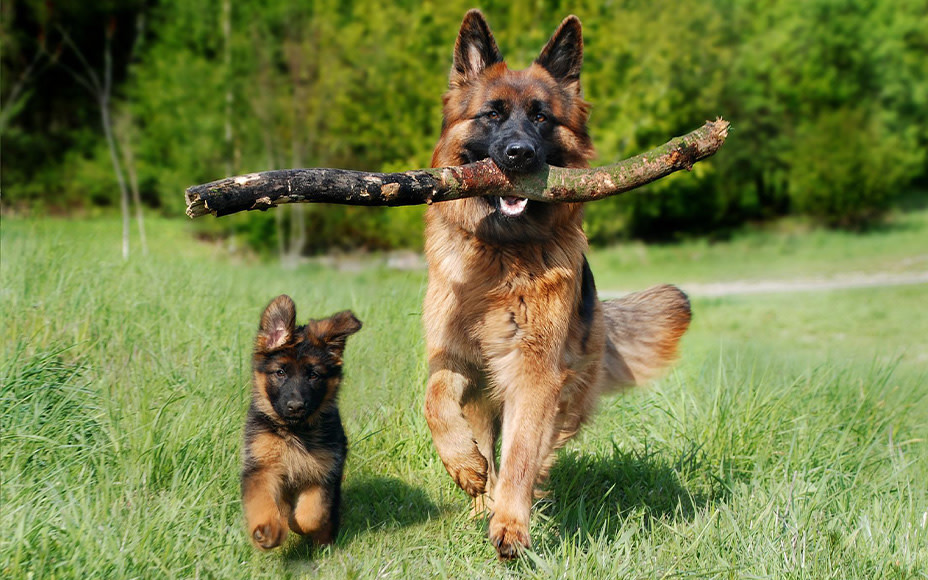
[TRANSLATION ERROR] Gemeinsam durch dick und dünn? Nicht immer gestaltet sich das Leben mit einem Zweithund so wie im Bilderbuch. Manche Hunde leben einfach nebeneinander her.
Observe your dogs closely - who does what?
Take a close look at what your older dog does when he meets the puppy: Does he bark, walk away, yawn, lick his lips, growl, or snap at him? In which situations does this happen? Especially aggressive behavior like snapping or growling is part of dog communication and serves as warning signals for your puppy that he is crossing a boundary.
Also observe your puppy: How does he behave towards your older dog? Does he accept "corrections" and treats your dog with respect, or does he happily help himself to the food bowl, toys, and more, and invade your first dog's space? Engaging with the →communication of puppies and dogs in general is extremely important!
Give both dogs equal attention
Even if the little fluffball is so cute and cuddly and certainly needs more attention than your already trained dog, you should try to divide your time evenly between both furry friends. Your puppy will certainly need the occasional →play session more, while perhaps your older dog enjoys extra petting.
Additionally, you should train that sometimes only one dog gets attention and the other has to wait. If your first dog has no food jealousy, you can practice this ideally by giving both dogs a treat alternately. If your dog is particularly greedy, you can start by giving both a treat at the same time and then switch to alternating. Our irresistible snacks for young and old are perfect for this!
Gesund und lecker verwöhnen - mit unseren Snacks
Pay attention to relaxation and calmness at home
Little puppies want to experience something all day long. Of course, just lying around in the basket is boring! They would rather see what the other furry friend in the house is up to and climb on them a bit or try to encourage them to play. Here you need to be careful, as older dogs usually do not enjoy playing the "babysitter" for your puppy - they shouldn't have to.
It is your responsibility to ensure that your →home is puppy-proof, also for the older dog! Your first dog needs a quiet retreat where he is not disturbed by the lively puppy. Furthermore, he is not there to tire out your dog. Support your dog and show him that you will keep the puppy away from him if he wants. This way, the little fluffball learns to calm down in the presence of other dogs and to respect personal spaces.
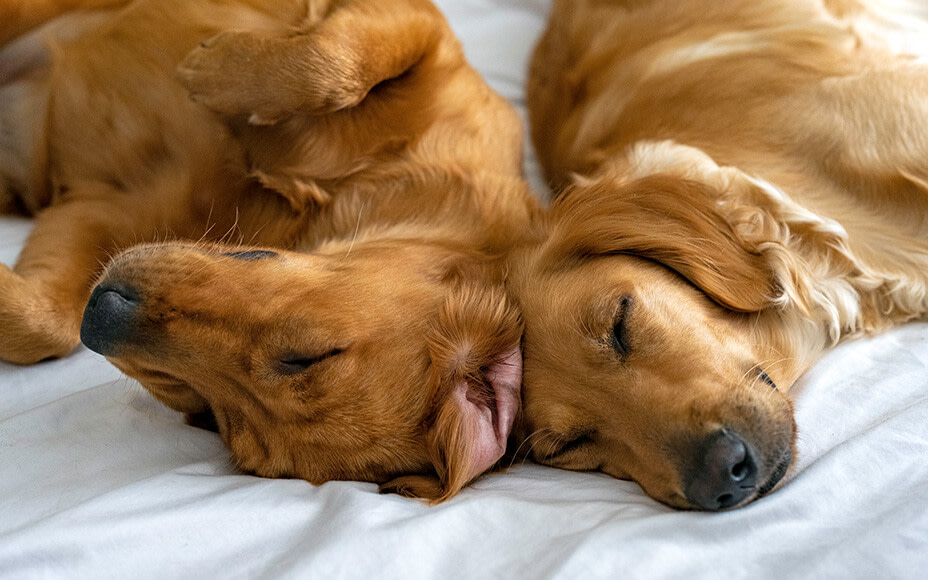
[TRANSLATION ERROR] Manche Hunde schlafen gern zusammen, andere bevorzugen ihren eigenen Schlafplatz. Beides ist völlig okay und muss vom Welpen respektiert werden.
Create shared experiences
Shared adventures bring you closer together - this also applies to your dogs! What does your first dog particularly enjoy? Going for a swim? Romping in the garden? Searching for food? Grab your dog and puppy and go for a walk together by the lake. There, your older dog can show the little one how great water is, and the focus is not so much on the two dogs. Sand, water, sticks - everything is exciting, and it’s much better discovered together.
Older dog reacts aggressively to puppy
You notice that your older dog is not warming up to the puppy at all. He barks and growls at him and may even snap at him? Instead of hoping for the supposed →puppy protection and trying something, you should seek professional support! Aggressive behavior is initially shocking, but you should never scold, hit, or otherwise unfairly punish your first dog for it. This can only make things worse. Perhaps your dog is simply →extremely stressed and is reacting this way.
Instead, make sure that your first dog does not attack the puppy. Separate the two animals from each other for now. You can, for example, set up a puppy gate in the living room. This way, both dogs can see and smell each other, but neither can hurt the other. If your dog tends to bite, it’s best to put a muzzle on him and do not leave the dogs alone in a room. Here, the motto is clearly: Better safe than sorry!
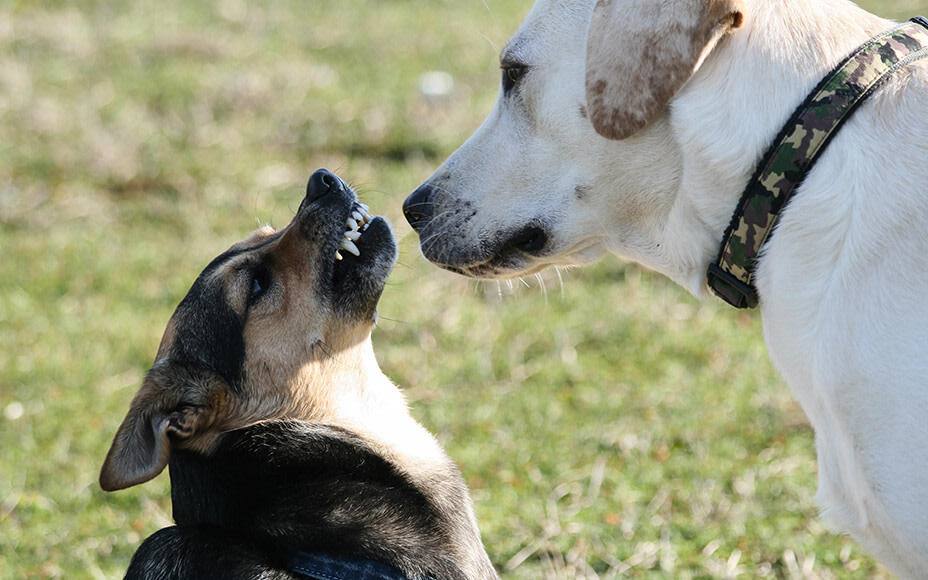
[TRANSLATION ERROR] Knurren, Bellen, Abschnappen - die Kommunikation der Hunde kann manchmal etwas rau sein, gehört aber zum Zusammenleben von Vierbeinern dazu.
Don't worry, everything will be fine!
Even if it may not seem like it at first, dogs can become thick friends, even if they had a few initial difficulties. If your dog initially reacts aggressively or dismissively towards your puppy, it does not mean that you have to give him up immediately. Dog trainers know what they are doing and can help you lead a harmonious coexistence with your four-legged friends.
However, keep in mind that not every dog is made for living with a second dog. Don’t be disappointed if your dream of a rosy dog friendship does not come true. Some dogs simply live side by side, which is also okay and does not mean they are unhappy.