Tips and Exercises When Your Dog Pulls on the Leash
Out the door, a sprint forward and off you go with a long arm through the neighborhood, while your dog happily pulls you around the block at what feels like 20 km/h? Dogs that pull on the leash cause many owners headaches. Not only the constant tension in the arms and the stressful walk, but also the choking, panting, and straining of the four-legged friends is not a pleasant sight for many dog parents. What you can do against pulling on the leash, we reveal to you with simple tips and exercises!
Why Does My Dog Pull on the Leash?
Pulling on the leash can have various causes. Primarily, the leash restricts your dog in the behavior and interests that he actually has and wants to express during walks. This is not unusual and a natural instinct of our four-legged friends. Dogs are essentially born curious and explore everything in detail - and that clearly goes beyond the leash length of one to three meters. From this point on, everything your dog learns is that he can reach the spot he wants to sniff by pulling.
The cause of the constant pulling usually lies in conditioning: Your dog wants to get to point X, pulls hard once, and sniffing at the desired spot is rewarding for your dog. The result: He will pull whenever he wants to run somewhere, because it has worked in the past. Especially puppies in the socialization phase remember this quickly, which is why you should start a →consistent leash training as part of →puppy training from day one.

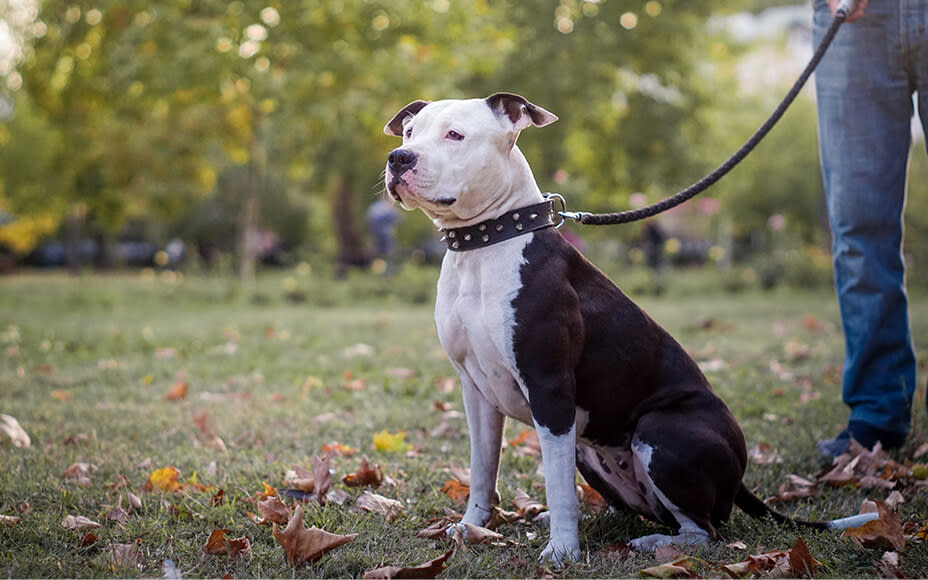
[TRANSLATION ERROR] Hunde lernen schnell, dass sie mit dem Ziehen an der Leine oft zu ihrem Ziel kommen. Hier ist jede Menge Konsequenz und das Know-how beim Training gefragt.
How Can I Train My Dog Not to Pull on the Leash?
What dogs get used to, they can also unlearn. Or? Almost, because fundamentally our four-legged friends are just doing the common "dog stuff" - and the two-legged ones are somewhat responsible for the habituation and unlearning of behaviors. Of course, this does not apply to four-legged friends from animal welfare or senior dogs from shelters. Here, the formative phase is long gone and you can only build on what the dogs have already acquired. This does not mean that →rescue dogs cannot learn anything anymore; on the contrary. However, some behaviors are already ingrained and challenging for further training.
So when you start training against pulling on the leash, the same rules apply to all four-legged friends of all ages: You need the necessary patience, consistency, and knowledge that you can apply in different situations. This means: If you allow your four-legged friend to pull, he will remember that and continue to do so. It is important that you do not tolerate this.
Are you looking for a suitable, sturdy leash and other high-quality accessories? Stop by and equip yourself well for your training!
Leine, Hundebett, Spielzeug & Co.: Hochwertiges Zubehör für deinen Hund


The A&O: Strong Tugging and Pulling is Forbidden
You read that right: The often seen, intense tug on the leash backward is not beneficial, yet it is often used by owners in training to stop the pulling on the leash. While your dog is briefly close to you, he cannot recognize any connection between this type of correction and his behavior. After all, it continues in the same direction from which your dog was pulled back.
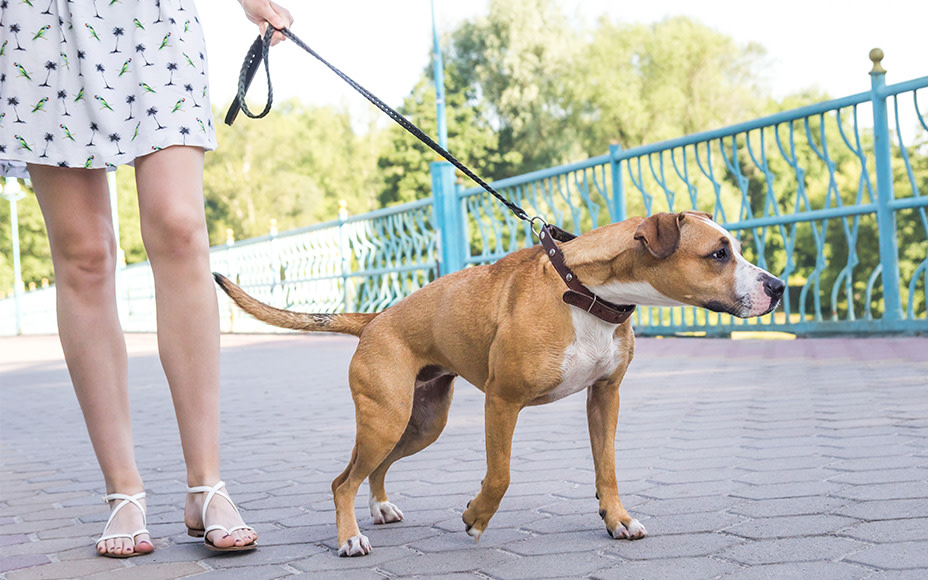
[TRANSLATION ERROR] Dein Hund zieht, du ziehst zurück. Diese Art der Korrektur führt langfristig nicht zum gewünschten Erfolg, weil dein Hund gar nicht weiß, was der Ruck bedeuten soll.
What Training is Suitable?
Stop: Stop and Go When Your Dog Pulls
A simple method is that you simply stand still when your dog pulls. From a training perspective, this means: Your dog does not reach his goal when he pulls on the leash. If you stand silently every time your dog pulls, your dog must also stop. Your four-legged friend will be puzzled and when he realizes that it doesn’t go any further, he will focus on you.
The tension in the leash should then decrease. If you notice that the tension is lessening and your dog takes one or more steps back, reward the desired behavior immediately with a tasty treat or a "Great." It sounds simple, but it is hard work when you consider that you may have to stop up to 50 times depending on the length of the walk. Because don’t forget: Pulling must not be tolerated so that your dog unlearns the behavior. Every time the leash hangs loose and is not tense, reward your dog.
Keyword reward: For training, it’s best to use healthy treats that contain neither sugar nor grains. Artificial additives like colorings and flavorings have no place in a healthy snack.
Gesund und lecker verwöhnen - mit unseren Snacks
Turning Around: Changing Direction When Pulling on the Leash
Effective and easy to implement is also the change of direction when your dog pulls. This means specifically that every time the leash is under tension, you silently turn around and change direction. This way, you take the lead and pull your dog behind you. Caution: Do not jerk your dog behind you, but continue walking normally. If the leash hangs loose, reward your dog. If he immediately pulls back to the front position, turn around again 180° and change direction. Consistency is also required here, because with intense pulling behavior, you can easily remain in the same spot for many minutes.
In both stopping and turning around, your dog learns that pulling on the leash does not yield the desired success. If he is rewarded for the loose leash, he learns that this is the only way to reach his goal. If you notice that your dog simply needs more help, a →visit to a dog school is advisable. Inform yourself well in advance about training concepts and make an informed decision about which school is suitable for you.
Avoid Flexi-Leashes and Opt for Harnesses Instead of Collars
Especially the wide space that flexi-leashes give your dog is not beneficial for leash pullers. While it is relaxing when your four-legged friend initially runs 5 meters until the stopper activates, it will not stop the pulling. Such leashes show your four-legged friend nothing else than that he gains more freedom of movement by pulling.
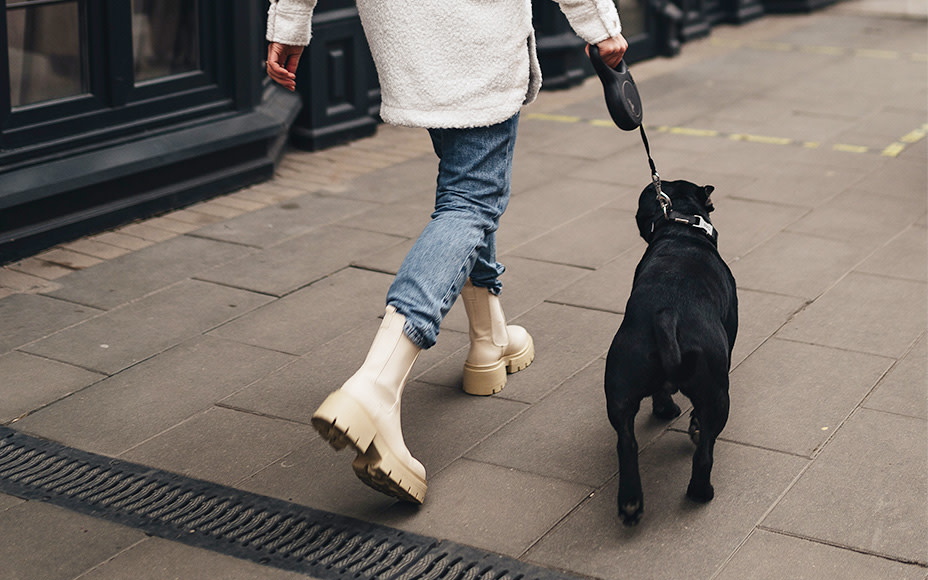
[TRANSLATION ERROR] Leinen mit Rollband suggerieren deinem Hund, dass er bestimmen kann, wie weit er nach vorne läuft. Für Hunde, die zum Ziehen neigen, sind solche Leinen nicht förderlich.
If your four-legged friend is a persistent leash puller, the behavior is likely accompanied by heavy panting and gasping. Pulling on the leash is not only annoying for you but also harmful to your dog's neck, throat, and muscles in the long run. When all the weight is on the pressure points of a collar, the cervical vertebrae will be affected sooner or later. Use a harness for training, as it distributes the weight better. Your dog can wear both and you can switch depending on the training status or double secure him with a collar and harness. Be cautious with "halters" for your dog's head, as they can also cause neck injuries if the correct usage is not explained by experts.
Violence is Not to be Tolerated
In any case, you should completely avoid prong and choke collars. Correction through pain is not only harmful to the bond between dog and human but also simply animal cruelty that no dog should experience. The same applies to hitting, kicking, etc.: Anyone who resorts to such behavior as a last resort is not suitable as a dog owner. A →training with patience and without stress is species-appropriate and will also lead to long-term success in the long run.