Help, my dog can't stay alone!
When a dog cannot relax and stay alone, it not only restricts you significantly in everyday life, but it is also pure stress for the animal and certainly for you as well. It is important that you recognize the stress signals and do not simply ignore the problem and hope that your dog will eventually get used to being alone.
Stress signs when leaving dogs alone
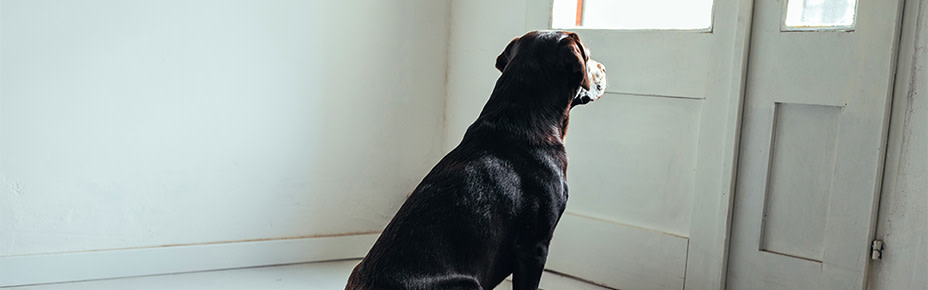
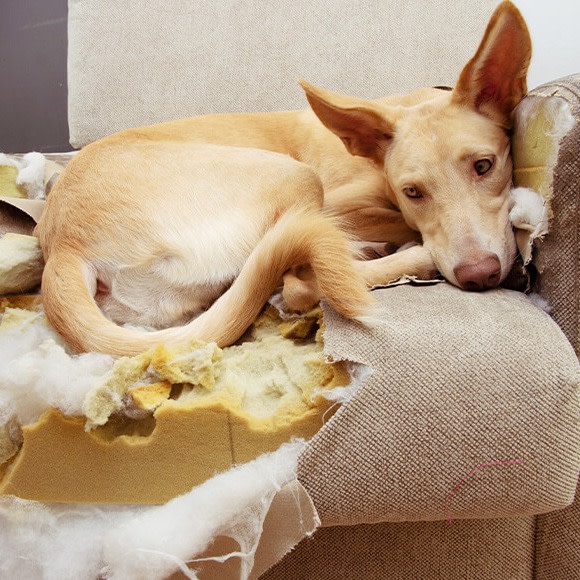
As soon as you grab your house key, does your dog become restless and won't leave your side? When left home alone, he barks or whines, paces, is restless or destroys things - instead of relaxing in his bed or on the sofa. It is not always visible that your dog is stressed when left alone. However, many behaviors are quite clearly recognizable:
- loud → barking, whining, yipping
- restless pacing, jumping at the door, looking out the window
- chewing/destroying objects
- peeing in the → apartment, making a mess
- heavy panting and drooling
- excessive licking and gnawing at → paws or scratching
- exhausted, tired behavior as soon as you are back home
Gestresster Hund?
Jetzt mehr zu Ursachen & Tipps gegen Stress bei Hunden lesen
Dogs are pack animals, which is why many of them find it difficult to stay alone. If your four-legged friend shows clear stress signals, he is going through a tough time during your absence, which can also affect his health. The good news is: Being alone can be trained. Even if your four-legged friend has already outgrown his puppy stage and is a bit older!

[TRANSLATION ERROR] Viele Hunde wären gern rund um die Uhr mit uns zusammen. Leider ist das nicht immer möglich, weswegen das Alleinlassen sehr wichtig ist.
Why can't my dog stay alone?
This question is certainly on the minds of many owners when their dog, despite all efforts, simply cannot relax and stay alone. To help your dog sustainably and practice staying relaxed alone, it is important to first find out the cause of the problem. It is very helpful if experts come to your home to get a picture of the situation. Because, as with many training issues, leaving a dog alone is a very multifaceted topic, which can be addressed with the most diverse training approaches.
Dog trainers or behavior therapists come to your home and take a closer look at your dog's behavior. They can explain what the causes of the problem are and discuss possible training approaches that are specifically suitable for you and your dog. If you are not making progress in training, have questions, or experience setbacks, they will support you with advice and assistance until you reach your goal!
With a bag of tasty treats, training becomes much easier. Even when left alone, a long-lasting chew treat can help sweeten the time without you for your dog.
Tolle Belohnungen für fleißige Hunde - unsere Snacks
Possible causes
The reasons for difficulties in staying alone can be very different. Below we present 3 common reasons, but keep in mind that there are many other causes as well. It is also possible that there are multiple reasons at once.
Separation anxiety
As the name suggests, separation anxiety refers to the fear of losing attachment figures. This manifests itself through a physical or spatial separation, usually when the dog has to stay alone. The origin of this fear can lie in being separated from the mother too early, as is often the case with →dogs from shelters, or when being left alone was not gradually built up, but the puppy was left alone for too long too quickly.
Loss of control
Separation anxiety is often confused with loss of control. Both states manifest with similar symptoms. In a loss of control, the dog falls into a kind of panic and overwhelm as soon as his people are no longer there and he cannot control them anymore. Often, owners are not even aware that they are being controlled by their dog every step of the way and that the dog also has difficulties in everyday life with giving up control.
Insufficient exercise
A walk in the park once in the morning and once in the evening and a bit of ball throwing is enough for your four-legged friend - or not? Some dogs develop difficulties in staying alone because they are not sufficiently exercised according to their breed. A French Bulldog may be happy and satisfied with two rounds in the park, while a German Shepherd needs a bit more activity - also for the mind!
Especially working breeds are often kept as everyday dogs nowadays. However, it is often forgotten that these breeds once had a task and therefore come with more energy and cleverness. If they are under-challenged, they tend to develop bad habits such as barking, scratching, destroying things, or even developing →aggressive behavior like leash pulling.
[TRANSLATION ERROR] Ein Hund, der entspannt in seinem Körbchen liegt und schläft - so stellt man sich das Alleinlassen idealerweise vor. Das Gute: Mit dem richtigen Ansatz kannst du es trainieren!
Possible solutions for your dog's relaxed alone time
As mentioned earlier, the training approaches for practicing staying alone are very diverse and should definitely be tailored to the cause of the problem, meaning to your dog and to you. Therefore, we recommend working together with experienced trainers on this topic.
Based on the causes mentioned above, we present 3 possible training approaches. Since dog training and education are very individual and practicing staying alone should be built up step by step, we unfortunately cannot provide a guide.
For separation anxiety
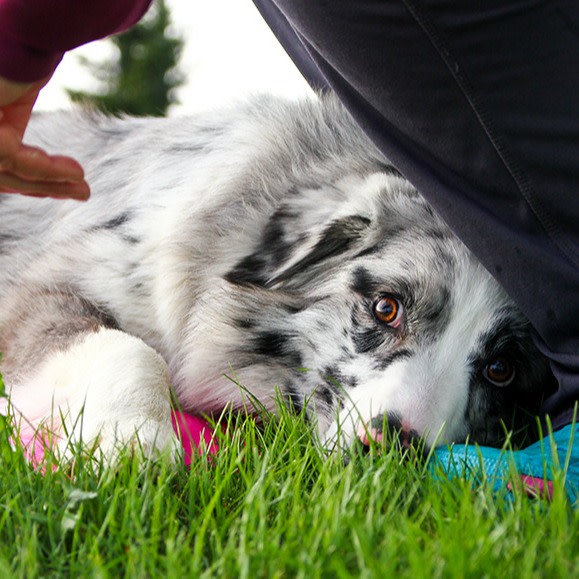
If your dog suffers from separation anxiety, it is important to train very gently, disciplined, and patiently. Usually, you start with a spatial separation without actually leaving the apartment. Key triggers such as picking up the house key, putting on a jacket and shoes, or applying favorite perfume should be incorporated more often into everyday life. A designated resting place and a routine for staying alone can also give your four-legged friend security and help him relax during your absence.
Ängstlicher Hund?
So erkennst du Angst und hilfst deinem Hund
For loss of control
The topic of control and giving up control must definitely be considered holistically. Here, it is primarily about clarifying some principles in the human-dog relationship before getting into the actual training of staying alone. Dogs that control their owners tend to constantly observe and follow them and are also more prone to behavioral problems while walking.
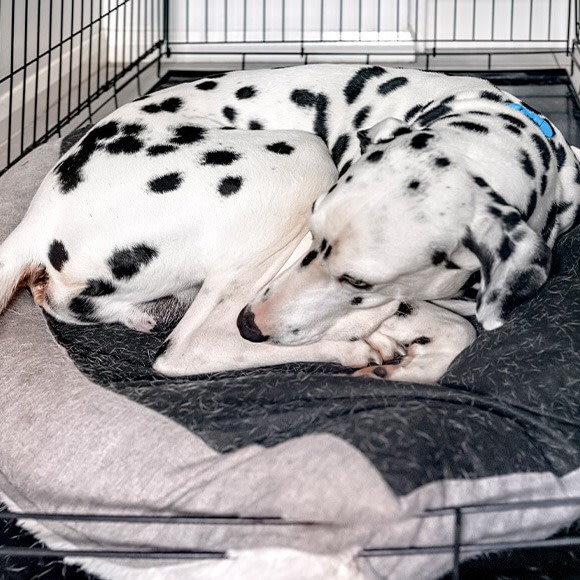
One option is to work on spatial boundaries here, signaling to the dog, "You have a break now, I'll handle this." A →designated resting place like a dog crate is helpful in this case. When walking, care should be taken that the dog →walks well on a leash and does not make too many decisions on his own.
Hilfreicher Tipp:
Deswegen kann eine Hundebox beim entspannten Alleinlassen helfen.
For insufficient exercise
If your dog is not properly exercised, you should take a closer look at the breed and consider what your four-legged friend enjoys. It is not about biking with your dog for 3 hours until he collapses from exhaustion and therefore doesn't make a sound while you are away. Mental stimulation is the key word here, along with breed-appropriate exercise.
Depending on preferences and breed, there are numerous different options to exercise your dog besides a simple walk. Educate yourself about agility, mantrailing, obedience, canicross, bikejoring, dummy work, longlining, etc., try out some of these activities, and start a shared hobby with your dog. You don't have to join a club for every sport; often, "amateur" training in the garden or courtyard is enough to exercise your dog. Of course, you can also work together with trainers here.
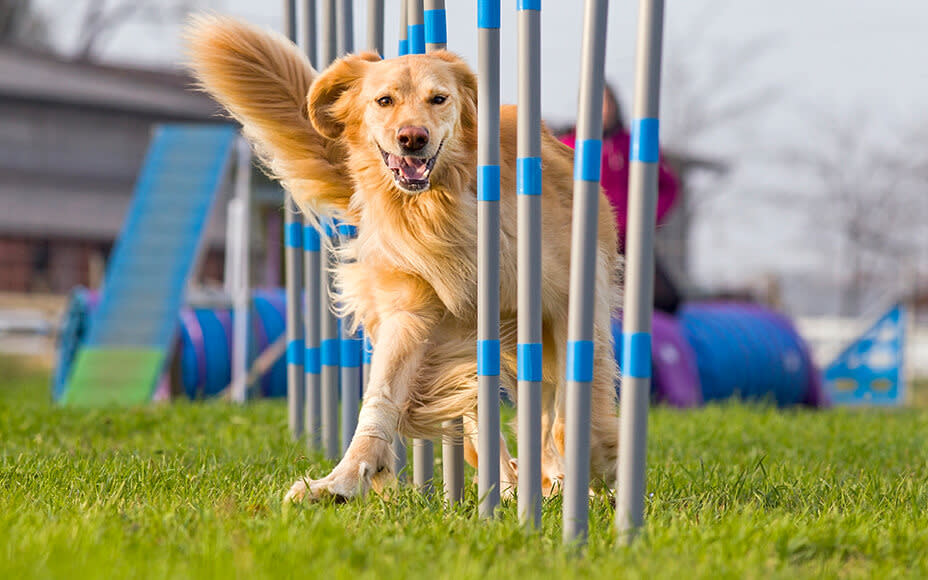
[TRANSLATION ERROR] Überlege einmal, ob dein Hund seiner Rasse entsprechend ausgelastet ist und was euch gemeinsam Spaß machen könnte.
When can I leave a puppy alone?
Practice makes perfect - this also applies to your puppy. Therefore, you can start leaving him alone →right when he moves in. This does not mean, of course, that he can stay alone for 1 hour while you go shopping. But even small spatial separations help him to be relaxed when you later leave the apartment.
Depending on how your puppy is, a puppy gate can be helpful. This way, you can physically separate your dog without having to close doors and at the same time ensure that he does not follow you. Start very gradually and let the dog be alone for a short time while you make tea or start the washing machine in the living room. Gradually, you can increase the duration and close the door further.
For puppy training →visiting a dog school is also recommended if you notice difficulties or have questions.