
Barking is normal, but when is it too much?
First of all: Barking in dogs is normal. It is part of communication like growling, wagging their tails, and licking your hands. However, there are dogs that →are very relaxed and naturally bark little. And then there are those that can be heard from afar and are real yappers. The causes for this can vary. Some dogs are almost born to bark faster and are more sensitive to stimuli. Dog breeds with a strong guarding instinct, for example, bark at noises because it is in their genes.
However, it is important to distinguish: Are the dogs barking and can the owners easily interrupt or calm them down, or do they get uncontrollably worked up? Does your dog bark at other dogs, people, bicycles, children, etc., or does he "just give a quick notice" when he sees or hears something strange? It is always important to look at why your dog barks and whether you can "control" the barking. If your dog cannot be calmed down by you or doesn't understand that he should stop, then it is too much. The same applies if your dog gets increasingly worked up and ultimately becomes overexcited or even →aggressive.

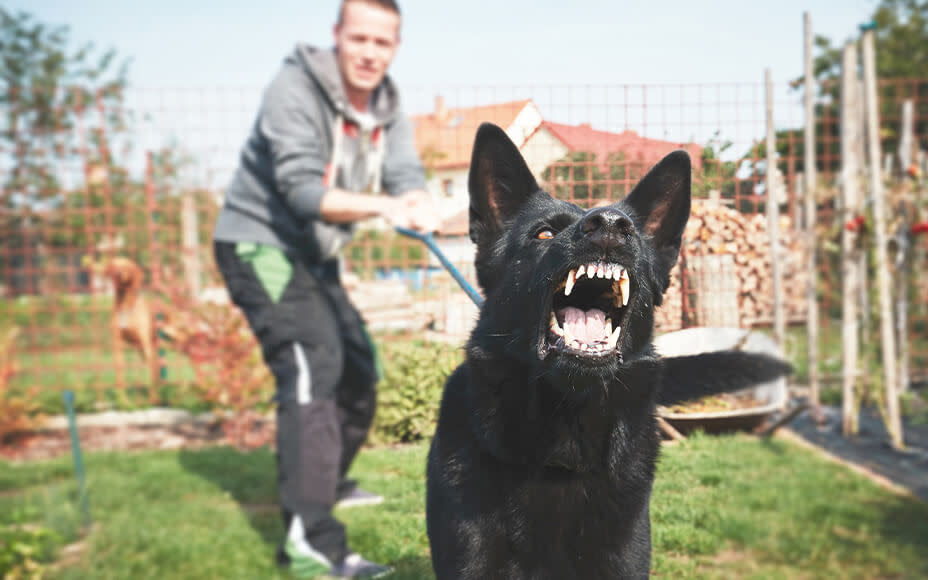
[TRANSLATION ERROR] Hunde die bellen, beißen nicht? Das kommt ganz auf die Ursache für das Bellen an!
The cause: Why do dogs bark?
To teach your dog to stop barking, the first step is to find out why he barks so much. The reasons for barking can be quite varied, and the training approach should always be tailored to the cause.
Possible causes for frequent barking in dogs are:
- →Stress, insecurity, and/or →fear, e.g., barking during dog encounters, at other people, bicycles, noises, visitors
- Frustration, e.g., barking when seeing other dogs, waiting too long, throwing toys
- Boredom, e.g., barking while lying in the basket, not paying attention to the dog, talking on the phone
- Joy, e.g., barking while playing, being petted, greeting visitors, coming home
- "Giving notice," e.g., barking at the postman, neighbors, noises, doorbells, knocking
- Illness, e.g., barking in stressful situations, during dog contact, being touched
As mentioned earlier, barking is also simply in the blood of some dogs. Some bark because they want to alert you to a stranger in your territory. Others use barking to alert to wildlife, which is often the case with hunting breeds. It is important not to try to suppress the barking in these cases or with these dogs, as this would go against the natural instincts of these breeds. In such cases, it is important to learn to guide the dogs better and to "control" the barking.

[TRANSLATION ERROR] Vor allem die Grenzen kleinerer Hunde werden häufig nicht respektiert. Knurren und Bellen wird meist als niedliches Verhalten abgetan, können aber auch mit einem schmerzhaften Biss enden.
The appropriate training approach
What you see is often not the cause of your dog's barking. This means: What you might see is that your dog always barks at other dogs while walking. However, the cause for the increased barking is not the other dog itself, but perhaps that your dog is insecure in dealing with other four-legged friends and barks to keep them at a distance. Perhaps he has had bad experiences with other dogs in the past and has learned that he can keep others at bay and drive them away by barking. Consequently, you should work on your dog becoming more confident in dealing with other dogs and gaining more self-confidence. He can do this, for example, by ensuring positive experiences with other dogs and leading him confidently and →safely past other dogs.
You will notice that the topic is quite profound and requires some dog knowledge to safely determine why your dog barks so much and what an appropriate approach would be. It is best to contact a dog trainer and have the situation assessed. By being "live on the scene," professionals can tell you exactly why your dog barks so much and how you can train him to stop.
How can I teach my dog to stop barking?
Once you have figured out the cause of your dog's frequent barking, you can start training. Below we provide you with possible approaches to help your dog stop barking. However, we recommend that you seek advice from dog trainers, as the causes can be very individual and training approaches can vary greatly.
Mistakes in dog training can happen, but they can also worsen behaviors and are best avoided by knowing exactly how to work with your dog.
In case of insecurity and/or fear
If your dog barks out of fear and/or insecurity, you should work on self-confidence and learn how to safely guide your dog through difficult situations for him. Gradually reducing the "fear triggers," e.g., large men by associating them with positive emotions, such as "man gives me treats," can also help.
The association with something positive can be very effective in dog training. Many dogs are quite food-driven and therefore look forward to a tasty reward - even if it comes from a scary person they would like to bark at.
Leckere Belohnungen für tapfere Hunde
In case of frustration
Dogs that bark a lot out of frustration, for example, because you have put away their favorite toy or are chatting too long with your friend at the street corner while your dog wants to move on, need to learn to tolerate frustration. You can practice this by repeatedly putting yourself and your dog in frustrating situations, in a way that is appropriate for him. Calm, relaxed behavior can be rewarded when it doesn't excite your dog.
In case of boredom
Dogs that bark because they are supposed to lie in their place now and no one is interested in them may not have learned to just tolerate boredom. For this reason, quiet training is one of the first things you should practice when your →four-legged friend moves in with you. Send your dog to his place several times a day and ignore him for a while. Also, looking at, touching, or talking to him is then prohibited!

[TRANSLATION ERROR] Feste Ruheplätze sind für deinen Hund sehr wichtig. Auch das Nicht-Dransein müssen viele Hunde erst lernen, sonst bellen sie, um Aufmerksamkeit zu bekommen.
In case of joy
If your dog barks out of joy, that is not necessarily a bad thing. However, it is important to distinguish whether your dog is at an acceptable level of excitement or whether he is getting overly excited and the joy turns into overexcitement. In that case, you should calmly take your dog aside and wait until he has calmed down. Only then does he get your attention** and/or his object of desire, such as his toy. This way, he learns that he achieves his goal with calm behavior.
When "giving notice"
If your dog comments on the postman or the doorbell with loud barking, that is of course not nice. "Giving notice" is important for many dogs and should not be completely suppressed. Instead, you can teach your dog that, when the doorbell rings, he should go to his place and wait there until you come to get him and he can greet the visitor. If your dog also comments on everything he hears, he might feel responsible for the "safety" of your family. Here you should work on taking this task away from him and making it clear to him that he can relax at home and you have everything under control.
In case of illness
Barking due to illness or injury usually occurs quite suddenly and is accompanied by other behavioral changes. If your dog, for example, no longer allows you or others to touch him or seems nervous, anxious, or restless, you should have this checked by a veterinarian.
Should I punish my dog for barking? Anti-bark collars, water bottles, and more.
When the dog barks again as if stung by a tarantula, a serious "Stop it, cut that out" or other scolding is usually our first impulse. However, it is important not to simply punish your dog for barking. Anti-bark collars, water spray bottles, throwing keys, yelling at the dog, or pinching are methods you should avoid, as they go against proper animal husbandry. In most cases, you only combat the symptoms and not the cause of the barking - and in the worst case, you destroy the trust between you and your dog. Spraying with water may stop the barking, and your dog might even learn that if he barks, he gets sprayed and will refrain from barking out of fear of the spray bottle in the future. Keep in mind that measures based on fear are not appropriate and should be avoided in any case.
If your dog has barked out of insecurity, he cannot learn that everything is okay and that he can relax. The cause is not being addressed here. When training through punishment, it can also happen that you have a big success at first, which, however, does not last sustainably. Sometimes behaviors worsen even more, or new problems arise, such as your dog developing a fear of water.
If you are unsure, you should always enlist a trainer whose training approaches you feel comfortable with and where both you and your dog feel well taken care of. Some trainers also offer →online support.