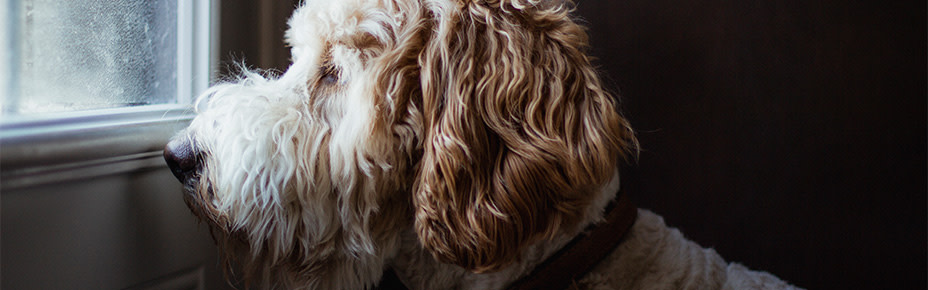
What is separation anxiety in dogs?
As the name suggests, separation anxiety refers to the fear of being separated from caregivers. This means physical separation, usually when the dog has to stay alone.
Causes: What leads to separation anxiety in dogs?
The reasons for separation anxiety in dogs are quite varied. Three possible causes could be:
Your dog naturally struggles with being alone
Some dogs have "no problem" being alone by nature. Others, however, show from the moment they arrive, usually starting from puppyhood, that they have difficulty with the physical separation from their caregivers. Smaller "separations," such as the dog staying briefly in the living room while you fetch something from the kitchen, are often not possible.
Typically, these dogs already show in everyday situations that they have difficulty with the physical separation from their caregivers. Many owners do not notice these small signs and only realize the seriousness of the issue when it comes to actually leaving the dog alone at home.
Your dog has never learned to be apart from you
Another possible cause is that your dog simply never learned that it sometimes has to be alone. When the puppy moves in with us, we prefer to be with it around the clock. This is cute and endearing, but it can later lead to some difficulties with leaving them alone—especially if your dog already shows difficulties with physical separation within the home.
Therefore, practicing being alone as early as possible is essential. If the whole situation proves to be more challenging than expected, contact experienced trainers in time and work on it together.

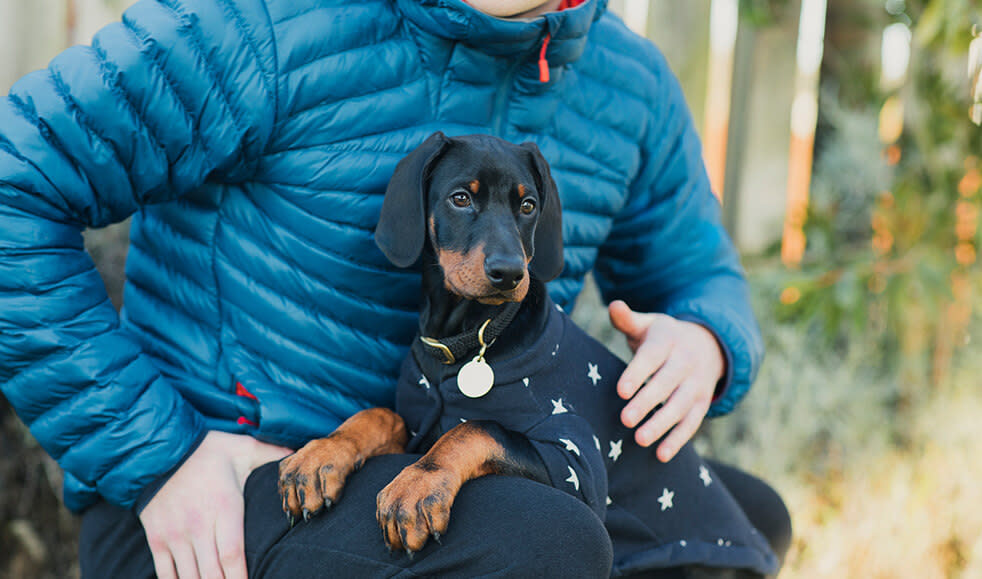
[TRANSLATION ERROR] Ein Welpe, der dich überall hin begleitet, ist toll. Doch auch das Alleinlassen solltest du frühzeitig üben, damit es später nicht zum Problem wird.
Your dog has had negative formative experiences
Especially rescue dogs often have a history and are shaped by their previous owners. Dogs from shelters have had the most diverse experiences. Each rescue dog comes with its own baggage; some have significant fears of loss or trust issues and, once accustomed to their new caregiver, find it hard to be alone. In this case, it is also important to consult experienced professionals and delve deeper into the matter.
Signs of separation anxiety in dogs
In general, separation anxiety in dogs is quite evident. However, note that there can also be other causes for the mentioned behaviors and that the issue of leaving them alone might be different. For example, loss of control can manifest through very similar behavioral abnormalities. Therefore, it is even more important to view the problem in context and work on it together with experienced trainers.
The following signs may indicate separation anxiety.
- Loud barking, whining, yipping
- Jumping at the door, scratching
- Urinating or defecating in the house
- Destroying objects
- Heavy panting and drooling
- Rushing around the house, restlessness
- Excessive licking and nibbling on paws

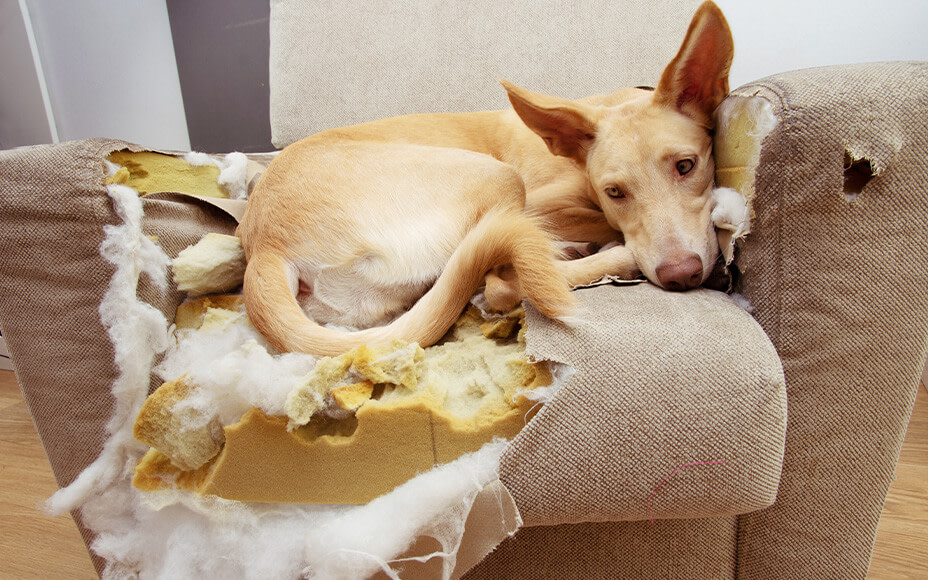
[TRANSLATION ERROR] Zerstörte Möbel, zerkratze Wände und ein völlig gestresster Hund? Wenn dein Liebling beim Alleinlassen durchdreht, steckt vielleicht eine Trennungsangst dahinter.
Assistance: Helping your dog out of anxiety
With such a profound and complex issue as separation anxiety, usually only a step-by-step, patient, and tailored training approach for the dog-human team helps. Separation anxiety is related to trust and security and is not something that can be fixed with a toy or chew treat.
It is important to understand that your four-legged friend is not barking out of malice, breaking things, or urinating on the carpet. On the contrary: A dog with separation anxiety is extremely stressed when left alone, frustrated, and scared. The goal of the training should be to reduce the stress associated with being alone and for the dog to learn to be relaxed without you.
Important: Before you start training, have your dog checked by veterinarians. Illnesses, pain, or hormonal imbalances can also cause stress in your dog.
Whether it's after a successful vet visit or when your dog has managed to stay alone again—the appropriate reward should not be missing. Our delicious treats have everything a dog's heart desires.
Leckere Belohnungen für tapfere Hunde
Various training approaches for separation anxiety
Since every dog-human team is different and, as mentioned above, the causes of separation anxiety can vary widely, you need to find a training approach that works well for you. Ideally, discuss this with several trainers and get an idea of the training methods they use.
Possible training approaches could include:
Gradual acclimatization to being alone
In most cases, desensitization is recommended as a therapeutic method for separation anxiety. This involves repeatedly exposing the dog to the anxiety-inducing situation in very small doses. The exercise is always concluded positively, meaning before your dog shows any signs of anxiety. For a dog with separation anxiety, this could mean that you leave the room for just a few seconds and then come back.
It is clear that this method requires diligence. Often, owners must leave the room several times a day for a few seconds to minutes, come back, leave again, come back... This exercise is repeated until the dog remains completely relaxed. Only then is the duration of being left alone gradually extended by a few seconds.
[TRANSLATION ERROR] Minute für Minute zum entspannten Alleinbleiben - das Alleinlassen-Training kann definitiv zur Fleißarbeit werden!
Reducing key triggers
At the same time, so-called key triggers should also be desensitized. Key triggers are cues that signal to your dog that you are about to leave the house and that it must be alone. These include the jingle of the house keys, putting on shoes, packing a bag, opening the front door, and so on. All these actions cause stress in your dog because it knows that every time you jingle the keys, it will soon be left alone.
Therefore, it is also important here to pick up the keys more often and place them somewhere else, pack and unpack your handbag, put on your jacket, and go to the kitchen—all of this helps your dog to no longer associate these cues with being alone (= stress).
Establishing separation signals
Some dogs may also benefit from a signal to better understand that there are times when they have "no access" to you and no one is taking care of them. Such signals could be a bandana or a blanket with a specific scent, an object like a lamp that only turns on when the dog has "time out," the radio being turned on, or a simple word like "quiet."** A combination of an object and a word is also possible.
Creating a designated resting place
Some dogs also settle better when they do not have access to the entire house, but are given a designated resting place. A fixed resting spot could be a specific room like the bedroom, living room, or hallway. However, some dogs may still find this size overwhelming, and they may need something smaller, like a dog crate or a cave-like bed. Especially insecure and anxious dogs benefit from spatial boundaries and a fixed retreat.