Sit, Stay, Out! - Tips and Tricks for Puppy Training
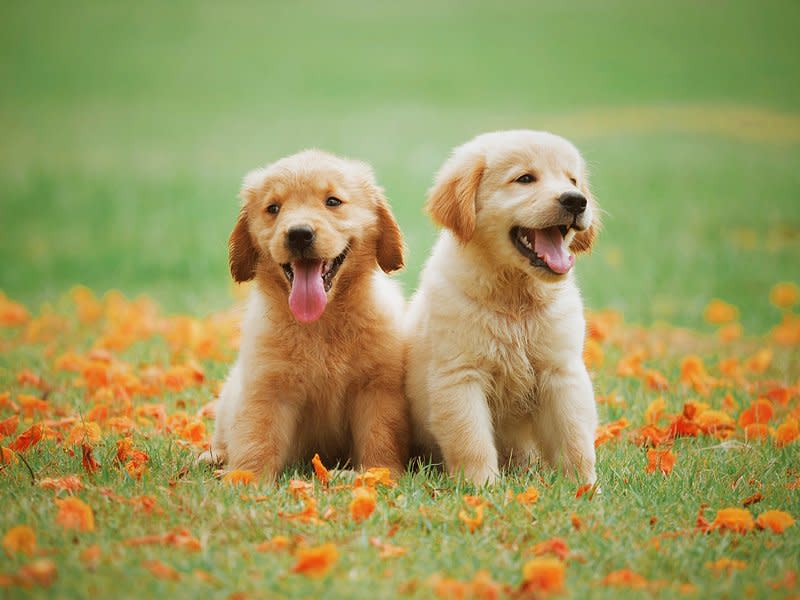
The first glance, the first time the puppy's tongue touches your face, then the long-awaited day: Your puppy is finally moving in with you. And with it comes a completely new chapter in life, filled with fun, play, cuddles, and discovery.
But at the latest, when you want to take your favorite leather shoes to the restaurant for the first time and only one of them is somewhat wearable while the other is almost digested in the puppy's stomach, you will know: The fluff needs to be trained.
How do I train my puppy?
The foundation for good training is best laid with the arrival of your furry friend. Thoughts like "He's so cute, he needs to settle in first!" are understandable, but they will make it harder for you later to have a successful training of your little treasure.
This doesn't mean that retriever puppy Mila needs to master a triple somersault on the cliff of the Zugspitze at 5 months old, but there are a few basic things she should definitely have down by then:
1. Sit
2. Stay
3. Please don't eat the other shoe too!
The list of different opinions on what constitutes good puppy training is at least as long as the receipt of things you can replace if you let the puppy run free without restrictions. But no matter how different the approaches are, in the fundamental ideas, almost everyone agrees.
Consistency is Key
So that your beloved four-legged friend can trust you unconditionally from day one, consistent behavior on your part is important. When you set rules, you should always enforce them. If Mila heads towards the sofa in the evening and you invite her to cuddle, she will understand that as a general sofa permission.
Training through Conditioning and Imitation
An important rule for the beginning is: Use the power of conditioning and reward desired behavior. How you reward depends on what your favorite responds to particularly well. For most dogs, nothing works without tasty treats, while for others, a loving ear scratch is the ultimate reward.
Always use the treat to lure your puppy into the desired position. For example, to teach "Sit," you can lure her nose upwards with the treat—most of the time, your little four-legged friend will sit down. As soon as your puppy does what she is supposed to do, you must clearly state the command. This creates a connection between the action and the spoken word. Then it's: Immediately put the treat in your puppy's mouth and reward her. You repeat this process over and over, without forgetting that the command and the treat should be presented as quickly as possible.
Are Punishments Allowed in Training?
If you know one thing for sure, it's that regular praise is essential in puppy training. But what about punishments if your favorite just won't stop chewing everything that isn't nailed down?
What you might not think of first when you hear the word "punishment": Your puppy has already gathered some experiences with punishments in her short life. These start with interactions with the mother in the form of reprimands and play fights with siblings. So your puppy has already learned through punishments before she even lived with you.
The application of species-appropriate punishments can indeed be used in puppy training. Light grabs at the nape of the neck are something puppies already know from their mother, and they usually stop immediately what they are doing.
Important: Never grab your puppy by the neck to lift her up, even if some sources claim: "They know that from nature!" Such actions can cause serious neck injuries to your four-legged friend and are painful. All physically painful punishments disrupt the basic trust that your puppy has in you.
Instead of working with punishments, you should focus on reinforcing desired behavior and rewarding it. Science shows: This improves training and increases your four-legged friend's trust in you.
Probier's doch mal hiermit!
With Love into a Shared Life
The puppy phase is something very special in the life of a dog owner, and it's clear that you want to enjoy it to the fullest. And you should! Give your favorite a lot of love from the very beginning and be the trusted person you would wish for yourself.
Train lovingly and consistently to have a relaxed and balanced four-legged companion by your side later, who will go through thick and thin with you - for a whole dog life. That is your goal, and we firmly believe that you can achieve it together!