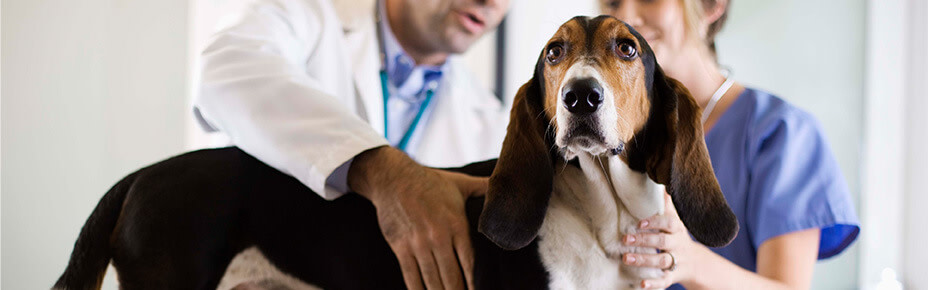
Herniated disc in dogs: causes, symptoms, and treatment
Severe pain, slow gait and above all, one that protects the back: a herniated disc causes severe pain and a loss of quality of life in a short time. How a herniated disc develops, which symptoms help you recognize it, how veterinarians make the diagnosis and what treatment options are available, you can find out here.treatment.
What is a herniated disc in dogs?
A herniated disc is one of those neurological diseases that occur particularly often. The intervertebral discs in dogs are ring-shaped, flexible, and cartilaginous structures, located between the individual vertebrae. Composed of an outer, rather hard fibrous ring and a nearly liquid core, the intervertebral discs have important functions in the back. They prevent the vertebral bones from colliding and causing a blockage. Smooth movement and good cushioning of the spine – that's what the intervertebral discs are for.
If a tear occurs in the outer ring, it leads to a displacement or leakage of the core and this is called a herniated disc. The result: the disc exerts painful pressure on the spinal cord through the vertebral canal. There are two degrees of severity, with the fluid only leaking into the surrounding tissue in the second stage.
Causes: What leads to a herniated disc?
The following causes can lead to or favor a herniated disc:
→Overweight and the resulting incorrect loading
Breed-related factors (long backs in dachshunds, corgis & co.)
Accidents
Wear and tear with age or usage
Lack of exercise
Overexertion from climbing stairs and overly intense sports (agility and other activities)

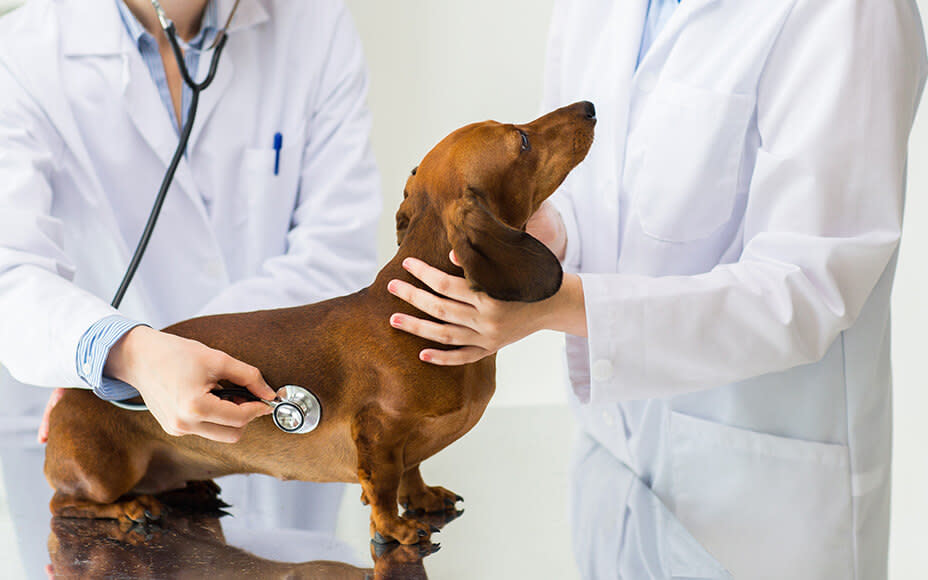
Dog breeds such as dachshunds have a higher risk of developing a slipped disc due to their very long backs.
Symptoms: How to recognize a herniated disc in your dog
If you suspect your dog is suffering from a herniated disc, the following symptoms may indicate it:
Tension
Refusal to jump
stiff gait
stiff or →limping legs
Trembling
drooping head & tail
vocalizing in pain
lameness in one or more legs
incontinence
sensitivity to touch
Diagnosis: Identifying a herniated disc
The spine of our four-legged friends is very complex and a herniated disc can occur in different places. Therefore, symptoms can sometimes be limited to the head area, while other dogs can hardly move both hind legs. To determine that it is not another condition such as osteoarthritis, veterinarians conduct a thorough examination including neurological tests.
In addition to checking reflexes in various areas, imaging using CT, MRI, and X-rays is also performed. This makes it possible to see if and where dogs have a herniated disc.
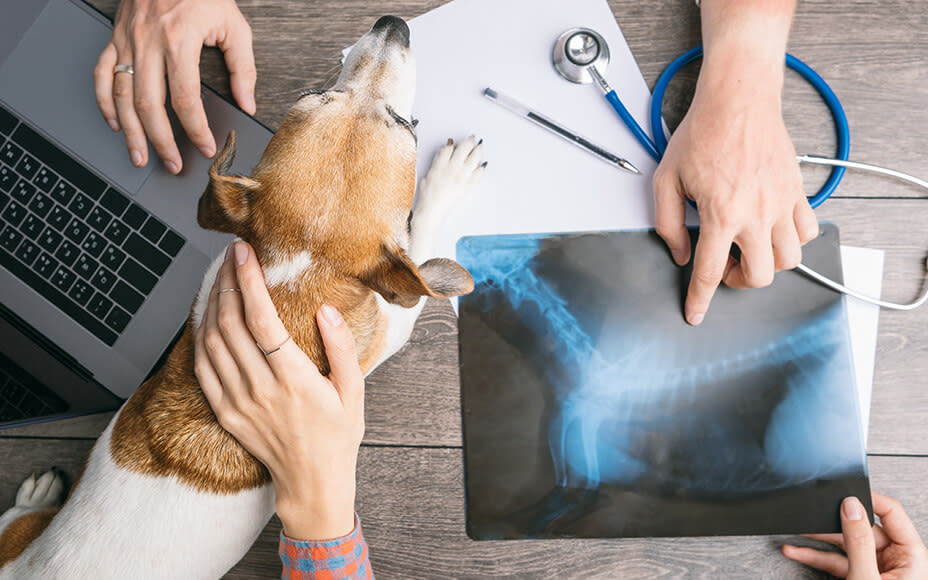
As part of the diagnosis, veterinarians can use imaging techniques to assess whether and to what extent a herniated disc is present in the dog.
Treatment and prognosis – can a herniated disc be cured?
Once the diagnosis is made, quick action from both sides is required. For a herniated disc, immobilization is the first step combined with plenty of warmth. In addition, a proper dose of painkillers is given, because herniated discs cause a different level of pain – even if your dog may not show it directly. For possible inflammation cortisone is sometimes administered. Measures such as physiotherapy help with muscle tension and support recovery. If your dog is severely overweight, he must →lose weight first with suitable tips, to relieve the back. It's also worth checking whether →feeding recommendations are being followed. Often, a herniated disc can be well treated with conservative measures and without surgery.
In some cases, however, surgery is necessary, during which the leaked material is removed. After a longer recovery period with minimal strain on the spine, the chances of healing are good. A good prognosis can be made if owners act early. If the first typical symptoms appear, you should visit a veterinary clinic immediately . If a herniated disc remains untreated for longer, it not only means severe pain for your pet, but also worse chances of recovery.
Your dog has his own medication box, but even before the first tablet, he runs away and has absolutely no interest in the little pills? We've got it: the lifesaver in an emergency, the real treat and best assistant when it comes to administering medication – our delicious liver pâté.

How can I support my dog with a herniated disc?
To help your dog through this difficult time and relieve his spine, is essential. To distribute pressure points well during walks, it's better to avoid a collar and use a harness. Jumps and stairs are now off limits, as the jarring and strain usually worsen the symptoms. Warmth for the back can also be provided at home by getting a special heat lamp or warming up a heating pad for your dog.
In addition to these options, →a healthy diet is important. For strong bones and a healthy immune system your dog needs a species-appropriate food that provides all minerals required. Our →VET Joint Fit wet food is specially designed for dogs that need support for mobility and cartilage metabolism. You can also easily enhance existing food with our →Omega Joint Oil, which thanks to omega-3 fatty acids can have a positive effect on the symptoms of joint inflammation.