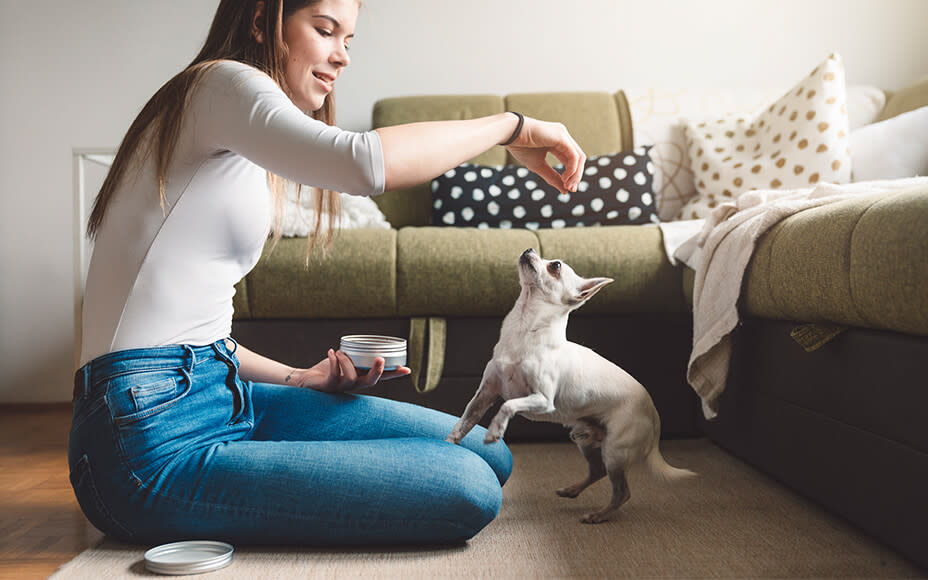
What is dementia in dogs?
Dementia (or Alzheimer's) is a well-known disease in older people. However, few are aware that our dogs can also suffer from dementia and may show symptoms such as disorientation and memory loss. In veterinary medicine, this condition is referred to as *cognitive dysfunction syndrome and is more common than you might think*.
It is an incurable disease of the nervous system, where there is death of nerve cells and changes in brain structures due to the accumulation of various proteins. The disease is associated, similar to humans, with impairment of memory and recall, attention, behavior, and perception.
According to studies, up to 28% of 11-12 year old dogs and up to 68% of 15-16 year old dogs suffer from cognitive dysfunction syndrome. So it is quite possible that your senior furry friend’s disorientation can be explained by this condition.

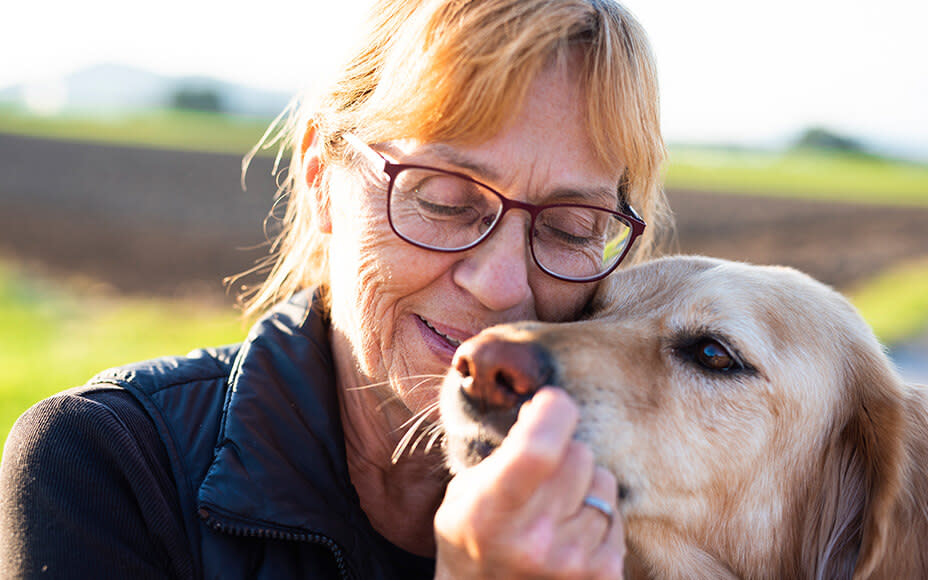
How does dementia manifest in dogs?
It is not always easy to distinguish dementia from the normal signs of →aging weakness.
So observe your furry friend particularly well and pay attention to the following commonly occurring symptoms:
Disorientation
- Getting lost in their own home
- Wandering aimlessly
- Staring blankly or fixating on objects
- Staying behind furniture
- Walking to the wrong door when it’s time to go outside
- Walking in the wrong direction to the food bowl
Changes in behavior
- Decreased or increased need for affection and attention
- Reduced joy when their owner comes home
- Changed behavior with familiar people or pets
- Sudden separation anxiety, even if it was never a problem in younger years
- Licking of objects, people, or themselves
- Increased appetite or also
- Loss of appetite
- Anxiety
- Increased vocalization (howling, barking)
Altered sleep rhythm
- Increased sleeping during the day
- Staying awake at night
- Evening restlessness and increased panting
- Sudden waking from sleep
Forgetfulness
- Forgetting simple commands like "sit" or "down"
- Forgetting house training
- Not recognizing familiar people and animals
If you notice one or more of these symptoms in your elderly furry friend, you should seek veterinary advice. Some of these signs can also be symptoms of other diseases such as diabetes mellitus, Cushing's disease, or arthritis and can only be ruled out through a veterinary examination.
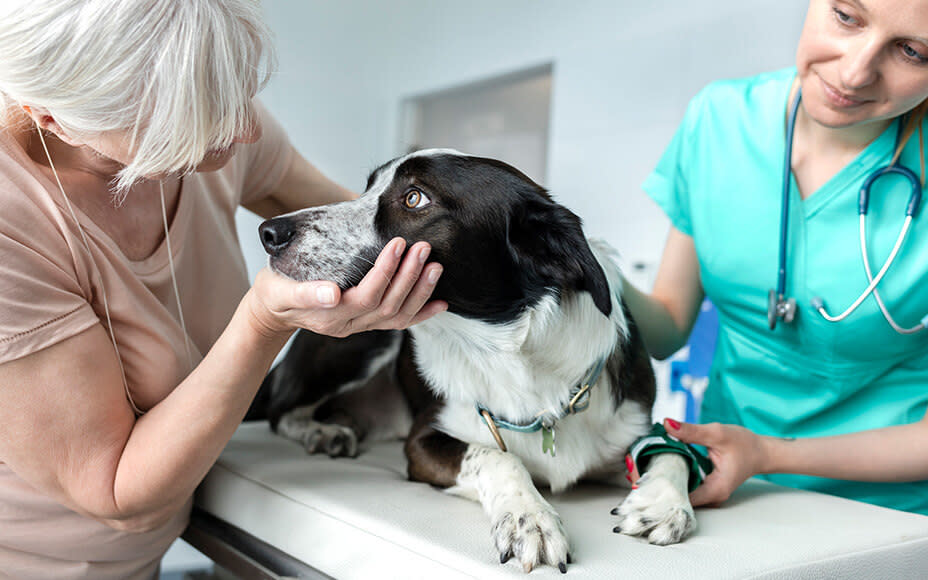
How can a diagnosis be made?
Unfortunately, there is no specific test that can definitively diagnose dementia in dogs. Rather, it involves a thorough history taking of your dog and the exclusion of other organic diseases.
So pay close attention to what changes you notice in your furry friend. Your veterinarian will make a diagnosis based on this and a clinical examination as well as possible further tests.
Is there a therapy for dementia?
As mentioned earlier, dementia in dogs, just like in humans, is an incurable disease. However, there are ways to alleviate the symptoms and slow the progression of the disease.
Medications containing the active ingredient Propentofyllin promote blood circulation in the brain and can have a positive effect on dementia. Your veterinarian can advise you whether medication treatment is sensible for your senior dog**.
Also, seek veterinary advice regarding feeding. Antioxidants as well as milk thistle and omega-3 fatty acids can be helpful for dogs with dementia. Our →"Vet" Joint Fit wet food supports joint metabolism, provides essential omega-3 fatty acids, and vitamin E as a natural antioxidant.

What else can I do for my dog with dementia?
Life with a dog with dementia is, of course, no longer the same as with a healthy young dog. Have patience with your senior furry friend, even if you have to clean up urine puddles more often.
With small puzzle games, you can help your four-legged friend stay mentally stimulated.
Walks in sunlight can help support a regular sleep-wake rhythm. Disorientation occurs not only in their own home but also outside. When you let your dog off the leash during walks, keep a close eye on them so they don’t get lost. A GPS tracker can also be useful - so you always know where your furry friend is.
If your dog seeks more affection and is cuddly, then pamper them especially and enjoy the precious time with your beloved four-legged companion. If your furry friend suddenly wants to cuddle less due to dementia, give your dog the space and peace they need.