
Common Emergencies and What You Can Do
Sometimes it's just a little scare, sometimes a real emergency – what's important is that you know what to do. Here are the most common emergencies in dogs and how to respond correctly:
- Poisoning: If your dog has eaten a →poison bait, call your veterinarian immediately. Activated charcoal can help bind toxins – it's best to ask beforehand how much you can give.
- Cuts: Gently rinse the wound with clean tap water or boiled, cooled water to remove dirt. Then treat gently with an appropriate disinfectant. After that, apply a loose bandage. Caution: For deeper injuries or heavy bleeding, you should see your veterinarian immediately. It's also advisable for smaller cuts to determine if further wound care or treatment with painkillers or antibiotics is necessary.
- Insect stings or allergic reactions: Carefully remove the stinger and cool the affected area. If swelling occurs in the head area – such as on the lips, eyes, or snout – or if your dog is having difficulty breathing, you should contact your veterinarian immediately.
- Bloat (gastric torsion): If your dog is restless, panting heavily, and the abdomen becomes hard, every minute counts – contact an emergency veterinary service.
- Heatstroke: Take your dog to a cool place and moisten the paws with water. Then contact your veterinarian.
For all emergencies: it's better to seek professional help once too often than once too little!


[TRANSLATION ERROR] Eine gut angelegte Pfotenbandage kann im Notfall viel bewirken – vor allem bei Verletzungen durch Hitze oder Asphalt.
How to Apply Bandages Properly
Sometimes a small bandage is enough to help your dog quickly and relieve pain. Here's how to proceed:
1. Clean the wound: Gently rinse the affected area with sterile saline solution to remove dirt and germs. If you don't have saline solution on hand, you can use boiled and cooled water.
2. Disinfect: A mild wound disinfectant protects against inflammation.
3. Apply the bandage: For paws: Place a sterile wound dressing or a compress, wrap loosely, and secure with tape or a self-adhesive bandage. For head or ears: Do not wrap the bandage too tightly and ensure your dog can still breathe freely.
4. Check: Make sure the bandage is not too tight. Regularly check if it is still in place or needs to be changed.
If you're unsure how to do this, it's best to ask at your veterinarian's practice. This way, your dog will be well cared for even in an emergency!
What Belongs in Your First Aid Kit
A well-equipped first aid kit is invaluable when something happens. Here are the most important items you should always have on hand:

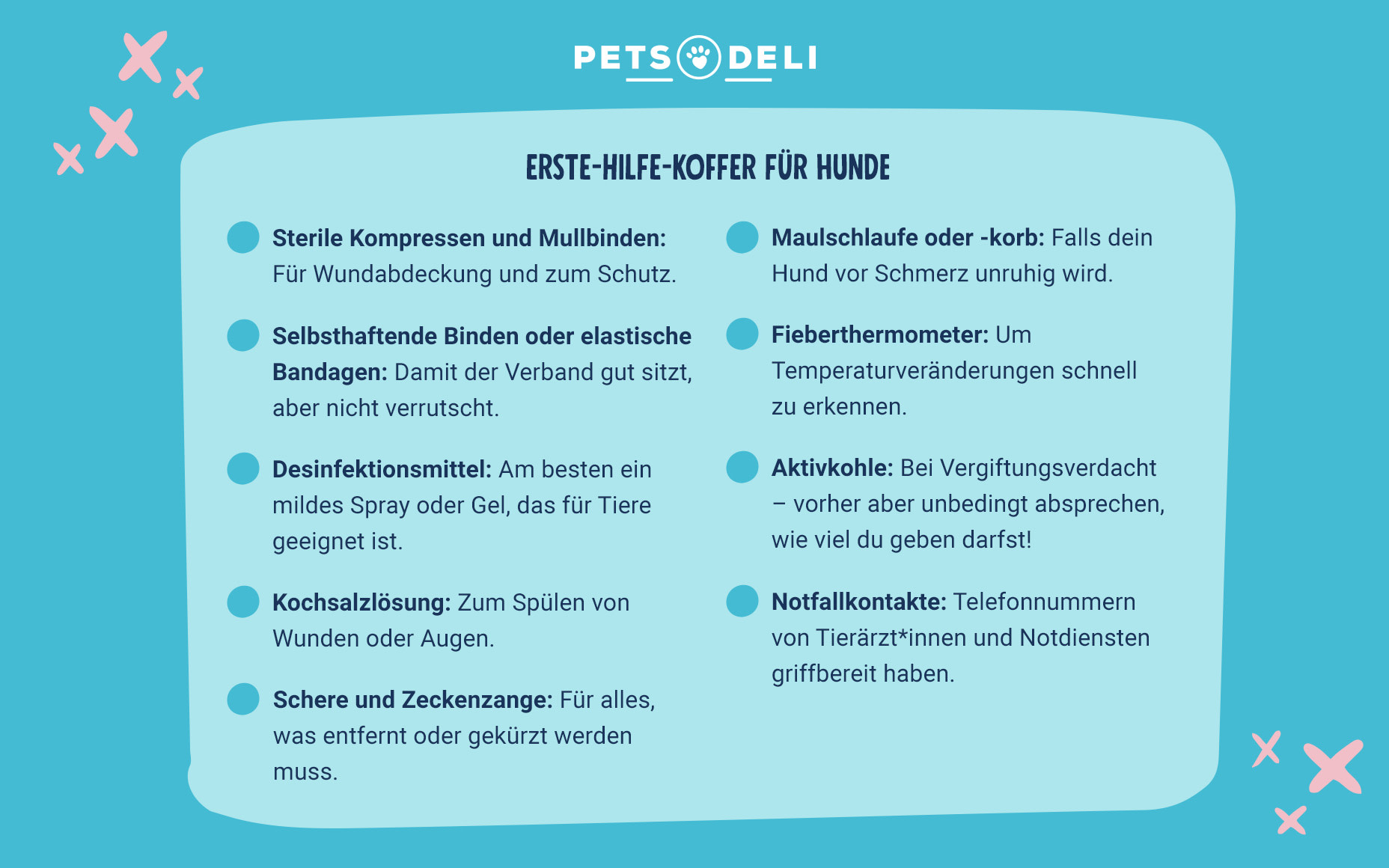
[TRANSLATION ERROR] Erste-Hilfe-Koffer für Hunde: Diese Basics solltest du immer griffbereit haben – für kleine und große Notfälle mit deinem Doggo.
Tip: Regularly check if everything is still complete and ready for use – this way, you'll always be prepared.
Stay Calm and Act in Time
No matter how serious the emergency looks – staying calm is the most important thing now. Your dog will immediately sense if you become panicked, and that can make the situation even more difficult.
Take a deep breath, assess the situation carefully, and then decide what to do. If you're not sure, it's better to call the veterinarian once too often – this way, you'll be on the safe side.
For you: A well-equipped first aid kit and a clear head are essential. And when things get serious, don't hesitate to seek professional help. This way, your dog will be well taken care of in any case!