
At what temperature is a dog considered to have a fever?
Your dog seems to have a fever, but you’re not sure? Well, your four-legged friend’s normal body temperature is already higher than ours. So the normal temperature for dogs ranges between 38.0°C and 39°C, and for young puppies it’s usually even up to 39.5°C. From a temperature of about 40°C, it’s considered a fever. If the body temperature exceeds 41°C, the condition can become life-threatening for the dog.
Keep in mind that your dog’s body temperature changes throughout the day. In the morning it’s usually at its lowest, and after vigorous activity or a long stay in the sun it can be slightly elevated, which in this case is harmless.
How can I tell if my dog has a fever?
It’s often said: if your dog’s nose is dry, something is wrong. And yes, a dry nose can indicate a fever in dogs. But it’s better to look out for the following symptoms in your four-legged friend:
Shivering/trembling
very warm ears
tiredness and lethargy
excessive thirst
heavy panting
increased pulse/strong heartbeat
→diarrhea or
very →dry and firm stool
If you want to properly detect a fever, it takes more than just putting your hand on your dog’s forehead. Due to their fur, an elevated body temperature isn’t always immediately noticeable. But many of the above symptoms are usually clear and easy to recognize.

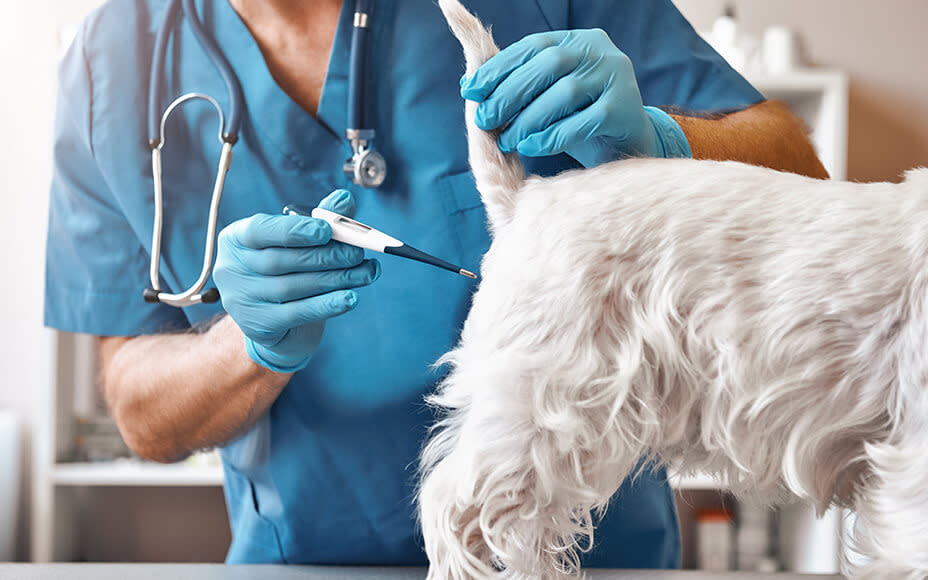
Fever in dogs is usually just a symptom of illness. If you are unsure, it is best to visit a veterinarian.
How to measure fever in dogs correctly – 8 steps
If you notice some of the symptoms mentioned or other unusual behaviors in your dog, it’s time to check their temperature. To start, you can feel your dog’s ears and belly. If these areas feel warmer than usual, this can indicate fever.
However, it’s better tomeasure the fever correctly. If your dog is a bit fidgety, a special thermometer for dogs is suitable. If you don’t have one on hand, you can also use a regular digital thermometer. It’s important that your dog stays still to avoid measurement errors.
Since you need to gently insert the thermometer into your dog’s anus, it’s advisable to have a second person help you. They can hold your dog securely and distract them a bit.
Clean and disinfect the thermometer thoroughly before measuring.
One person gently but securely holds your dog, if needed, the dog can be distracted with a treat such as licking from a →liver sausage tube for dogs.
Lubricate the tip of the thermometer with Vaseline to make it more comfortable for your four-legged friend.
Carefully insert the thermometer a few centimeters into the anus of your dog.
If your dog pushes back strongly, don’t force it, but rather wait until your dog relaxes!
It’s important to have mucous membrane contact when measuring. The tip should be held against the inside wall of the rectum, otherwise you’ll only measure the warm air in the intestine.
Clean and disinfect the thermometer thoroughly after measuring.
Reward your dog!
Especially if you or someone else is measuring your dog’s fever for the first time, you should proceed carefully. If your dog is particularly anxious or shows defensive behavior, putting on a muzzle may be advisable to protect yourself from possible bites. During the measurement you should give lots of praise and afterwards you can spoil them with a tasty snack (if health allows).
Delicious Rewards for Brave Dogs
Possible causes of fever in dogs
In most cases, fever in dogs is a symptom accompanying other illnesses. Sometimes it’s just a natural defense reaction, because your four-legged friend might be fighting off a cold.
Common causes of fever are:
Viral infections such as the flu or →kennel cough
Bacterial infections such as →inflammation in the mouth
Parasites or worms such as →giardia
Immune-mediated diseases
Vaccinations

If your dog has a fever, give him plenty of rest and sleep. Keep an eye on him and check his temperature regularly.
What can I do about fever in my dog?
You’ve noticed an elevated temperature in your dog and are unsure whether you need to see a vet and how you can help your dog? For adult dogs you don’t need to visit a clinic immediately for a fever. Often, the fever will go down on its own. However, it’s important to observe your dog closely and measure the fever at regular intervals. If the condition worsens, you should visit a clinic promptly!
Here’s what you can do to reduce your dog’s fever:
Give your dog plenty of rest and sleep. If there are children in the household, explain that the dog is sick and should be left alone.
A dark, cool resting place is just right now. Maybe a darkened room or a dog crate.
Keep walks short and match your pace to your dog’s.
Make sure your dog drinks plenty of water. Alternatively, you can offer cooled chamomile tea.
If your dog doesn’t want to eat, they can sip a little salt-free vegetable or meat broth.
As always: if you’re unsure, head to the vet! Sometimes a phone call to the clinic is enough.