
How does heart cough develop?
Coughing is usually always related to the respiratory tract? Not always - to clarify this question, you should understand a few things about the heart in general:
The heart consists of a right and left atrium as well as a right and left ventricle. Between the individual "heart chambers" are the heart valves, which ensure that blood always flows in the right direction. The deoxygenated blood flows from the body through the right atrium into the right ventricle and then through the pulmonary vessels into the lungs. There it is enriched with oxygen and then returns to the left atrium, which pumps the blood into the left ventricle, and from there it goes back into the systemic circulation.

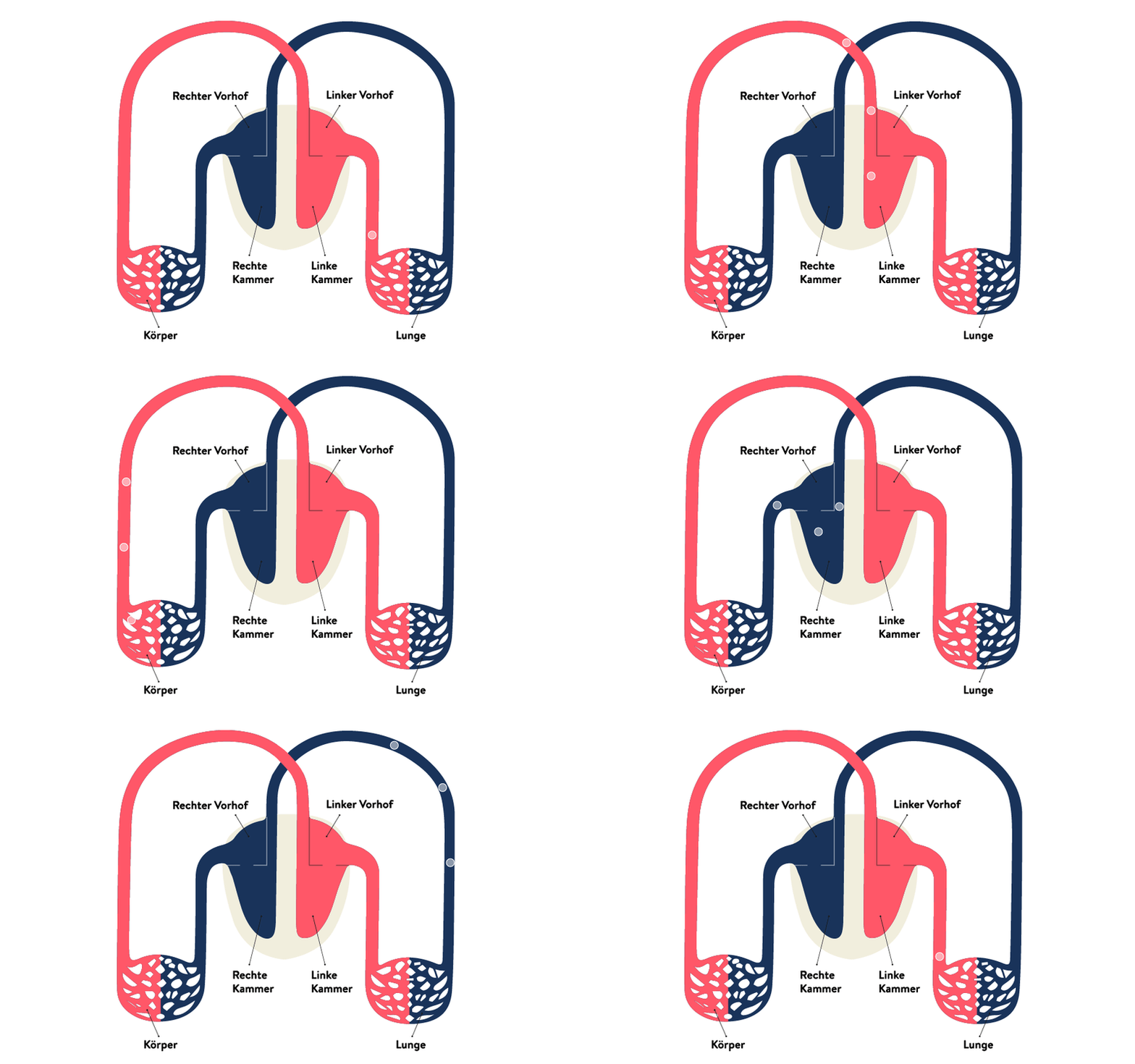
In the case of reduced function of the left heart, blood cannot be adequately pumped into the systemic circulation, and it backs up into the pulmonary vessels. This congestion causes fluid from the blood to enter the lung tissue, cough receptors are activated, and the symptom of heart cough occurs.
Thus, heart cough is not a disease, but a symptom of an underlying heart condition.
Heart cough and other symptoms
Heart cough can occur both at rest and during exertion. In addition to coughing, there are several other symptoms that may indicate heart disease:
- Weakness
- Reluctance to move
- Rapid fatigue during exertion and walks
- Restlessness
- Increased panting and shortness of breath
- Increased respiratory rate at rest
- Abdominal swelling
Some of these symptoms are not so easy to recognize, and one might think they are part of the normal aging process.
So, if you notice that your dog can no longer handle long walks as well as before, remember that this could also be an early symptom of heart disease. If you notice one or more of these signs in your dog, you should seek veterinary advice.
Altersschwäche beim Hund
So unterstützt du deinen Senior
How dangerous is heart cough?
In most cases, heart disease develops slowly. Often, a heart murmur is detected during a routine veterinary examination, after which further investigations follow to clarify a heart condition.

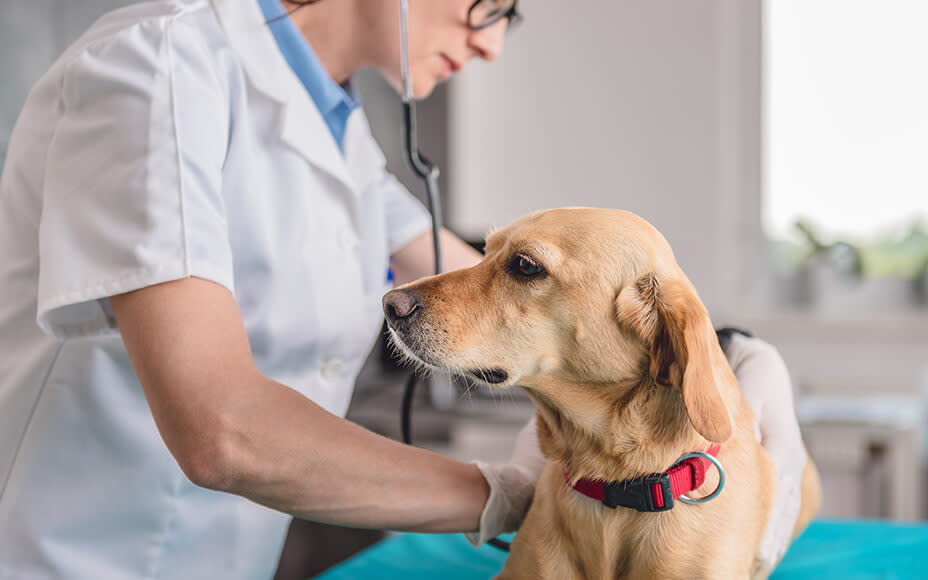
Depending on the extent of the symptoms, heart disease can also signify a medical emergency in the context of heart failure. This is the case, for example, with severe coughing accompanied by shortness of breath. Your dog's body will then not be adequately supplied with oxygen. In such a case, you should immediately go to a veterinary practice or clinic to save your pet's life.
What other causes of coughing are there?
You probably first think of lung and respiratory diseases when it comes to coughing. You are absolutely right, and it is always important to determine whether it is heart cough or cough with other causes.
The following causes can be behind coughing:
- Parasites, such as lungworms
- Pneumonia
- Asthma
- Bronchitis
- Pulmonary fibrosis
- Foreign bodies
- Tracheal or bronchial collapse
- Pulmonary thrombosis
- Tumor diseases
How is the diagnosis made?
First, your veterinarian will inquire about your dog's history, followed by a clinical examination. Special attention will be paid to the heart and respiratory tract.
Of course, it is important to find out whether the cough is heart-related or not. In the case of heart disease, a so-called heart murmur is often detected. This means that the heart sounds heard with a stethoscope sound altered. This does not indicate what the problem is, but it is a sign that something is not right with the heart. Further diagnostic tests are needed for clarification.
X-ray
An X-ray can assess whether the lungs show radiological changes. Additionally, the size of the heart is measured, which provides clues as to whether and where the problem in the heart might lie.

[TRANSLATION ERROR] Mittels Röntgen können Tierärzt*innen sich Herz und Lunge genauer ansehen.
Ultrasound
In an ultrasound examination (echocardiography), the heart and its function can be assessed in detail. Your veterinarian can precisely determine where the problem lies and assess the extent of the disease. An ultrasound examination of the heart is essential for diagnosing heart disease. Just like in human medicine, there are various specializations in veterinary medicine. An ultrasound examination of the heart is very specialized and is therefore performed by a veterinary cardiologist. So don't be surprised if your veterinarian refers your pet to a specialist for this examination.
Usually, an ECG is also performed simultaneously with the ultrasound examination. An ECG assesses the heart's rhythm and provides information about possible arrhythmias.
Blood test
A blood test cannot diagnose heart disease. However, the biomarker "NT-pro BNP" can provide initial indications that a heart problem exists.
Depending on other symptoms, a blood test may also be important for the exclusion of other diseases. What disease is behind the heart cough?
There are a number of heart diseases that can be either congenital or acquired. If coughing is the first symptom you notice and your pet is already somewhat older, it is likely an acquired condition.
The most common heart diseases in our dogs include:
Heart valve disease (valvular endocardiosis)
Just like in humans, our four-legged friends have four heart valves, which can lose their function and integrity due to various diseases and aging. In our dogs, the so-called mitral valve is most commonly affected. This valve lies between the left atrium and the left ventricle and normally prevents blood from flowing back into the pulmonary vessels.
When the mitral valve becomes leaky, it is referred to in medicine as *mitral valve insufficiency. As you have learned, blood backs up into the pulmonary vessels, fluid enters the lungs, and the symptom of heart cough arises. Due to the valve changes, further damage to the heart occurs, such as heart enlargement, muscle weakness, or arrhythmias*.
Cardiomyopathy (dilated cardiomyopathy)
Dilated cardiomyopathy is characterized by congenital or acquired heart muscle weakness. The muscle thickness decreases, the heart essentially becomes flabby and can no longer adequately pump blood. This results in enlargement of the heart, which in turn affects the integrity of the heart valves.
Which dogs get heart cough?
In principle, any dog can develop a heart disease with the symptom of heart cough during its lifetime.
Heart valve diseases, such as mitral valve insufficiency, primarily occur in small and medium-sized dog breeds from about the fifth year of life.
These breeds are particularly prone to heart valve diseases:
- → Dachshund
- Miniature Schnauzer
- → Miniature Poodle
- → Cavalier King Charles Spaniel
- → Chihuahua
- Pekingese
- → Boston Terrier
- → Yorkshire Terrier
- Fox Terrier

[TRANSLATION ERROR] Prinzipiell kann jeder Hund Herzhusten und andere Symptome einer Herzerkrankung bekommen.
Cardiomyopathies often develop in young or middle-aged dogs, primarily affecting large and giant breeds.
The following breeds are more likely to experience cardiomyopathies:
- → Doberman
- → Boxer
- → Saint Bernard
- → Newfoundland
- → Great Dane
- → Irish Wolfhound
Can heart diseases be treated?
While a damaged heart cannot be repaired, veterinary medicine now has various medications available to support heart function. If your dog has heart disease, this means for you: Administering pills every day. To make this a bit more pleasant for your four-legged friend, you can give the tablet with some food. Our → delicious liver pâtés are particularly suitable for tasty hiding of tablets.
The various medications have different effects on the heart. The active ingredient Pimobendan supports the pumping power of the heart. So-called diuretics, such as Furosemide, have a dehydrating effect, which relieves the heart. ACE inhibitors, such as Benazepril, dilate the blood vessels, which also relieves the heart. Additionally, there are several other medications that can be used for heart diseases. Depending on your dog's symptoms and the extent of the disease, your veterinarian will select the appropriate medication.

[TRANSLATION ERROR] Tabletten kannst du gut in kleinen Leckerlis oder Wurstpasten für Hunde verstecken.
Your dog will need regular check-ups to monitor the success of the therapy and the progression of the disease. The medications may also be adjusted over time to give your four-legged friend as long and happy a life as possible.
In addition to heart medications, you can support your dog with omega-3 fatty acids. These contribute to healthy heart function. Our → salmon oil is rich in omega-3 fatty acids and also tastes irresistibly delicious.
Can I prevent heart diseases?
Unfortunately, there is nothing specific you can do as preventive measures. Your dog should be examined by a veterinarian at least once a year to detect early signs of heart disease, such as a heart murmur during auscultation. You know your dog best - if you notice any early signs, it’s better to call your veterinarian once too often than once too little.
What about my dog's quality of life?
As you have learned, a damaged heart cannot be repaired. Heart diseases progress at varying speeds. This consequently has a certain impact on your dog's life expectancy.
However, if your four-legged friend is well-managed with medications and you go for regular check-ups, your dog can still have many happy years even with heart disease. Enjoy the time together with your dog and give him lots of affection and cuddles.