
What are heartworms in dogs?
A heartworm or heartworms (Dirofilaria immitis) are dangerous parasites that settle in the right ventricle and the pulmonary vessels of your dog. An adult heartworm (macrofilaria) can live up to 7 years and reach a length of 30 cm. If multiple adult heartworms accumulate in the dog, it can massively impair heart performance and lung vessel function. Consequently, the organs receive less oxygen. If the disease remains untreated, it can lead to kidney or liver failure and can be fatal.
How does my dog get heartworms?
The parasites are more prevalent in warm climates. Consequently, many dogs from our warm vacation countries such as Spain, Italy, Greece, southern France, Bulgaria, Hungary, or Romania are affected. When dogs are bitten by a mosquito infected with heartworm larvae, the larvae of the heartworm enter the bloodstream. From there, they migrate to the right ventricle and possibly later to the pulmonary artery. There, they grow into adult heartworms within 4-6 months, mate, and produce new larvae.
The larvae can live in a dog's bloodstream for up to 1.5 years. If the dog is bitten again by a mosquito, these can take up the larvae through the blood and thus transmit them to other animals.


[TRANSLATION ERROR] Nimmst du deinen Hund mit ins den Urlaub in ein Risikogebiet, kann er sich leicht über eine infizierte Stechmücke anstecken.
Symptoms: How to recognize heartworms in your dog
Unfortunately, an infestation by heartworms only becomes noticeable quite late. The larvae can live and grow inside your dog for a long time without being detected. Therefore, a heartworm infestation in dogs can only be diagnosed through special veterinary examinations.
The first symptoms usually indicate heart-lung issues such as:
- Breathing difficulties and shortness of breath
- Dry cough
- Weak, tired appearance
- Increased heart rate
- Ascites/abdominal fluid accumulation
- Fainting spells
If the disease progresses further, the liver and kidneys can also be damaged. Due to the damaged organs, nonspecific general symptoms may occur, as well as some abnormalities specifically caused by liver or kidney damage. These include, among others:
- Increased urination
- Excessive thirst
- →Nausea, vomiting
- Bad breath
- Anemia (low blood count)
- →Diarrhea
- Loss of appetite
- Weight loss
- →Dull coat
- Susceptibility to infections
If you notice any of the symptoms mentioned above or if your dog shows any unusual behavior, quickly consult a veterinarian. Only through a medical examination can it be determined whether your pet is suffering from heartworms or if something else is behind the symptoms.
Little tip: Don't forget the tasty reward after a successfully completed examination. This way, you end every vet visit on a positive note.
Leckere Belohnungen für tapfere Hunde
How is a diagnosis made?
The further a heartworm infestation has progressed, the easier it is to detect. Depending on the stage of the disease, blood tests, X-rays, and ultrasounds are performed.
An ultrasound examination is usually only conducted if a severe infestation is suspected. This is the case for dogs that already show clear symptoms of heart or lung disease and have previously been unprotected in a risk area.
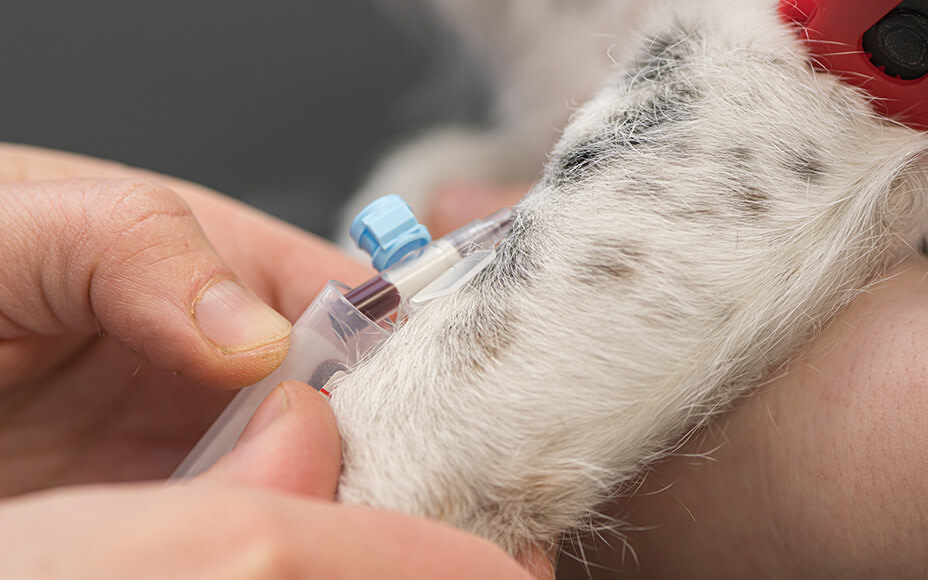
[TRANSLATION ERROR] Über Blutuntersuchungen und weitere Kontrollen werden Herzwürmer diagnostiziert. Mit Medikamenten und ggf. Antibiotikum kann dein Hund behandelt werden.
What does treatment for heartworms in dogs look like?
In principle: The earlier the disease is detected, the better the chances of a successful therapy. Ideally, treatment occurs before the parasites have caused organ damage. If your dog is proven to be infested with heartworms, all stages of the heartworms should be killed with treatment. This usually involves administering medications and possibly a special antibiotic.
In the case of a mild infestation, treatment is quite straightforward with medication given from home. In the case of a severe infestation with clear symptoms, treatment often needs to be done in a hospital. The reason for this is that the dead heartworms can clog vessels. If rapid treatment is not provided in such cases, it can be fatal. In cases of a severe infestation with adult heartworms, a surgical procedure may also be advisable. This involves directly removing the parasites from the blood vessels.
How can I prevent heartworms?
Fortunately, heartworms are not so widespread in Germany, Austria, and Switzerland. However, there is a high risk of infection if you want to take your dog on vacation and it is a risk area. Therefore, the safest preventive measure would be to leave the dog at home.
There are also various products against mosquitoes for dogs. These include, for example, →special parasite collars or spot-on preparations. A regularly conducted preventive deworming can also reduce the risk of infection. Additionally, try to avoid being out with your dog during dusk, as mosquitoes are particularly active during this time while searching for food.
If you have been on vacation with your dog and did not protect him from mosquitoes, you should have a blood test for heartworm larvae done 6 months after your vacation. Before that, the developmental cycle of the worms is not yet complete, which could lead to a false negative result.