What you can do if your dog eats feces during walks
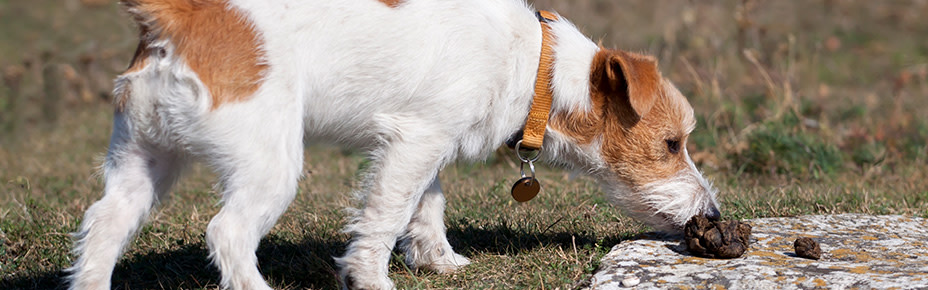
A carefree walk on the meadow and what seems rather disgusting to you is suddenly very exciting for your four-legged friend? Many dogs tend to lick or even eat the feces of other dogs or animals during walks. This is - admittedly - rather gross to watch, but normal for dogs in small amounts. Only when your four-legged friend seems to make the feces of other dogs a full meal should you take a closer look at the causes.
Is it dangerous if my dog eats feces?
It's not only not particularly pleasant to watch your own dog dive into the next pile of feces or happily collect horse droppings. Such actions can also be health-threatening for your four-legged friend. Feces are full of germs and are an ideal breeding ground for worms and other parasites, which can multiply in your dog's intestines when ingested. The intake of toxins through feces is also possible, for example, if it is the feces of other animals like cats or horses that excrete medication residues which can be toxic to your dog. In some cases, eating feces can become life-threatening for your dog.
This habit of your dog is also not entirely harmless for you: If he licks your face and hands, he can infect you with parasites and other pathogens.
Causes: Why do dogs eat the feces of other animals?
Eating feces (coprophagia) is now attributed to the following causes that are either behavioral in nature or triggered by physical processes.
Behavioral reasons why your dog eats feces
- Hygiene: If dogs live in an unclean environment, they ensure that their excretions are removed. Similar to →bitches, who eat their puppies' feces in the early days to avoid attracting potential predators and to keep the nest free of germs. Then some dogs prefer to take matters into their own paws and, well, eat their own feces.
- Habit: Some four-legged friends are more prone to adopt undesirable behaviors. If your four-legged friend does not receive enough attention, he looks for something to get it. Eating feces often leads to the desired attention, and so your four-legged friend gets used to it walk after walk.
- Stress: When dogs are under stress, they sometimes exhibit behaviors that may not be entirely understandable to us humans at first glance. Unclear communication between you and your dog and possibly other four-legged friends in the household can make dogs insecure about their place in the hierarchy. Negative behavior can then be used as a means to let you know that your furry friend has something on his mind and therefore eats feces.

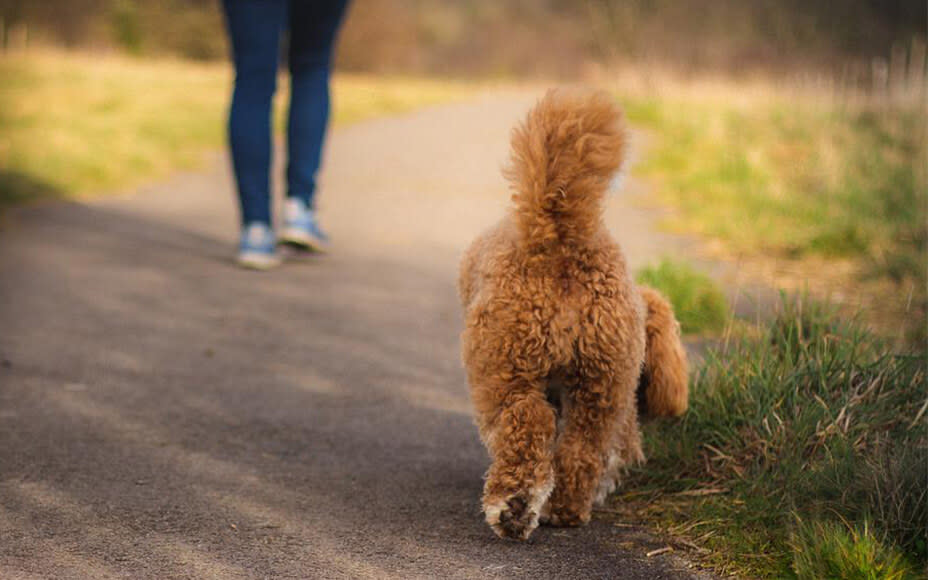
[TRANSLATION ERROR] Manchen Vierbeiner mangelt es an Aufmerksamkeit oder ihnen liegt etwas anderes auf der Seele, sodass sie beginnen, Kot anderer Hunde zu fressen.
Nutritional reasons why your dog eats feces
In some cases, there are physical causes behind dogs that eat feces. Their bodies signal to them for various reasons that eating feces is necessary and important. This can be triggered by:
- Imbalance in gut flora and malnutrition: Food that is not complete and does not provide your dog with enough digestible nutrients causes rumbling in the intestines. Your dog then excretes most of his food because it simply does not have the composition that your dog needs to be supplied with all the →nutrients. Not enough energy leads your dog to seek out sources to compensate for his deficiency. Feces from dogs or other animals like horses, sheep, or rabbits seem to be a nutritious food source for many dogs that quickly provides energy.
Have you ever taken a look at your furry friend's food? Is the composition such that you are →feeding your dog species-appropriately and healthily? Or do ingredients like grains, sugar, and artificial additives lurk in it? With dog food, you can do quite a bit to make your dog stop eating feces.
We at Pets Deli strictly adhere to the findings on healthy nutrition for your dog, ensuring that your beloved pet is supplied with all nutrients. Fresh meat, crunchy vegetables, aromatic fruits, rich oils, and herbs make our dog food a true delicacy.
Unser Futter für Hunde: gesund, ehrlich, lecker.
- Too much strain with too little energy: Does your dog's food really meet their energy needs? Dogs that are very active or even used for professional purposes often have an increased energy requirement. If this is not met, the four-legged friends quickly look for the next best energy source, and a pile of feces during a walk comes in handy. It is important to adhere to the →feeding recommendations, which are usually also broken down by activity level.
- Diseases: If certain organs, such as the pancreas, do not function properly, your four-legged friend cannot absorb the nutrients he needs, and the valuable components simply "slip" through your dog's body. Thus, he again seeks a way to cover the resulting deficiency.
- Infestation with parasites: →Tapeworms, →Giardia, and →roundworms settle in your dog's digestive tract and rob the food of nutrients so that the culprits can continue to live. The result: The necessary nutrients do not reach your dog's body, and he takes matters into his own hands by resorting to eating feces.
- Flavors in dog feces: If other dogs receive food with chemical, flavor-enhancing additives, they excrete these undigested. Thus, your dog can smell the intense scent from several meters away and immediately feels hungry.
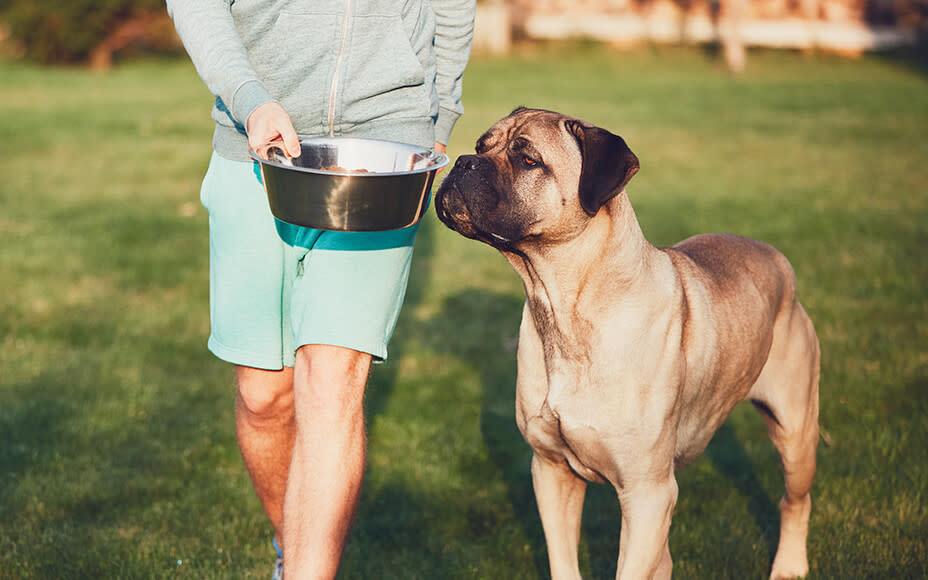
[TRANSLATION ERROR] Steckt die Ursache im Futter deines Hundes? Mangelhafte Qualität und Zusammensetzung begünstigen einen Nährstoffmangel, den dein Hund über das Fressen von Kot ausgleichen möchte.
How do I prevent my dog from eating feces?
As a precaution, you should first rule out physical causes. If your dog indulges in numerous piles of feces during every walk, it's best to have him examined at a veterinary practice. Here, organ functions can be checked and any parasite infestations can be identified. A blood test can reveal if your dog has a deficiency and a →change of food would be advisable. If your dog is physically fit and lacks nothing, it is worth taking a look at your training and habitual behaviors.
Are you still looking for the perfect, healthy snack for successful training? In our snacks, your dog finds only meat, delicious vegetables, and lots of love!
Tolle Belohnungen für fleißige Hunde - unsere Snacks
Does your four-legged friend live in a clean environment or do you sometimes leave piles in the garden for several days? Then it may be that your four-legged friend takes matters into his own paws and wants to clean up.
After that, it is worth taking a critical look at your bond: Are you communicating past each other or are you sensitively addressing why your dog acts in certain situations? →Dog language is not always easy, and →a secure bond is essential if you want to pursue common goals with your dog.
Teaching your dog not to eat anything off the ground
To ensure your dog doesn't eat everything he finds on the ground, it is worthwhile to train accordingly. The best time to train this is from puppy age, as besides feces, there are also →some poison baits along the way. Teach your four-legged friend that he may only eat on command and nothing from the ground. You can start by having him only touch his bowl when you give the signal.
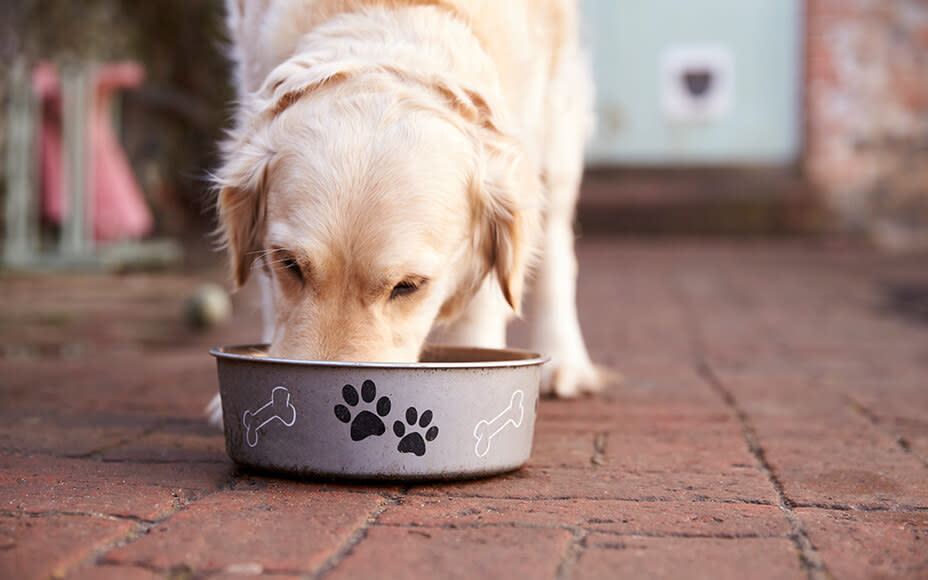
[TRANSLATION ERROR] Futtern auf Kommando: Du bestimmst, wann dein Hund frisst. So gehst du sicher, dass er nichts vom Boden aufsammelt und anerkennt, dass es in deiner Hand liegt, wann und wie er futtert.
During the walk, you should not let your four-legged friend [→roam without a leash](/magazin/hunde/hunde-erziehung/schleppleine-leinentraining-leinenfuhrigkeit-mit-hund-trainieren) as long as he is nibbling on everything he finds. If you notice your dog wanting to eat something off the ground, move him away from the pile of feces on the leash and say "No" or "Leave it." Your dog should be familiar with this command and associate it with the idea that he should refrain from something. If he stops, reward him. Such exercises should always be carried out consistently, as your four-legged friend learns quickly, including what he is not supposed to do. If he does something well, you should always reinforce it.
Here it applies: Be →patient and stress-free in your dog's training, but not negligent. If he has developed a behavior, it takes some time for him to unlearn it. Clear commands and expectations from you are important. Violence is always a no-go in dog training, and if you consult a [trainer](/magazin/hunde/hunde-erziehung/hundeschule-ab-wann-starten-und-wie-sinnvoll-ist-sie) make sure that they align with your values in training. Then nothing can stand in the way of your training, and soon your four-legged friend will turn a cold shoulder to the pile of feces!