
Lick Dermatitis in Dogs
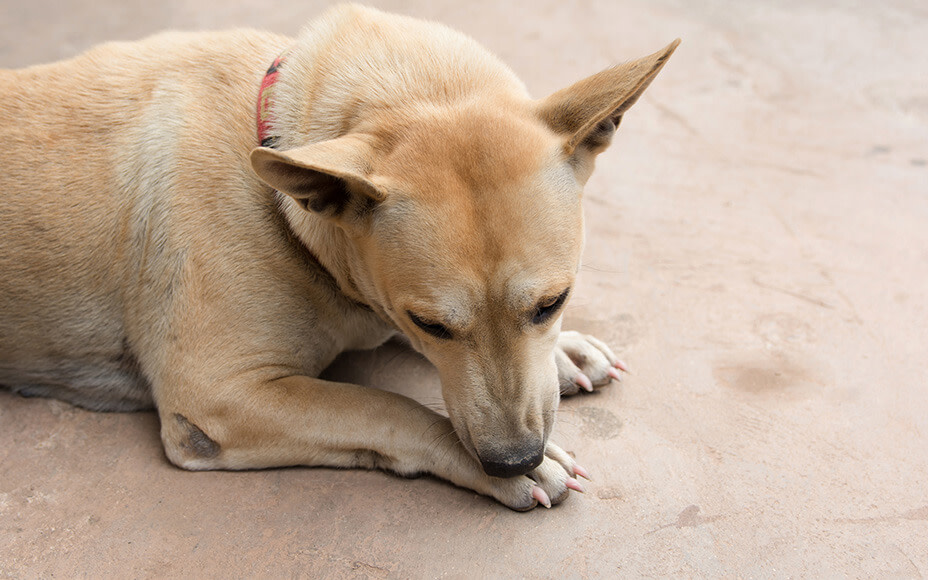
Grooming is essential for a happy dog life, that's clear. However, if your four-legged friend is constantly licking their paws and their skin appears red, you should take notice. Lick dermatitis is a skin inflammation caused by excessive licking. In this article, you will learn everything important about underlying causes, diagnostics, and treatment.
Causes of Lick Dermatitis
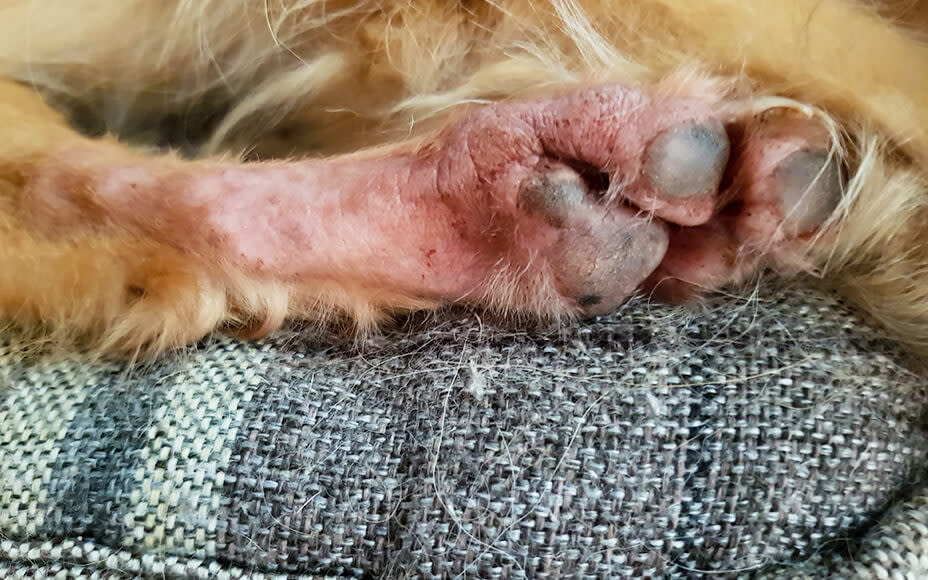
A lick dermatitis is not a disease in itself, but rather a symptom of an underlying problem. The excessive licking damages the skin surface and bacteria from the saliva enter the skin layers. The result is skin inflammations, which in turn lead to →itching and increased licking - a real vicious cycle. The legs and paws are often affected.
Common causes of lick dermatitis include allergies, stress, and pain.

Allergy
→Allergic reactions can cause not only diarrhea or bloating but also itching and skin changes.
Your dog will try to get rid of the itching in some way. By scratching, biting, or excessive licking, your furry friend temporarily fights the itching, but this leads to skin inflammations and even more itching.
Allergies to flea saliva are particularly common causes of lick dermatitis. In the case of a flea saliva allergy, affected dogs react with severe symptoms like intense itching even with minimal flea infestation. Food allergies or contact allergies can also be potential causes.
Little tip: Our →Sensitive wet food and →dry food are hypoallergenic and taste great even for dogs with food allergies. Are you unsure which food is suitable? Take a look at our products specifically for dogs with allergies and food intolerances!

Bei Haut- und Fellproblemen:
Futter zur Stärkung von Haut und Fell
Stress
Even our beloved four-legged friends can suffer from stress. Changed daily routines, a new family member, or moving can be causes of increased stress. Some dogs start licking their paws and legs to cope with the stress, leading to lick dermatitis.
Pain
Arthritis-related pain in the joints can also lead our four-legged friends to lick the painful areas more, which can in turn cause inflammatory skin changes.
What does lick dermatitis look like in dogs?
The symptoms associated with lick dermatitis are always dependent on the underlying condition.
The following signs are common in lick dermatitis:
- Itching and consequently increased licking, scratching, and biting
- Skin redness with or without purulent deposits
- Hair loss in the affected areas
- Fever and decreased general well-being in cases of deep skin inflammation
How is a diagnosis made?
Especially with skin changes, a detailed history is important. So tell your veterinarian in detail, when which symptoms appeared and what else you notice.
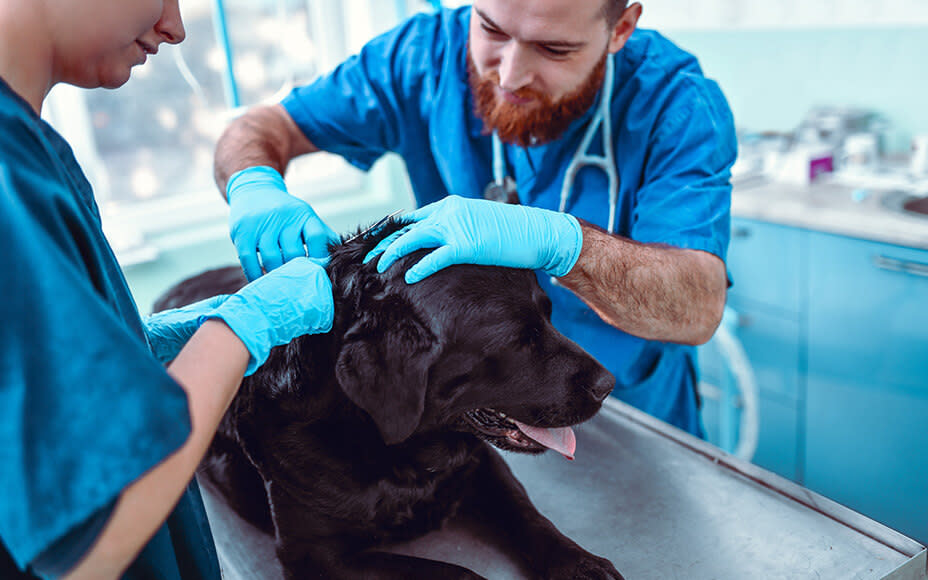
Diagnosis includes a general clinical examination and a specific examination of the skin. It may often be useful to take a sterile swab from the affected skin areas. This way, your veterinarian can see under the microscope whether bacteria or fungi are involved in the inflammation.
As you have already learned, there is always an underlying condition behind a lick dermatitis that causes the symptom. To find out if a flea infestation is behind the symptom of lick dermatitis, your veterinarian will examine your →dog for fleas.
If a food allergy is suspected, you will likely be recommended a elimination diet and an allergy test. To confirm or rule out arthritis pain, an X-ray may be helpful.
Snacking despite allergies? No problem! Our delicious →Sensitive snacks are also well-suited for dogs with food allergies.
Gesund snacken war nie so lecker!
What can be done about lick dermatitis in dogs?
The lick dermatitis itself is treated with anti-inflammatory shampoos for washing and cleaning. Your veterinarian will show you exactly how to care for the affected skin areas at home.
If necessary, an antibiotic treatment in the form of tablets may be indicated to combat the inflammation. To relieve itching, corticosteroids may be injected or given to you in tablet form to take home.
The treatment of the underlying condition varies depending on the cause. In the case of a flea infestation, medications against fleas are used. A food allergy can be confirmed through an elimination diet, and symptoms can be avoided in the future. For pain, pain relievers provide relief, and for stress-related lick dermatitis, a dog trainer can help you.

Can I do something preventive?
To prevent flea infestation as a cause, adequate flea prevention is essential. Consult your veterinarian about which product is best suited for your four-legged friend. There are no specific preventive measures for the other causes.
It is especially important that you recognize the symptoms and do not dismiss excessive paw licking as normal behavior.