
Symptoms: How to recognize an ear infection in your dog
An inflammation of your dog's ear is not uncommon, but it should be taken seriously. It often involves an inflammation of the outer ear canal (otitis externa), also known as ear canker. However, the middle ear can also (otitis media) or the inner ear (otitis interna) become inflamed.
You can usually spot ear problems in your dog quite easily. Watch out for the following symptoms:
increased, intense head shaking
head tilt of the head
constant scratching at the ear
Face or ear is rubbed
Redness, swelling or scabs on the inside of the ears
Ears feel hot to the touch
sensitivity to touch on the head
balance disorder
brownish, foul-smelling discharge on the inside of the ears
If your dog shows one or more of these symptoms, you should consult a veterinarian, because an ear infection is always a case for the professionals.

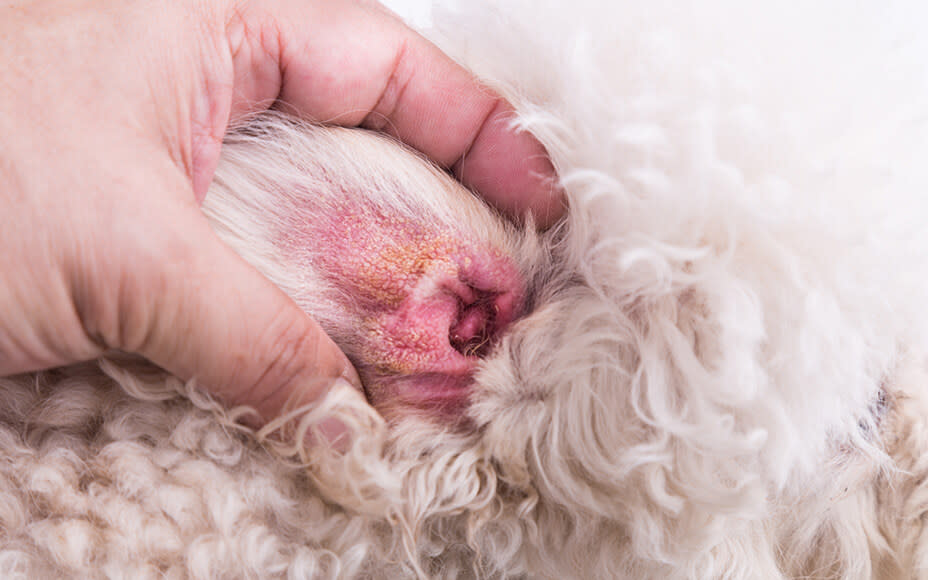
If your dog's inner ear is very red, this may be a sign of inflammation.
Causes: How does your dog get an ear infection?
Before your four-legged friend can be treated, the veterinarian will first check what is causing the ear infection. Only then can your pet be helped. Common causes are fungal infection, ear mites, foreign bodies, or allergies. But anatomical factors can also trigger inflammation in the ear.
Anatomical factors
Dogs with floppy ears, narrow ear canals, or long fur are more prone to ear infections. Due to the heavy hair growth and the drooping ear, the inner ear is less ventilated and the earwax is less easily removed. As a result, a warm, moist environment develops in the ears, creating the ideal habitat for bacteria. An inflammation or infection of the dog's ear is then not far off.
Yeast infections
Malassezia are yeast fungi that are normally present on the skin surface of your dog in small numbers. They are often found in the outer ear canal or under the tail. Excessive growth of these fungi can lead to an ear infection (Malassezia otitis) in dogs. Dogs with floppy ears are often affected, especially those who love to swim frequently. If moisture remains in the ear, a warm, moist environment develops, which encourages the proliferation of Malassezia.
Ear mites
An infestation with ear mites can also cause an ear infection in your dog. The infection can cause the ear canal to thicken and become narrower, which means the ear is less ventilated, making it easier for fungi and bacteria to thrive there.
Allergies
If your dog suffers from an allergy, a reddened or even inflamed ear is a common symptom. This is especially true for environmental allergies to pollen or house dust mites as well as food intolerances. The ears become irritated quickly. When treating, it is very important to also treat the allergy in time, to prevent a chronic ear infection.
Foreign bodies
If coarse dirt or grass awns get stuck in your dog's ears, this can also promote inflammation. Be especially careful with awns and have a professional check them right away. These are small, often bristly plant particles that can travel deeper into your dog's ear canal and get lodged there.
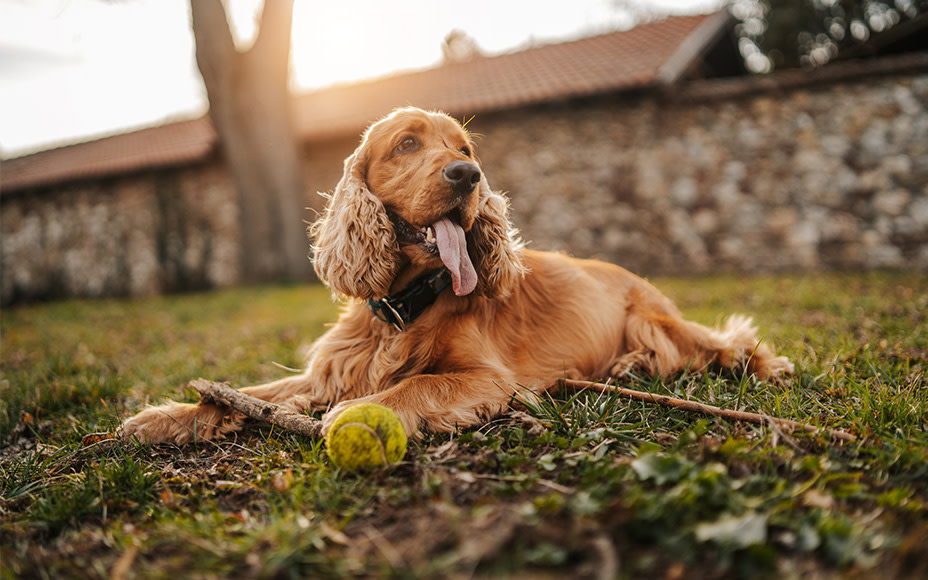
Breeds with long fur and floppy ears are especially prone to ear infections, as bacteria and fungi can colonize their ears more quickly.
Treatment: What helps against an ear infection in dogs?
After the veterinarian has thoroughly examined your pet and identified the cause, the appropriate treatment will be started. Often, your dog will feel better quickly, but in some cases, therapy can take longer.
Sometimes a simple ear flush to clean your dog's ear canal or manual removal of the foreign body is enough. Depending on the cause, antibiotic and anti-inflammatory ointments, tablets, or drops are given to fight the bacteria or fungi. If your dog is suffering from pain or itching, medications can also help. Surgery is usually only necessary in the case of a chronic ear infection, a severely narrowed ear canal or tumors in the ear.
If a food allergy or intolerance is the reason for your dog's ear infection, a switch to a different food with more tolerable ingredients can help. Relief may take a few weeks, but it will make mealtimes enjoyable again! Dogs are often allergic to chicken, beef and/or certain grains. If you're still looking for a healthy and, above all, tasty food for allergy sufferers, take a look at our hypoallergenic food varieties!
Ideal for Allergies and Intolerances - Hypoallergenic Food
How to prevent ear infections in your dog
You should avoid home remedies or trying to treat your dog's ear infection yourself. If the inflammation is not treated properly and promptly, it can worsen and become chronic. In the worst case, the ear infection can lead to hearing impairment, balance disorders or damage to the facial nerve.
Therefore, regular and thorough ear care for your dog is essential if you want to prevent ear infections as best as possible. This includes:
Regular cleaning of the outer ear canal of your dog with a damp cloth. Additionally, you can use our CARE Ear Cleaner as support. It cleans, protects, and cares based on purely natural ingredients and helps with irritations caused by yeast fungi and parasites. Never use a cotton swab to clean the ear. This increases the risk of pushing foreign bodies or debris further into the ear canal.
After consulting your veterinarian, you can also use a mild ear rinse.
If your dog has longer fur, which sometimes grows into the ear, trim or cut it a bit shorter. This ensures the ear remains well ventilated and prevents parasites or bacteria from accumulating.
For allergy-related ear infections you should avoid contact with the allergy-triggering substances as much as possible.