Summer, sun & more – tips to help your dog get through the summer
As soon as it gets warmer outside, you know what to do: slip into shorts or a breezy dress to get some relief from the heat. But it’s not quite that simple for your four-legged friend – even if they’re a true trendsetter – and there are a few things you should keep in mind on hot summer days to make summer easier for your furry companion.
A hairy affair: shedding and coat care
Your four-legged friend’s body initiates the shedding process automatically as soon as temperatures rise outside. This can sometimes happen very early in the year, so your dog can shine in their summer look just in time for summer. But if temperatures suddenly rise sharply and the shedding drags on into summer, you can help them get rid of their winter coat as quickly as possible.
For this, regular brushing is important – it removes loose fur and stimulates your dog’s skin, helping them shed more easily. Especially for long-haired breeds, daily, multiple brushings are recommended. In addition to regular grooming brushes, there are also combs for your pet’s undercoat.

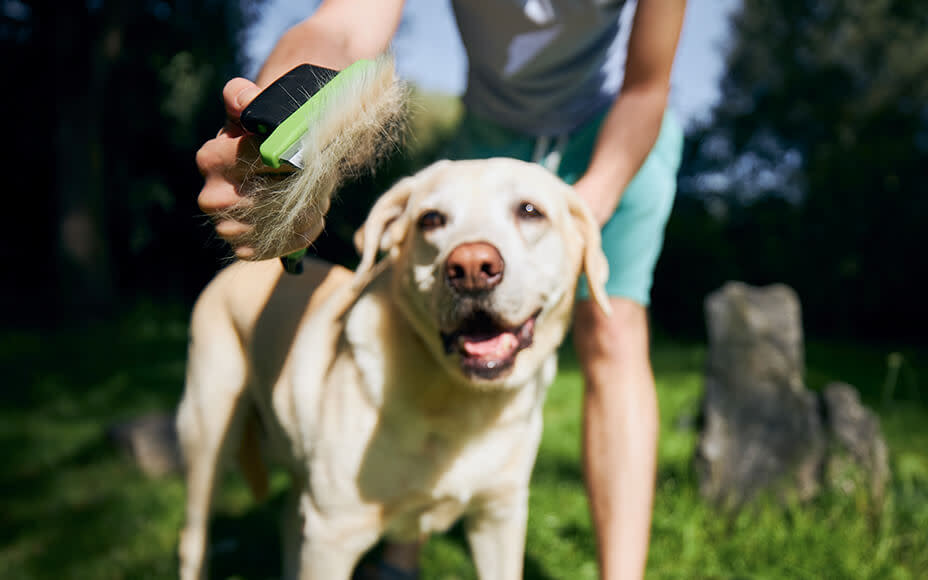
And what about clipping? More and more owners are having their dogs clipped or even doing it themselves. In general: every coat, depending on breed, has a specific function. Dogs with thick fur and a heavy undercoat, which protects against low temperatures, are prone to irreversible skin diseases and sunburns
after clipping. Fur doesn’t just protect against the cold, but also against heat and sunburn. Which dogs are suitable for a summer clip, and when it actually makes sense, can be explained to you at your trusted dog salon. Very important: your four-legged friend’s summer haircut belongs in the hands of a professional and should never be done yourself to avoid damaging the skin and topcoat.
Making hot days cooler: Ice, ice, baby!
To make life easier for your four-legged friend on especially hot days, here are a few tips to help them:
1. Walks only in the morning and evening, when it’s not too hot yet – avoid walking your dog in the midday sun
2. Combine walks with a cool-down in a lake and choose shady routes through the woods whenever possible
3. At home, create cool spots by keeping a room completely dark so it doesn’t heat up too much
4. Pool party for your four-legged friend – whether in the garden or in the apartment, your dog will love a cool down in a paddling pool or the bathtub
5. Car rides only when necessary: your furry friend won’t mind if you leave them at home for a drive or two in the summer, because it gets hot in the car quickly
6. Please never leave your four-legged friend alone in the car under any circumstances – not even with the window down and not even if it’s just for two minutes (for comparison: when it’s 30 degrees outside, the temperature inside the car rises to 46 degrees within 30 minutes – a temperature that can become life-threatening for your furry friend)
7. Cooling harnesses: there are special harnesses for dogs that can be soaked in cold water in summer to cool your dog’s body – practical and pretty cool!
8. Ice for dogs: You should avoid giving your dog regular ice cream or popsicles as a treat. Sugar and ingredients that dogs can’t digest as well as humans can cause stomach upset. So for you, that means: grab the mixing bowl, let’s make dog ice cream!

You can puree fruit (banana, apple, pear, watermelon, peach, or apricot – important: no grapes) and blend with water to make a creamy mixture. For a savory version, you can use vegetables like carrots, beetroot, pumpkin, cucumber, or broccoli. Your dog will also love a spoonful of cottage cheese, cream cheese, or yogurt in the ice. Pop it in the freezer for a few hours. After that, your four-legged friend can enjoy their very own ice cream.
Your dog’s water balance in summer: always drink plenty
Hardly anything is as important for your furry friend’s health in summer as proper hydration, because your four-legged friend is prone to dehydration on hot days. So always make sure that fresh, cool water is available and remember to bring enough fluids on walks. Caution at public bodies of water: at high temperatures, there is a risk of bacteria forming in the water – it’s better to bring tap water for outings.

Your furry friend is a bit of a reluctant drinker and you’re worried their hydration isn’t sufficient? Here are a few tasty, hydrating tips for you:
Not drinking enough?
With up to 95% water content, hardly any fruit is as hydrating as watermelon – and your four-legged friend will love the taste. Just put small pieces in the fridge and let your dog enjoy the refreshment. Don’t feed pieces that are too large or too much at once, but spread out small portions throughout the day.
Wet food boasts a moisture content of up to 80% – so your dog’s hydration is mostly covered and they need to drink less water than dogs who eat dry food
Many dogs like running water or stagnant water. Puddles and lakes are less suitable in summer, as explained above. Rainwater is a tasty alternative for some dogs. There are also drinking fountains for dogs that simulate running water and often work better for reluctant drinkers.