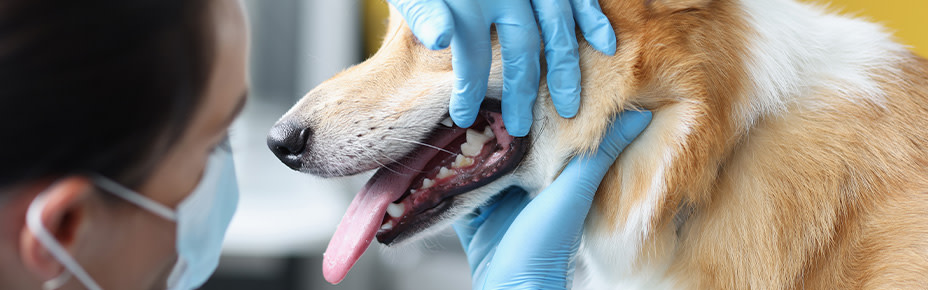
Periodontitis in Dogs
A disease of the periodontal apparatus in dogs is referred to in technical terms as periodontitis or (outdated) periodontitis. It is the consequence of a persistent [→gingivitis](/magazin/hunde/hunde-gesundheit/zahnfleischentzuendungen-beim-hund-vermeiden-und-behandeln). However, unlike an inflammation, periodontitis loosens and destroys the tissue and bony substances of the periodontal apparatus.
Cause: What Causes Periodontitis?
Periodontitis is often a result of bacterial plaque and [→tartar](/magazin/hunde/hunde-gesundheit/mein-hund-hat-zahnstein-was-jetzt). The bacteria destroy primarily the gum pockets, which are responsible for holding the teeth. The inflammation can also spread to the tooth and lead to a painful suppuration. In severe cases, an inflammatory-related loss of jawbone can occur.
A very simple way to prevent dental problems and gum inflammation is the [→right dog food](/magazin/hunde/hunde-ernaehrung/was-ist-gesundes-tierfutter). Unnecessary additives like sugar and grains can promote the formation of deposits on the teeth. That’s why we at Pets Deli only use high-quality meat combined with selected fruits and vegetables.
Unser Futter für Hunde: gesund, ehrlich, lecker.


However, other factors can also play a decisive role in the development of periodontitis in dogs. For example, other underlying diseases can cause conditions in the oral area and lead to periodontitis.
Symptoms: How to Recognize Periodontitis in Dogs?
The symptoms are very similar to those of gingivitis. An unpleasant smell from the mouth is one of the most common reasons why dog owners with periodontitis seek veterinary care. Other symptoms may include:
- strong →bad breath
- visible dental plaque
- tartar
- loose teeth
- reddish, inflamed gums
- refusal to eat
- refusal of hard chew snacks and toys
- susceptibility to infections
Overall, periodontitis also affects the general health of your dog, as chronic inflammation burdens your four-legged friend’s immune system. Additionally, dangerous plaque bacteria can enter the body and organs.

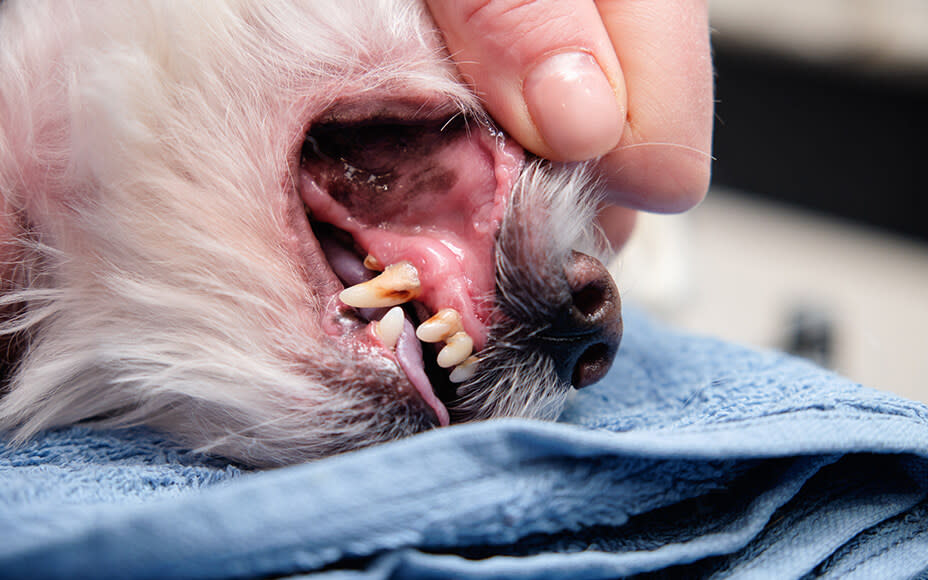
[TRANSLATION ERROR] Zahnstein und eine schlechte Maulhygiene sind eine häufige Ursache für Parodontitis bei Hunden.
3 Types of Periodontitis in Dogs
Three different types of periodontitis in dogs are distinguished:
- Chronic periodontitis: This is the most common form of the disease. The course is usually slow, and the periodontal apparatus is damaged bit by bit. The cause is often severe tartar.
- Aggressive periodontitis: In this form, the disease progresses rapidly, leading to bone loss in a short time. Severe pain and a significant impairment of the dog's general well-being accompany the disease. The cause lies in a combination of specific germs and a weakened immune system.
- Necrotizing periodontitis: Here, the gums gradually die off, accompanied by light deposits in the oral cavity and gum bleeding. This form of the disease is also very painful and affects the overall well-being of our four-legged friends. A specific cause has not been definitively proven; however, special germs in combination with an immune disorder are suspected, similar to the aggressive form.
Diagnosis and Treatment
Since periodontal diseases are hidden beneath the gum line, they can be poorly recognized with the naked eye. This is also one of the reasons why the disease often remains undetected for so long. To recognize periodontitis, special tools from veterinarians are necessary. For this reason, you should promptly visit a veterinary practice if you suspect it. There, a periodontal probe and X-rays will be used to diagnose a periodontal disease.
The treatment is usually performed under anesthesia. First, visible dental plaque and tartar are removed. Then, the cleaning of the non-visible area below the gum line is performed. Finally, a polishing and rinsing of the gum pockets is carried out. In very advanced stages of the disease, tooth extraction may also be unavoidable.
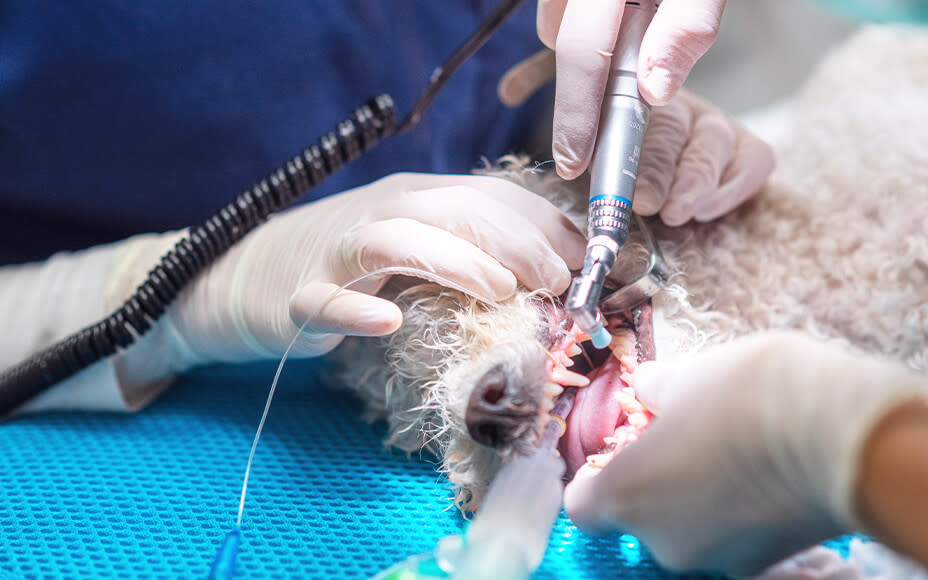
[TRANSLATION ERROR] In der Regel findet die Behandlung unter Narkose statt. Eine intensive Reinigung der Zähne und des Zahnfleischs ist bei jeder Form der Parodontitis notwendig.
Effectively Prevent Periodontitis in Your Dog
Loose teeth and tooth loss are often attributed to the natural aging process of dogs. However, in many cases, the cause lies in a lack of →dental hygiene**. This leads to serious diseases like periodontitis.
Daily →tooth brushing is the most effective method to prevent dental plaque and tartar in your dog, thus ensuring a long, carefree dental health. Also, note that a professional periodontal treatment is only permanently successful if dog owners are also willing to continue regular dental cleaning at home. There are no medications to prevent the disease. However, you can have your dog's teeth professionally cleaned regularly by your veterinarian as part of an [→annual routine examination](/magazin/hunde/hunde-gesundheit/).