
What is crawling in my four-legged friend's ear? Ear mites in dogs
Your dog is scratching its ears non-stop and shaking its head? Do you feel like something is crawling in the ear? Ear mites are the most common mites in dogs. Learn everything important about these little nuisances in this article.
What are ear mites actually?
Ear mites, like →fleas and →ticks, belong to the ectoparasites. This means that the little nuisances live on the skin or in easily accessible cavities like the outer ear canal or the nose. Ear mites (Otodectes cynotis) are among the most common mites in our dogs (and also cats) and prefer, as the name suggests, the ears as their habitat.
The small parasites feed on skin flakes, tissue fluid, and blood, and all developmental stages live on the host animal.
How can my four-legged friend get infected?
An infection occurs through direct contact. Ear mites are often found in places where many animals live in close contact, such as in animal shelters or on farms. The parasites can survive for several weeks in a moist environment, so indirect infection is also possible. In adult animals with a good immune system, symptoms may sometimes not appear, but especially immunocompromised and young animals can be severely affected.
Ear mites feel just as comfortable in dog ears as they do in cat ears. Thus, the mites can also be transmitted between dogs and cats. If your four-legged friend shares your home or apartment with a cat, always remember to treat both if necessary.

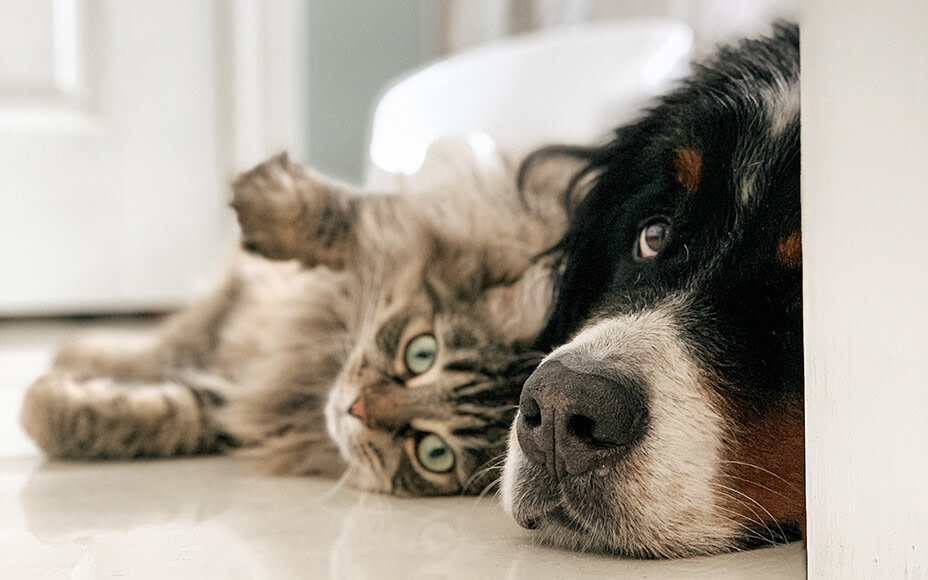
[TRANSLATION ERROR] Hat dein Hund Ohrmilben, übertragen sich die Parasiten auch auf im Haushalt lebende Katzen. Achte also darauf, beide Haustiere zu behandeln!
How do I recognize if my dog has ear mites?
You can surely imagine that it itches incredibly when mites crawl around in the ear. To combat the intense itching, our four-legged friends scratch their ears, which is the main symptom of an ear mite infestation. Frequent head shaking is also one of the signs. The mechanical irritation causes skin redness and inflammation as well as crusts in the ear and ear flap. The little nuisances excrete a brownish coffee grounds-like secretion as feces, which can then be found in the ears of the furry noses. In most cases, ear mites occur bilaterally, but unilateral infections are also possible. In severe cases, the small parasites can also be found outside the ears.
Many of these symptoms are typical for an →ear infection and can also have other causes such as foreign bodies in the ear (e.g., grass seeds, sand), →allergies, bacterial infections, or autoimmune diseases. If you observe one or more of these symptoms in your furry friend, you should promptly seek veterinary advice.
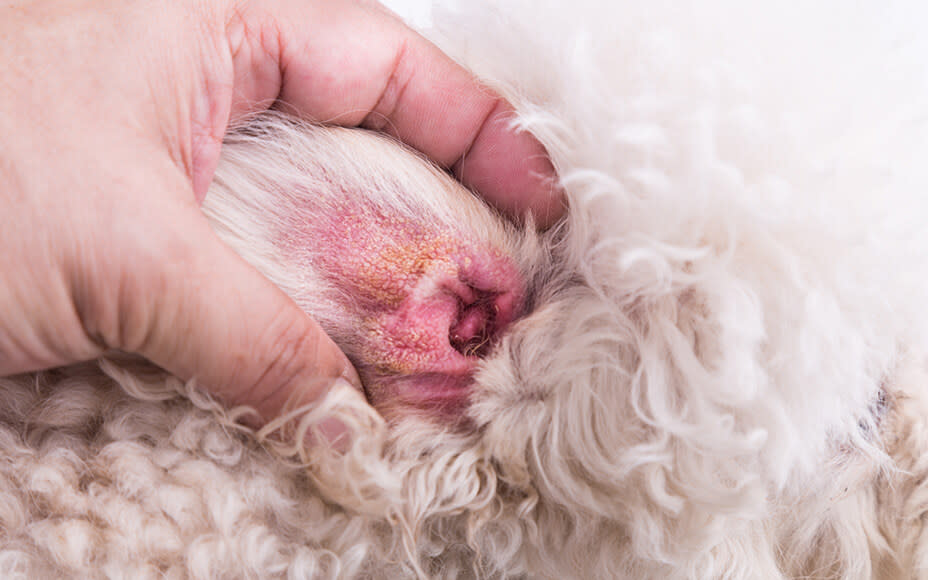
[TRANSLATION ERROR] Ein gerötetes Ohr mit braunem Sekret ist ein eindeutiges Anzeichen für Ohrmilben oder eine Entzündung.
Am I also at risk?
As you have already learned, ear mites can be transmitted between dogs and cats. Fortunately, humans are not among the "host animals." So you are not at risk and don’t need to worry about your children.
How is a diagnosis made?
The coffee grounds-like secretion is typical for an ear mite infestation. In an examination of the ears with an otoscope, your veterinarian can sometimes spot the mites with the naked eye. However, the mites are quite quick and hide as soon as a light source appears. Therefore, it is best to look for the mites from a swab from the ear under a microscope to confirm the diagnosis.
How will my dog get rid of the ear mites?
The good news is that ear mites can be treated well. There are various ear drops or ointments that are effective. Depending on how severe the inflammation in the ear is and whether bacteria have also settled, it may be advisable to use corticosteroid or antibiotic-containing drops as well. Your veterinarian will help you find the best treatment for your four-legged friend.
The life cycle of the mites, i.e., the time from egg laying to the development into an adult mite, is 3 weeks. Therefore, the treatment should last at least three weeks to ensure all developmental stages are eliminated.
Perfect for distracting your four-legged friend while you apply anti-flea, tick, and mite treatments are our delicious →pâtés with liver or poultry.


In addition to treating your four-legged friend, it is also important to think about the environment. Wash all textiles that your friend comes into contact with, and thoroughly vacuum the apartment or house.
Can I prevent ear mites?
Here again, good news: Yes, you can. A good →flea and tick prevention usually protects your friend simultaneously from mites as well. As a preventive measure, you can also use our →CARE Ear Cleaner. It cleans, protects, and cares based on purely natural ingredients and supports against irritations caused by parasites or yeast fungi. However, if you suspect a mite infestation, be sure to discuss the application first with your veterinarian.
Good prevention is definitely much easier than getting rid of the little nuisances once you have to deal with them.