How to support your dog's dental health
Show those teeth!
So your four-legged friend can fully enjoy their food and tasty snacks every day, a healthy set of teeth with well-cared-for teeth and vital gums is important.
Dental health isn't just an issue for us humans, and since your furry friend can't pick up a toothbrush themselves, they rely on your support. We'll explain how you can help here.

Promoting the health of the stomach and intestines
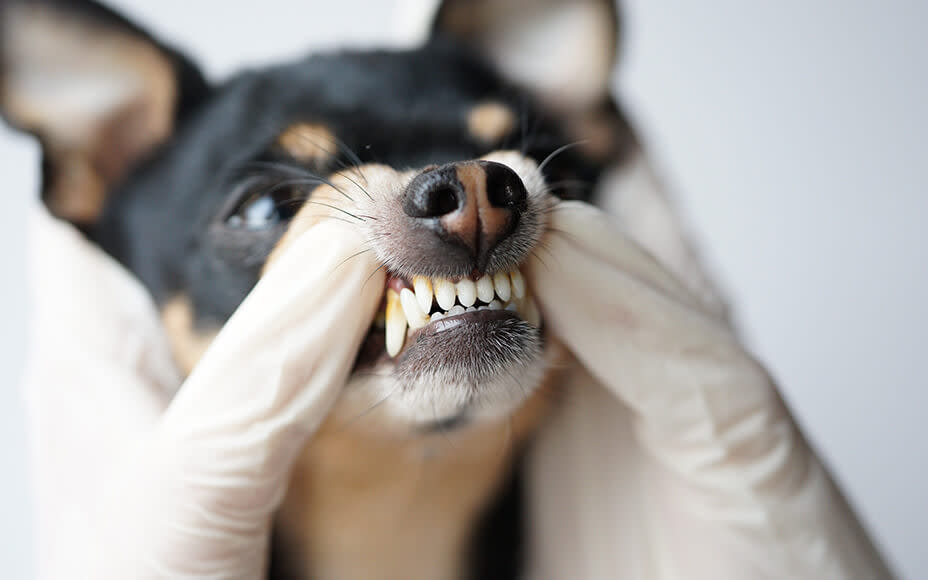
Stomach and intestines – when it comes to dental health? Huh?! You heard right! Your furry friend's teeth and gums are closely connected to the rest of the body – for example, inflammation in the teeth can quickly spread to other organs.
In particular, the stomach and intestines can be related to your dog's dental health. If your dog has a strong immune system, bacteria in the mouth can't do as much harm.
A food that promotes a healthy gut flora is therefore important from puppyhood onward. High-quality ingredients, essential vitamins and minerals, as well as oils and herbs, support the stomach and intestines of your furry friend and form an optimal foundation.
Brushing your dog's teeth
Brushing your dog's teeth? Of course! But how do wolves keep their teeth clean?
In fact, even wild dogs and wolves suffer from plaque and other problems. Brushing is often the best way to keep your furry friend's teeth clean. Special toothbrushes or finger caps allow for a thorough and pain-free cleaning.
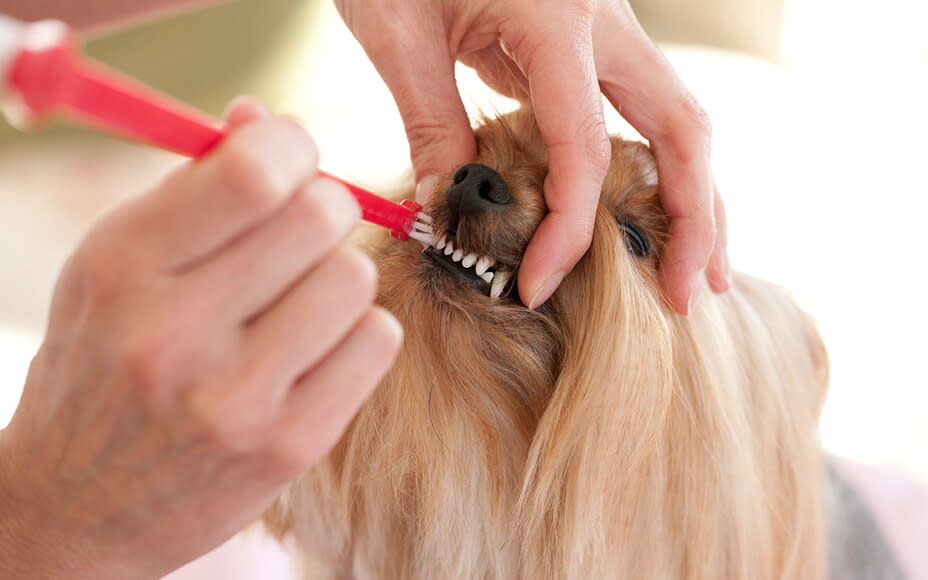
Your four-legged friend resists at first? Ideally, you should get them used to the toothbrush as soon as they join your home. But with a tasty toothpaste, even older dogs can usually be convinced.
Chew snacks for stronger and healthier teeth
A →dental care snack is the perfect way to combine healthy rewards with dental health. Chewing creates a mechanical abrasion of plaque – this cleans your dog's teeth and the spaces between them. An increased flow of saliva can, for example, soften tartar and plaque. Chewing movements also train the jaw and head muscles and keep your dog naturally engaged.
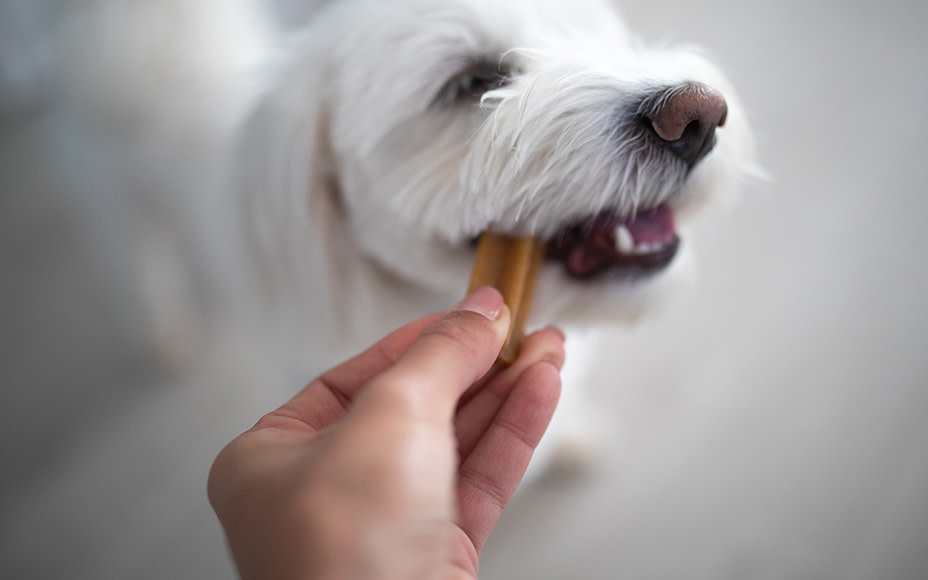
When choosing a chew snack, you should look for the following features:
lots of high-quality meat
free from sugar
free from grains
free from artificial colors and flavors
free from preservatives
Give this a try!
Recognizing dental problems in dogs
If your dog has dental problems, they'll probably try to show you quite quickly. Behavioral changes such as refusing food, weight loss, and diarrhea can be early signs of serious dental problems.
It's not uncommon for dogs with acute tooth pain to pick out only the particularly soft parts of their food. Shaking their head and scratching their snout on objects or with their paws is also often seen.
If you notice this behavior in your furry friend, it's a good idea to seek veterinary advice as soon as possible.