How Your Puppy Communicates with You
Interpreting a dog's language is not easy, especially in the beginning. Unlike us humans, Labrador puppy Lilly cannot and will not say "So, buddy, it's mealtime and then I really need to go outside!" Admittedly, that's a shame, but our four-legged family members have a very pronounced body language.
Recognizing and Interpreting Body Language
Posture, facial expressions, and various movements are part of a puppy's body language. Certain movements are practically innate to the little four-legged ones, allowing them to understand the signals of other dogs from the very start and act accordingly.
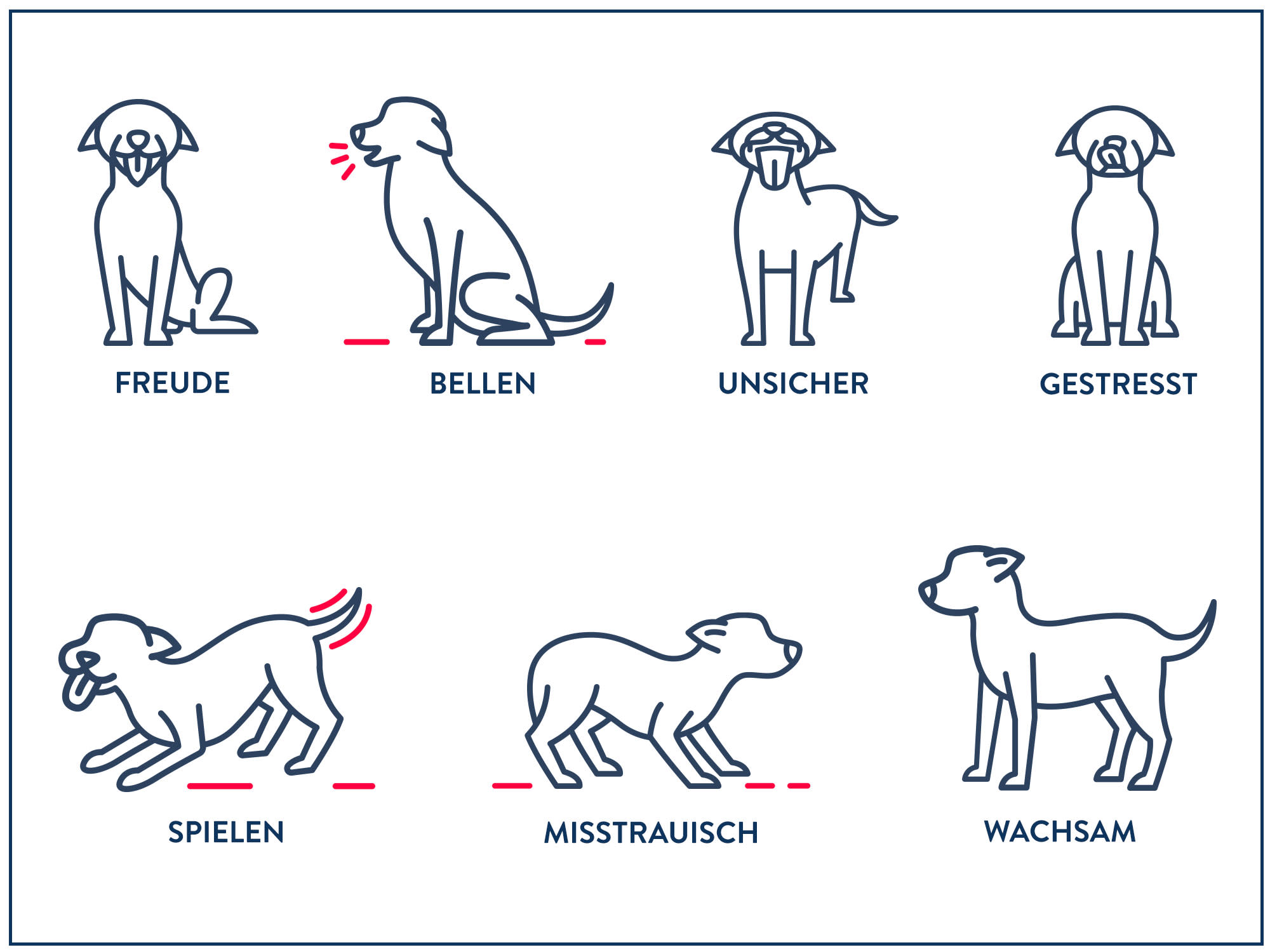
Tail wagging, changing positions, or head movements are all signs that your puppy sends you for communication. To help you understand what your puppy might be trying to tell you—as every dog communicates with individual nuances—here is an overview:

Your Puppy is Happy
If your puppy sits in front of you and looks up at you, that's already a good sign. If his posture is relaxed and he is even wagging his tail, he is happy to see you and is in a good mood. By the way, you can read here how to tell if →your dog loves you.
Your Puppy Wants to Play
There’s hardly a funnier sight: Your puppy bends down with its front legs and raises its butt as high as it can. Together with a demanding look and an occasional little bark, this clearly means: Play with me!
Alertness
If your puppy's body is tense and he is in a standing position, he is likely showing you his alertness. He will slightly lay his ears back, open his eyes wide, and look around regularly to take everything in. Your dog then needs some time for himself and wants to assess the situation before he wants to be petted. Perhaps there is a danger lurking?
Your Puppy is Suspicious
Not everything your puppy encounters on walks is familiar to him. If your furry friend lays his ears flat against his head, squints his eyes slightly, and is in a firm posture, he is suspicious. Maybe he sees something new and needs to better assess the situation.
Your Puppy is Uncertain
Yawning doesn’t always mean tiredness (even if the little rascal really needs a lot of naps!). Yawning is a way for dogs of all ages to show their uncertainty. This could be due to a situation with you—like when you are packing your bags and getting ready for work. Then your little furry friend doesn’t know what will happen next and tries to calm himself down. Whenever possible, you can help your four-legged friend by showing him security through a confident posture and relaxed, secure movements**.
Your Puppy is Stressed
You are probably familiar with the licking of the lips when you present your puppy with a tasty meal. But this body language also comes into play in uncertain situations. Your puppy tends to lick his mouth when feeling uncertain. Here, too, you can help ease your puppy's feelings with a relaxed body posture and reassurance.
"Woof!" - Understanding Your Puppy's Sounds
Your puppy can bark—not just always in the same tone and volume, but in a wide range of different barking and whimpering patterns:
The Barking
is characterized by a loud, strong sound. This can be high or low depending on the mood. Joy, aggression, or uncertainty can best be interpreted by looking at the body language. Perhaps you will soon be able to recognize your puppy's mood by the tone of his bark?
The Whining and Squeaking
The woes of a young puppy—hardly any sound sounds more pitiful than whining. With a high pitch, your four-legged friend can tell you a lot. Sometimes there are pains and fears behind it, and sometimes it’s just boredom or longing.
The Whimpering
The high, elongated sound can indicate various things. Nervousness, fear, and frustration can be behind it. Sometimes your puppy may whimper simply because he is very happy. Usually, dogs associate whimpering with an action and point to the food bowl or the door, as they connect these items with food or a walk. This way, your dog tells you that he wants to go outside to do his business.
The Growling
A deep rumble, which can be longer or shorter, usually issues a warning. This does not apply to the playful growl that your furry friend makes while playing with a tug toy. A deep growl generally issues a warning. Here, it’s worth observing your puppy's tail: If it is upright, your four-legged friend is annoyed. If he is wagging or is relaxed, that is a good sign.
The Howling
When your puppy howls, you probably immediately think of typical wolf sounds. In doing so, your puppy stretches his head back and points his nose to the sky. When howling, your dog can change the pitch, which often sounds like real words in breeds like Huskies. Howling signifies togetherness or the marking of one's territory. Perhaps your puppy howls when an ambulance passes by—dogs often perceive such sirens as howling from other dogs and join in.
Say "Thank You!" to Your Favorite!
Now you know how your puppy communicates with you and what he might be trying to say. You have the opportunity to show your four-legged friend in so many ways how much you love him. Whether it’s a thorough belly rub, a cuddle session on the sofa, or simply spending a day together—your furry friend appreciates every bit of love.
With our snacks, you can give him even more love—and also think about his healthy diet. Without sugar, colorings, or flavorings as well as grains, our snacks are guaranteed to make tails wag! So, do you remember what this sign means?