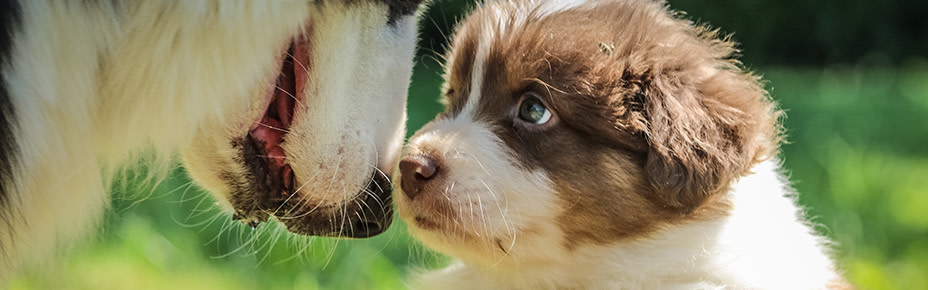
Introducing Your Puppy to Other Dogs Safely - Here's How!
A little →puppy has moved in with you and now you're wondering how to best introduce him to other dogs? The reactions to a young dog can vary. To ensure that nothing goes wrong and neither the puppy nor the other dogs are overwhelmed, there are a few things you can keep in mind:
Safely Introducing Puppies to Your Own Dog(s)
You already have one or more dogs and now they should meet the new puppy? There are many cute videos online about this, but let me just say: Putting the puppy in a box and then surprising your dog with it is not a good idea! Instead, you should pay attention to the following things:
1. Choose a neutral location for the introduction. Ideally, it should be close to your house or apartment.
2. Depending on how the puppy and/or your other dog are behaving, additional security with a leash and even a muzzle can be helpful. For safety, use a harness for the puppy instead of a collar.
3. Ideally, both dogs are initially leashed. You walk together for a bit, gradually bringing the dogs closer until they can walk side by side.
4. If everything is relaxed, you can unclip the leashes or switch to a long line and let them play or sniff.
5. If there is a tense atmosphere, walk a bit further. Stopping can create additional tension.
6. If everything goes well, you can go together with the dogs into the garden or the house.

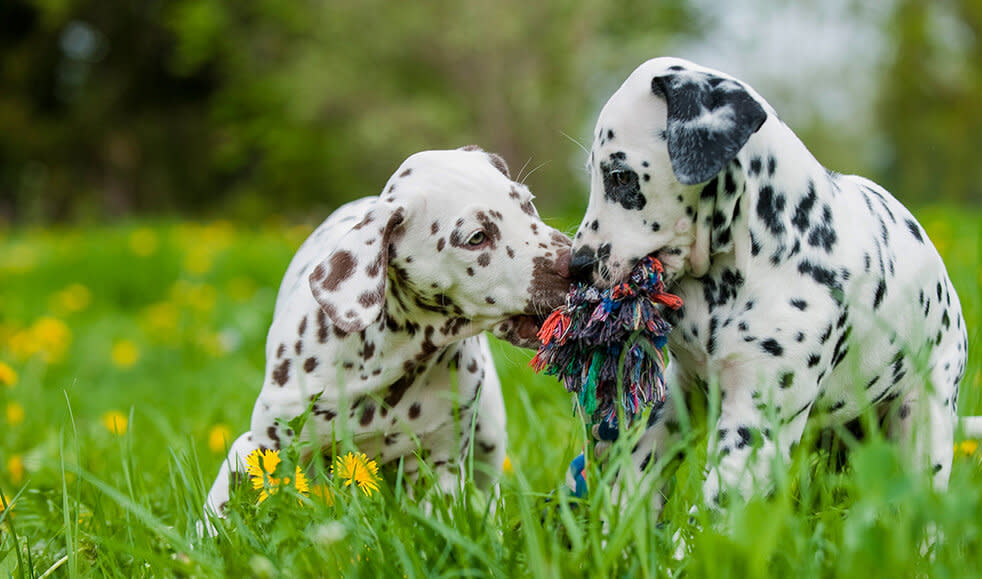
Try to behave as relaxed and calm as possible. Even if you are certainly excited and want the dogs to play and become best friends right away - don’t pressure them. Some dogs need a little time to warm up to each other. Other dogs may be more open. Yet others may be more neutral.
Alles beisammen: Unsere Erstausstattung für Welpen


Introducing Puppies to Family or Friends' Dogs
When you want to introduce your puppy to the dogs of your parents, siblings, or friends, it's a bit different than when your little one meets a strange dog on the street. Surely, the dog of your family already knows you and will be a bit surprised at who you brought along. An introduction in the home garden or house can be overwhelming for the older dog. After all, everyone is excited, which can also transfer to the dogs.
It's better to be safe and meet beforehand at a neutral location. A side street will suffice. Here, the two dogs can get to know each other on neutral ground and sniff each other in a relaxed manner. If one of the dogs is a bit unsure, refer to the steps mentioned earlier in the article and walk a little together. This lightens the mood and gives both dogs the chance to gain the necessary distance from each other.
Once the dogs are relaxed with each other, you can go into the garden or the house. Also, try not to stand around staring at the dogs. This increases the pressure and can create a tense atmosphere. Observe the dogs and especially keep →an eye on the puppy, but otherwise behave normally. Move around, talk to each other and try not to focus too much on the dogs.

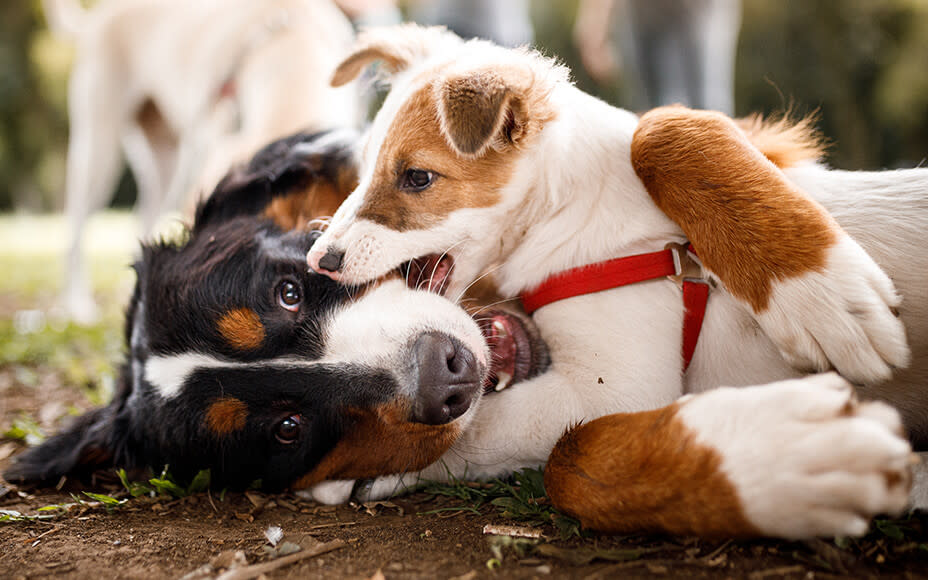
What If Your Own Dog Reacts Aggressively to the Puppy?
Does your dog find your puppy quite annoying and would love to give him a piece of his mind? This can happen, which is why the introduction of the dogs should always be well thought out and secured. If your dog reacts this way to a strange dog or puppy, he has likely already shown some difficulties in dealing with other four-legged friends. This means you can take some safety precautions in advance:
1. A well-fitting muzzle is not a bad thing. On the contrary: It allows you to let your dog interact safely with the puppy without anything happening.
2. Organize a puppy gate. This can especially help in the beginning to spatially separate the dogs and slowly get them used to each other. Through a puppy gate, the dogs can see and smell each other. At the same time, the puppy cannot enter the first dog's personal space and vice versa.
3. Give both dogs equal attention. Especially when the puppy suddenly receives a lot of petting and affection while your other dog only hears "Leave it" and "Stop it," this is not great for your furry friend. By giving both dogs equal attention, your dog learns that he is not neglected despite the puppy. This also applies to your visitors.
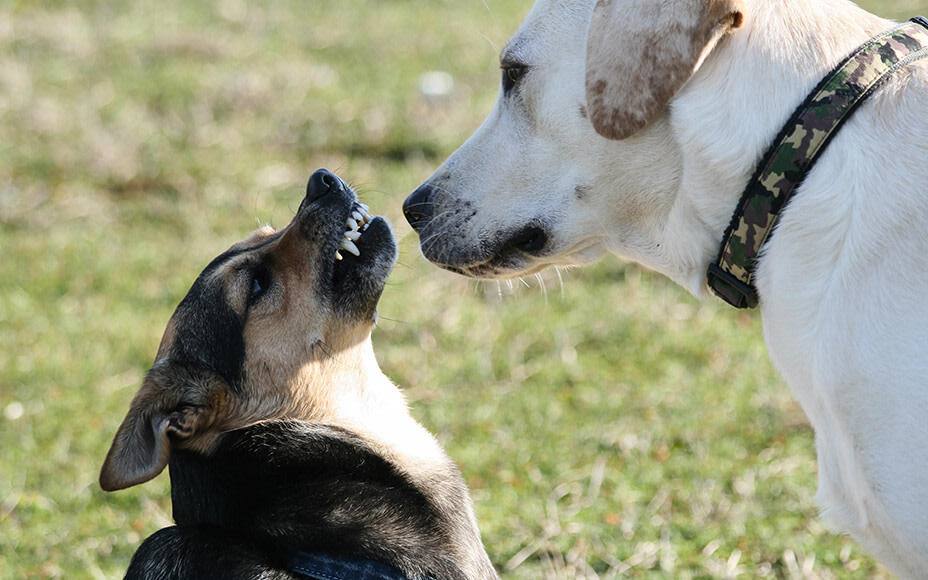
Puppy Protection - How Much Does It Really Protect Your Puppy?
It is often claimed that a puppy enjoys what is called →puppy protection and therefore is not reprimanded or even attacked by older dogs. However, this is not entirely true. A young dog has puppy protection, if at all, only within its own "pack." This means with dogs that are related by blood and usually only until the 14th week of life. This behavior serves to protect and preserve its own kind.
When a puppy moves in with you, there is often a higher tolerance level among the dogs living there, which is mistakenly seen as "puppy protection." But even here, conflicts can arise among the four-legged friends. Not infrequently, older dogs reprimand the puppies. Depending on how cheeky and self-assured your little four-legged friend is, such corrections can sometimes be a bit more intense.
When your puppy encounters unknown dogs, he generally enjoys no puppy protection. Most older dogs recognize a puppy and often let them get away with a bit more. However, you can also expect reprimands from older dogs for misbehavior or boundary crossings by the puppy. There are also dogs that cannot stand the cheeky nature of a puppy and will directly give a warning.