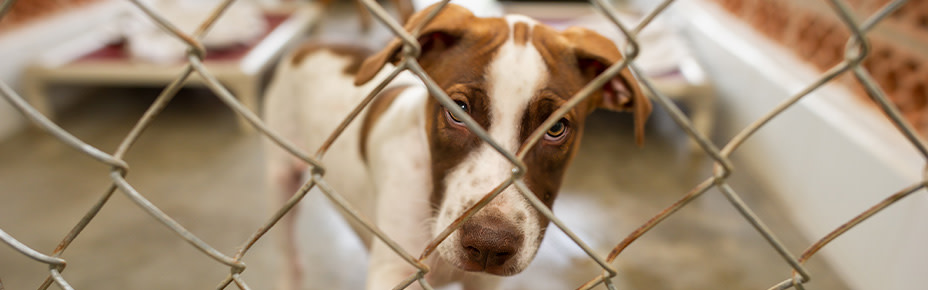
First of all: "Rescuing" a puppy...
...is an honorable thing, and many dogs from animal protection can certainly consider themselves lucky to find a home with you. However, even a "rescued" puppy from animal protection is a living being that should not be taken in out of pity. They all look sweet and cute, and yes, they all seek a warm bed. Nevertheless, a puppy from animal protection is still a puppy and requires a →good upbringing, costs a lot of nerves, and even more patience, and will present you with many challenges.
So think carefully about whether you are ready for a puppy that may have already experienced quite a bit and comes with one or another baggage. If the puppy is no longer so small and cute, difficulties may arise. If humans are not up to this pressure, the four-legged friend can quickly become a trophy and ultimately gain nothing from being "rescued." Owning a dog comes with a certain responsibility, and before purchasing, one should always consider whether one is truly →ready for their own dog.
Puppy from animal protection - Shelter, animal shelter, foster home?
If you are interested in adopting a puppy from animal protection, you have various options to find a suitable four-legged friend for yourself. First of all, you should consider whether you want to adopt a dog from abroad or prefer a puppy that already lives near you and that you can possibly get to know beforehand.
There are also dogs that are housed in shelters or shelters and those that live with foster families. Puppies from shelters are usually with many other dogs and often do not have it as nice as four-legged friends placed in a foster home. Here, private individuals take care of the charges and help find a suitable home.

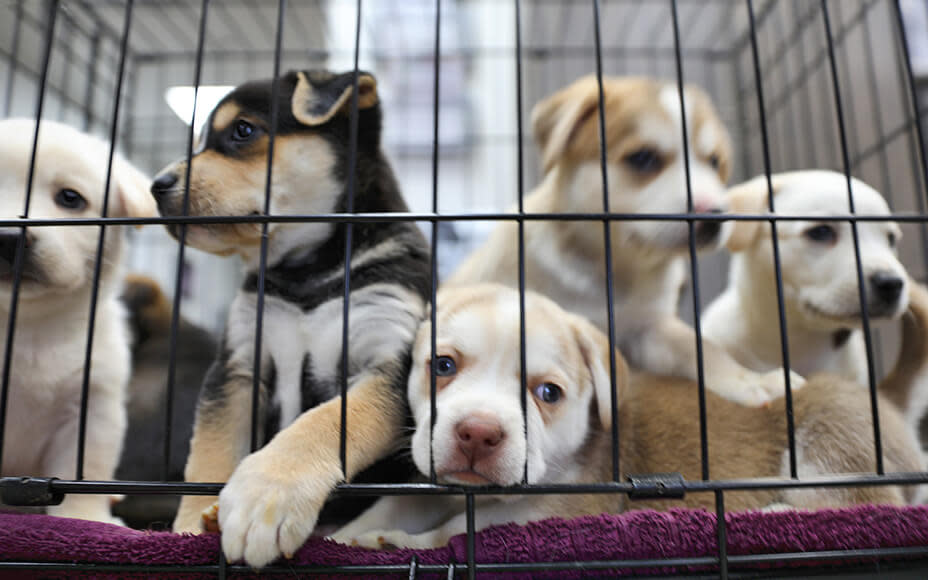
[TRANSLATION ERROR] Egal ob Tierheim, Zucht oder von Privat - beim Kauf eines Welpen gibt es einiges zu beachten!
Adopting a puppy from the shelter
If you want to adopt a puppy from the shelter, you usually have to apply for the puppy and fill out a self-disclosure form. Often, a pre-check is also conducted, where a staff member from the shelter or animal protection organization comes to your home and checks whether your information regarding your living situation is correct. Even though the animals are looking for a home, they are not simply given to every interested party.
If the little four-legged friend is in a shelter near you, you have the opportunity to view him after consulting with the shelter staff and get to know him. You may even be able to take a walk together or play a bit. It is important that you contact the shelter beforehand and ask whether the puppy is still looking for interested parties and whether he can be visited. Just dropping by to see the animals usually does not work, as a shelter is not a zoo, and the dogs may only be visited by appointment.
Puppies from the shelter or shelter abroad can usually be found through advertisements on the internet. But here too, you should request several videos and photos of the desired puppy and closely observe how the little one is doing and what character traits you can expect.
Adopting a puppy from a foster home
Some puppies from animal protection are in so-called foster homes. These are usually private individuals who agree to take in dogs from animal protection until a suitable home for the four-legged friends is found. The advantage of a foster home is that the puppies receive much more individual care and can also learn a thing or two. The nature of the animals can also be assessed much better, as they live with the foster family for some time before being placed. However, keep in mind that dogs in foster homes often lived in a shelter before and may have already experienced quite a bit.
If you are interested in a puppy from a foster home, you apply through the responsible animal protection organization using a self-disclosure form for him. If everything fits, you can visit the puppy after consulting with the foster home and get to know him, ask all your questions, and simply see if the little puppy suits you. Since the foster homes work with the animal protection organizations, they will naturally also have a few questions for you and will give an assessment after getting to know you if there was a spark between the puppy and you.
It's a match? Congratulations! Then pamper your new family member right from the start with our loving →starter kit. Tasty and healthy puppy food, a comfortable dog bed, and a high-quality pair of leash and collar - everything you need for a [→perfect puppy start](/magazin/hunde/welpenerziehung/alles-uber-den-welpenstart)!
Alles beisammen: Unsere Erstausstattung für Welpen
Attention! How to recognize reputable animal protection organizations
Unfortunately, even with puppies from animal protection, illegal puppy trading is conducted. To ensure that you do not accidentally support this animal cruelty, you should inform yourself well →about the animal protection organizations before adopting!
Important indicators of a reputable animal protection organization are:
- The organization is registered and ideally non-profit. If this is the case, you will find "e.V." for "registered association" at the end of the organization's name. Additionally, check the imprint of the website. Here you will also find information about non-profit status. Often, only German organizations that are active abroad are non-profit, as non-profit law applies in Germany and Austria.
- A well-maintained website and Facebook page are available. Posts and job advertisements are current.
- There are experience reports and reviews available on the internet and social media.
- The organization has animals of all ages, not just puppies. If puppies are offered for adoption, you should always ask about the mother dog. The goal of reputable animal protection organizations should always be to take in the puppies together with the mother and, at the appropriate time, also find a new home for the mother dog.
- The organization is also committed to further issues related to animal protection and collects donations, participates in projects, and provides educational work on the website.
- Animals that are placed should all be vaccinated, microchipped, and checked for Mediterranean diseases. Other diseases should also not be concealed but openly addressed. While this is rare in puppies, a look through other advertisements from the organization can show how the topic is handled.
- All information about the animal, such as age, origin, character, and traits, proof of medical history, and vaccinations should be included in the advertisement.
- The puppy should not be younger than eight weeks at the time of departure, and preferably not younger than four months. The reason for this is that animals from abroad are often weakened by malnutrition and health problems. Additionally, the stress of the journey to Germany and the unknown germs for the dog's organism can be dangerous for most dogs, especially puppies.
- A pre-check and possibly a follow-up check are conducted. Reputable organizations take the time to get to know you and ensure what the potential new home for the animal looks like. In rental situations, some organizations even require a written permission from the landlord to keep a pet.
- The organization provides sufficient photos and video material of the animal. They are happy to answer all your questions and may send you current and additional video material.
- The animal comes with a vaccination passport and possibly an EU pet passport.
- There is a protection or purchase contract. The protection fee to be paid is reasonable and usually ranges between 200 and 400 euros. Reputable organizations strive to be transparent about how the protection fee is composed in detail. Additionally, a written transfer contract is not uncommon before taking in the animal to secure both parties.
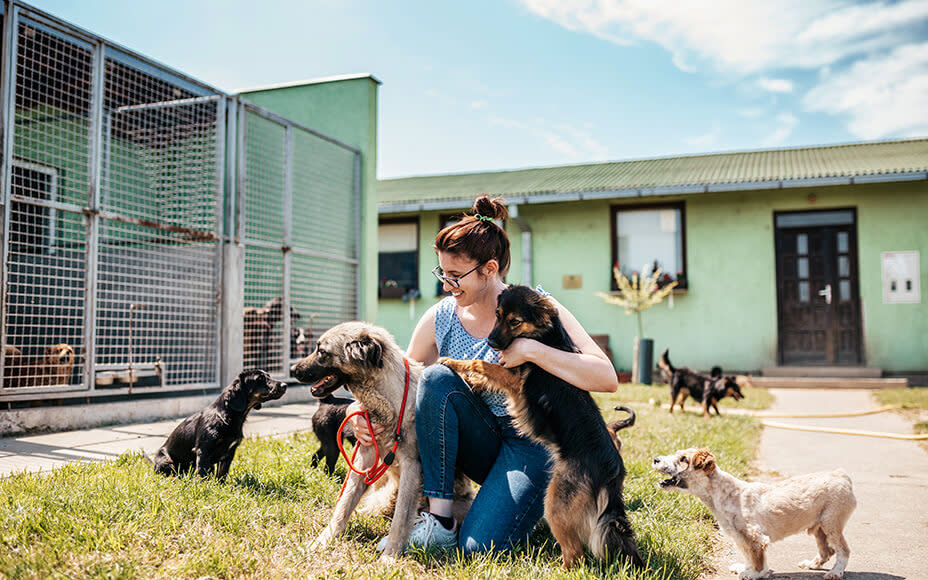
[TRANSLATION ERROR] Informier dich vor der Adoption gut über die Tierschutzorganisation deiner Wahl! Leider gibt es auch beim Tierschutz viele schwarze Schafe.
Possible challenges with a puppy from animal protection
Puppies require work, and one cannot generally predict how they will develop - this applies to both animals from animal protection and puppies from breeders. The difference, however, is that puppies from animal protection usually had a bumpy start in life. Perhaps they grew up without their mother, were found somewhere, suffered from illnesses or injuries, or are traumatized. All of this makes the puppy no less lovable, but these are peculiarities that you may need to prepare for.
Especially →the first months of life are very formative for dogs. Depending on the nature of the animals, some cope better with their past than others. Thus, a puppy from animal protection is a little surprise package. He can be uncomplicated and easy to handle or may require intensive →behavior training. Of course, a puppy from a breeding can also become behaviorally problematic, but in most cases, this is a self-made problem. Either way, a puppy, no matter how cute, means a lot of work, and you never know how much →training, patience, and time you will need to invest in the [→training](/magazin/hunde/hunde-erziehung).
Puppies from abroad can also have some →ailments and diseases. [→Worms](/magazin/hunde/hunde-gesundheit/spulwuermer-beim-hund-erkennen-und-behandeln) and [→parasites](/magazin/hunde/hunde-gesundheit/borreliose-beim-hund-symptome-behandlung-und-impfung) can sometimes be brought into the house unnoticed. Also, →diarrhea can occur in the first days. Therefore, you should have your puppy checked by veterinarians once →when moving in and immediately switch to a [→high-quality and healthy puppy food](/magazin/hunde/hund-welpe-ernaehrung/gesunde-welpenernaehrung).
With our Pets Deli Junior food, your little furball is provided with everything it needs for healthy development. A special food for puppies is essential until the 12th month of life because young dogs in growth need a different composition of proteins and nutrients than adult dogs. This optimally supports the growth of bones, muscles, and organs.
Gesund ab dem ersten Tag: Unser Juniorfutter für deinen Welpen
Myth: Dogs from animal protection are so grateful
Did you know that dogs cannot feel gratitude? They can only distinguish between things that are allowed for them (e.g., lying on the sofa) and things that are forbidden (e.g., lying in bed). Depending on whether you make an exception (e.g., on weekends the dog is allowed to cuddle in bed), they feel joy. However, a puppy from animal protection will not feel deep gratitude upon moving in with you for "rescuing" him and will therefore not be super well-behaved.
The fact is that the dog was torn from its natural environment and everyday life (as sad as it may have been) and will initially be quite confused and perhaps also insecure. We humans have simply decided that the puppy will live with you from now on - and that's it. Some rescue dogs are, of course, happy that they now have a warm bed, a full bowl, and more peace and cuddles. Others may find it a bit difficult because they may not know what an apartment is, are used to sleeping on hard floors, and find humans quite scary.
Additionally, many foreign rescue dogs do not know our everyday life. They are unfamiliar with busy streets, bicycles, train stations, elevators, vacuum cleaners, and also do not know rules or how to orient themselves to someone. So do not be disappointed if your puppy initially reacts a bit shy and withdrawn and does not let you pet his belly out of sheer gratitude.
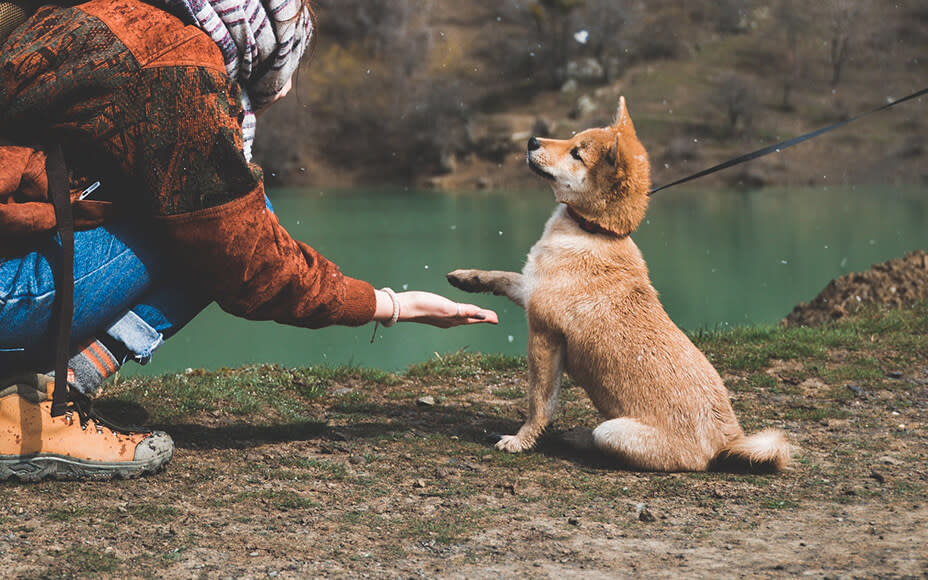
[TRANSLATION ERROR] Gemeinsam durch dick und dünn - das Überwinden so mancher Hürden schafft Vertrauen und stärkt die Bindung zwischen dir und deinem Hund!
Once your charge has truly settled in with you, he will likely test his boundaries and do some silly things - just as a carefree puppy should! Surely, over time, you will grow into a team together, and every challenge you face together will strengthen your bond. And your dog will definitely show you sooner or later that he is very happy to be part of your family.