How to stop your puppy from biting
No matter how cute your little four-legged friend is, the adorable little teeth will eventually turn into strong, fully grown teeth. At no other time does your puppy learn as much and as intensively as in the first months of life. That means for you: As soon as your little darling sets paw in your home for the first time, it's time for →consistent puppy training on your part. Find out here why your puppy keeps biting and how you can train this behavior out of him.
Bite inhibition: Why do puppies bite and when do they stop?
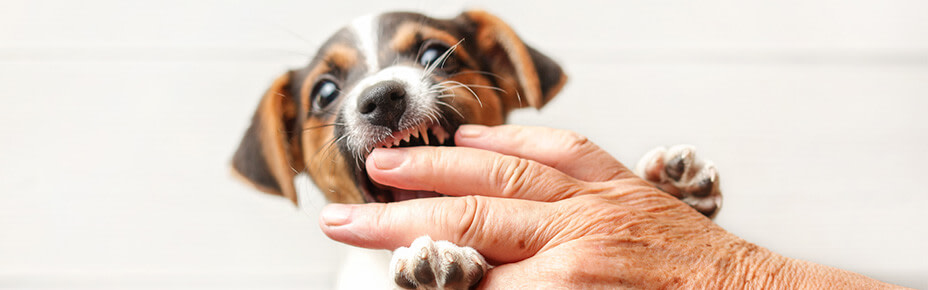
It's completely normal and not unusual for puppies to bite at first. But why do puppies bite at all, and sometimes even aggressively? They are born without the so-called bite inhibition, which they first have to learn. While puppies in their first weeks of life use their sharp teeth everywhere, wherever possible, they quickly learn from their mother that they are only allowed to use their teeth in a limited way. When playing with their siblings, the puppies already discipline each other and signal that they can't just bite as they please.

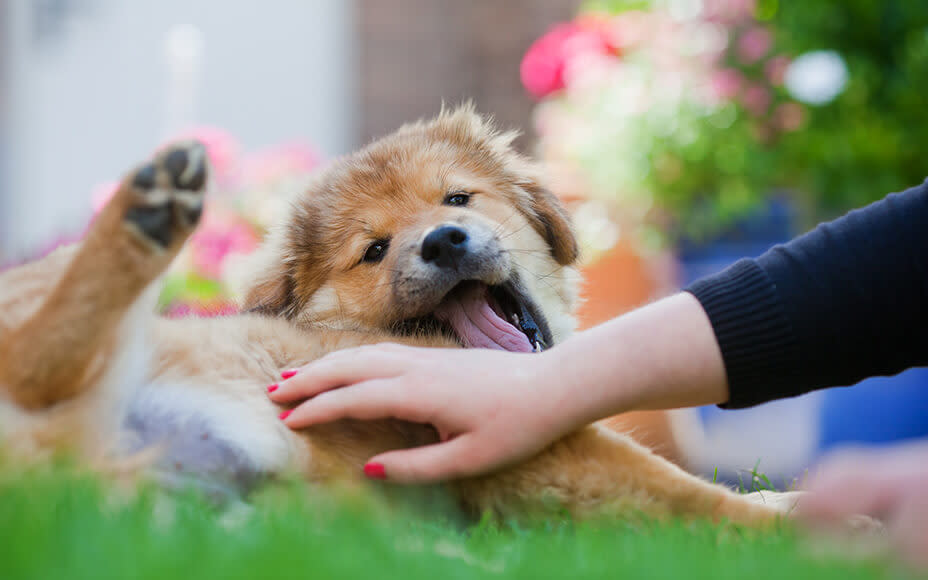
That puppies are not allowed to chew on everything is already signaled by their mother and siblings. However, once at home, your puppy will put you to the test and loves to use its little teeth.
Depending on how you build on this foundation, your puppy will eventually stop biting. For this, it's important that you consistently train bite inhibition and teach your four-legged friend that biting is not allowed. The more intensively you train this, the sooner your puppy will stop biting. Because around the fourth month of life, depending on the breed, the teething phase begins—and while the little milk teeth weren't very strong, your dog's adult teeth can cause real injuries.
Training a biting puppy: How to train your dog
Deep bite marks decorate your hands for weeks now? Diagnosis: →teething puppy. It's completely normal for your little one to want to chew and gnaw a lot during this time to cope with the itchy and sometimes painful tooth growth. During this period, you can help your puppy cope with the pain by giving him special chew toys to help him through it.
Tasty rewards for hardworking puppies
Are you wondering which treats and chew snacks are best for your puppy? When choosing, make sure you pick a grain- and sugar-free recipe. Meat should make up the majority, and artificial additives like flavors and colorants are a no-go, when it comes to healthy treats. At Pets Deli, we want the best taste for your puppy, a →long-lasting chewing experience and, of course, all in a healthy way!
But at some point, your four-legged friend's teeth stop bothering him, and yet he may still gnaw on everything non-stop? That can quickly become an unpleasant habit, because eventually your dog's teeth are fully developed. If he still nibbles on your hands and you don't counteract it, you might soon be missing 2-10 fingers. It's important here to train bite inhibition, even if your furry friend has tooth pain.
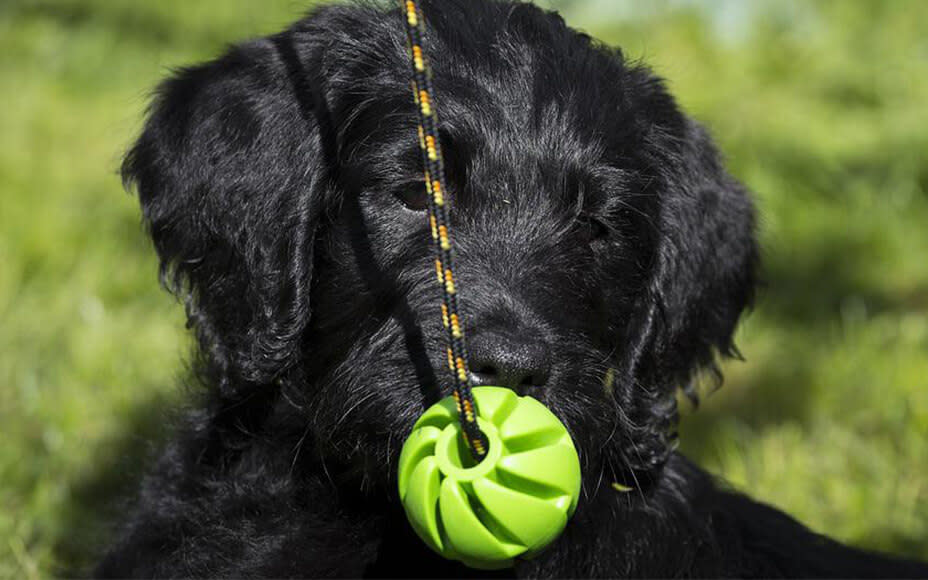
Some of your behavior can reinforce your dog's biting. For example, if you allow him to snap while playing with a tug toy, he will quickly remember that.
The use of →consistent training tools is only effective if they are used immediately in connection with unwanted behavior—in this case, constant biting beyond teething. With these tips you can already start at an early age, to generally prevent snapping at hands and legs:
A loud, firm "No" without yelling and screaming is already a corrective for some pups. Puppies know these kinds of sounds from their siblings, who signal pain from a bite by yelping. Also, keep valuables safe, leave shoes at the front door or store them in the closet if you don't want them to fall victim to your puppy's young teeth (of course, you can't really hide the sofa in the closet when you're out of the house).
Games that end in hand nibbling should be stopped immediately. The consequence here is that you take away what your puppy enjoys: fun and playtime with his favorite human. Take a play break and leave the situation. Your puppy will realize that his biting ends the game for him.
Tug and pull games suggest to your puppy a scenario where he has to fight for something. Your puppy learns that if he tries hard enough and is strong enough, he can take things—and this often transfers to other toys, food, and treats, which is why you should avoid such games until your puppy has reliably learned bite inhibition.
Puppies have been shown to display empathy when their caregivers feel pain . Show him with a pained "Ouch!", a half-loud yelp, and by clearly massaging the bitten spot that he has hurt you.
If your puppy is always looking for something to chew on, offer him a puppy chew toy. If he tries to grab your shoe to chew on it, take the shoe away and give him the chew toy instead. Praise him when he uses his teeth on that.
When to go to puppy school if your puppy bites?
If you reach a point where you feel the situation is getting out of hand, →attending a puppy school can help. So before you bury your head in the dog mess on the carpet and resign yourself to a shoeless future, a trainer can help get you and your puppy on the right track.
Even if you want expert support from the very beginning, you can visit puppy school at any time. Beforehand, you should thoroughly research different training methods and philosophies and consider which ones align with your own approach.
Methods based on violence, aggression, and fear should always be ruled out, as they can never provide a good foundation for training your dog. Empathetic behavior, patience, and →consistent communication make it easier for your puppy to adopt the behavior you hope for.