How to socialize your puppy
From the fourth week of life, an extremely formative phase for the further life with your furry friend begins within the framework of the →developmental phases of puppies. How will they cope with people and other dogs?
It is all the more important to introduce the puppy to all possible fellow species, objects, and experiences during this time. What the puppy associates with a positive experience during this time, they will perceive as completely normal in everyday life. That’s why intensive engagement in the form of cuddling and playtime with siblings is important, as part of the socialization ideally takes place in the puppy nursery. Roughhousing, nipping, communicating: The contact with the mother and siblings teaches young dogs a lot that they will need for their later life.
However, you cannot influence how the breeder socializes your puppy before pickup. But if you invest a lot of time in research for a →suitable breeding, you can be sure that good breeders place great value on early socialization.
But from week 8 onward, you take over: Creating connections and establishing contact with people and other fellow species are now your responsibilities. But how do you best go about it?
Fact Check: What does socialization mean for dogs?
In the course of their development, your puppy learns to communicate with other living beings. Besides other fellow species, this includes other four-legged friends like cats, small animals, and of course, us two-legged beings - humans. The socialization period for puppies starts around the 15th day and lasts until the end of the 14th week of life. Your puppy does not stop acquiring important communication skills from one day to the next, but the sensitive phase is nearing its end because certain cells in the brain have already matured, and "rewriting" them is only partially possible.
Socialization is essentially nothing more than the learning of interaction and communication rules, the acclimatization to living beings, and the adaptation of one’s behavior to certain circumstances in the environment. Your puppy should learn to →communicate with other living beings and, ideally, be able to lead a peaceful life with everyone. However, socialization goes further: Everyday situations and the correct behavior in the environment are learned during the socialization phase.

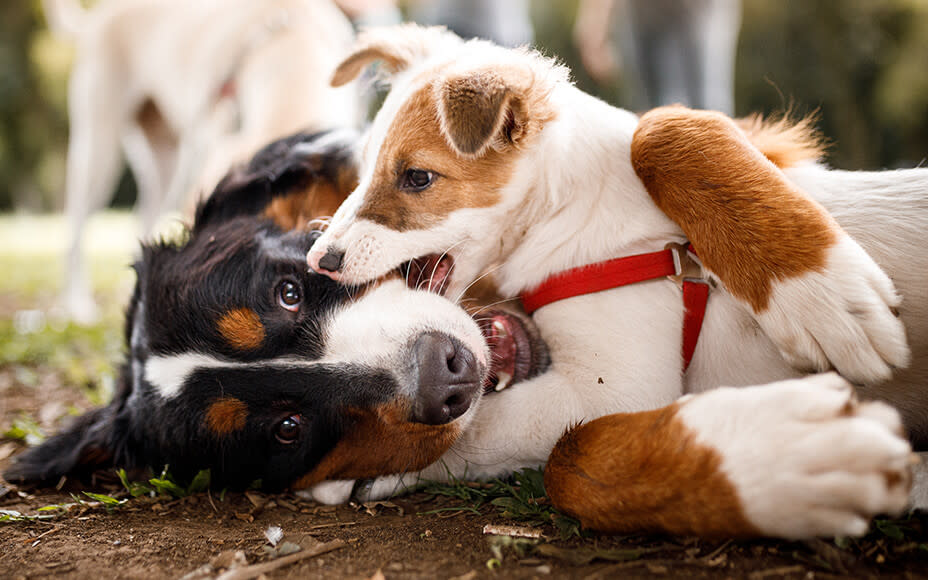
[TRANSLATION ERROR] Zu lernen, wie man mit anderen Hunden und weiteren Lebewesen kommuniziert und interagiert sind Kernpunkte der Sozialisation.
Good socialization not only ensures that your puppy gets along well with most living beings, but also that they can show appropriate behavior in various situations - such as in traffic. Your bond strengthens even more during this phase - because your puppy must trust you in new situations and reads from your behavior how they can behave in turn. Thus, it is important that you remain relaxed in the following phases, exude calmness, and always keep in mind that your puppy mirrors you in case of doubt.
Keyword trust: Our four-legged friends must entrust their health to us - so it’s best to start right from day one with a →healthy diet for your dog. We at Pets Deli have a special puppy food for you and your junior, which is precisely tailored to the needs of growing dogs that require proteins and nutrients in a specific composition. Give your puppy a can of joy!
Gesund ab dem ersten Tag: Unser Juniorfutter für deinen Welpen
The phases of puppy socialization
1. Phase
Everything your puppy should get to know should be introduced in this first phase, which begins immediately after picking up your puppy. (Of course, this doesn’t mean that you should take your puppy directly from the breeder on your next vacation).
Getting to know other dogs
Once your puppy has settled in, you can show them everything step by step. They should have the opportunity to get to know a wide range of →dogs. Plenty of playtime with fellow species is important, as puppies correct each other and thus learn how to interact with others. Just dropping your puppy off at the dog park? Absolutely not - it’s very likely that everyone will pounce on your young puppy wanting to get to know them.
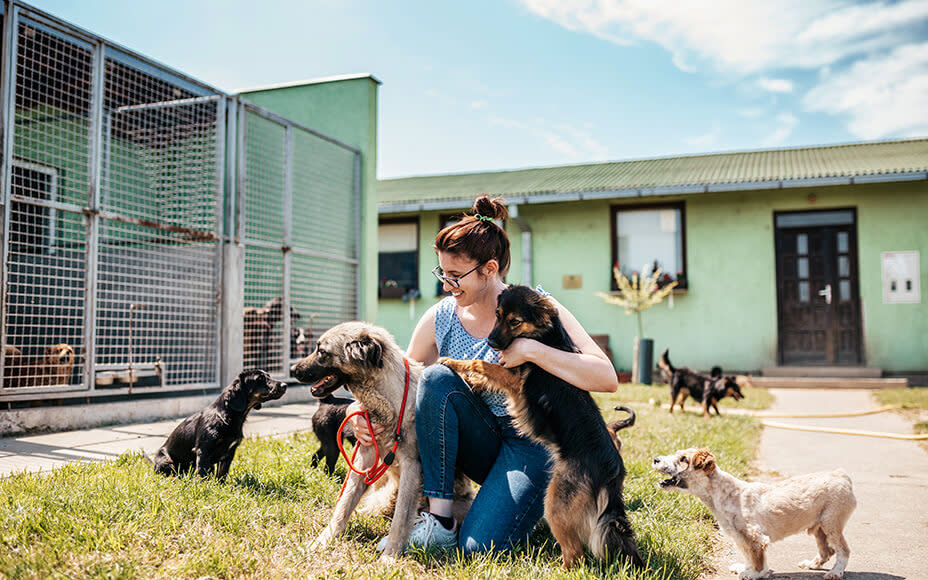
[TRANSLATION ERROR] Stellst du deinem Vierbeiner andere Hunde vor, sollte die Menge ausgewählt sein, um bei deinem jungen Hund nicht für Überforderung zu sorgen.
The result would be a frightened puppy who may have been overrun by various dogs. Plan dog encounters carefully and approach people intentionally. Pay close attention to your four-legged friend and how they communicate; this way, you can recognize whether they feel comfortable. Perhaps a →visit to a dog school would also be worthwhile for you and your puppy, as there you can get tips from professionals, controlled contact with other dogs, and someone can supervise and intervene if things go in the wrong direction.
Establishing contact with strangers
The contact with people is also important. If you want your dog to be friendly towards others later on, familiarize them with some of your friends and definitely with all important family members. Remember that your young dog has a lot to process and should not meet 10 new people per day - otherwise, →stress is pre-programmed. It is very important that you do not overwhelm your dog - regardless of the situation. This also means that your four-legged friend needs sufficient rest periods and →sleep (e.g., in their →crate) and does not collect too many impressions in one day.
To get your puppy used to the sometimes boisterous behavior of children, regular encounters are also recommended. Especially babies and children behave differently than adults: body language and vocal expressions may differ or be very intense and loud. If your puppy knows this early on, they can react calmly later.
Because you want passing people in everyday life to be accepted, ask someone for a short conversation while out and about. This way, your puppy sees that even strange people have a right to exist and are not frightening.
2. Phase
In the second phase, your puppy should already have a stable trust in other living beings. Now they will encounter some things that scare them. This includes traffic, possibly car rides, loud fireworks, and the ultimate challenge: the vacuum cleaner. In this phase, it’s more about acclimatization, as socialization technically only refers to interaction with living beings.
Dogs that later show uncertainties or [→aggressions](/magazin/hunde/hunde-erziehung/aggressives-verhalten-bei-hunden-verstehen-und-unterbinden) towards certain objects - e.g., inline skates, bicycles, joggers, cars, airplanes - did not have the opportunity during the socialization period to get to know these objects better or to gather good experiences. Here’s the thing: Your puppy may flinch from such things, but it’s up to you to show them that such things are harmless and can be ignored.
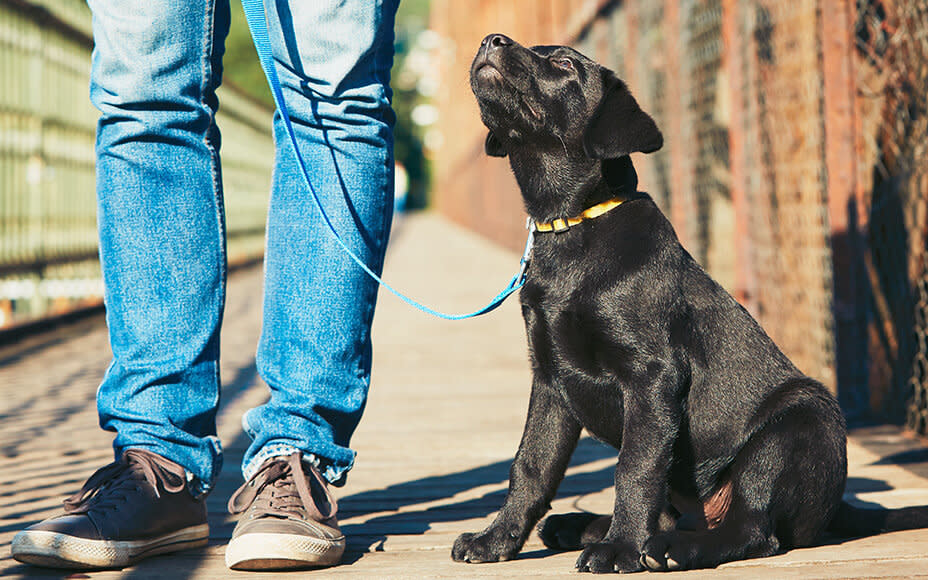
[TRANSLATION ERROR] Unterwegs zwischen Autos, Fahrrädern und einer lauten Menschenmenge: Das kann schonmal beängstigend sein. Wenn du deinem Welpen alles genau zeigst und selbst Ruhe ausstrahlst, lern dein Vierbeiner von dir.
If you notice that your →puppy reacts fearfully to foreign objects or is hesitant in certain situations, approach them slowly but confidently. Do not avoid such situations and do not give in if your puppy wants to flee immediately. Remember to always have enough healthy snacks** on hand and reward your young four-legged friend when they endure the frightening or uncomfortable situations.
Leckere Belohnungen für fleißige Welpen
It’s about showing your puppy early on that their fear is unfounded. You can best counteract bad experiences, such as a bite from another dog, by creating positive and relaxed situations with friendly dogs. The more intensively you practice this with your four-legged friend from the 8th week of life, the lower the likelihood of later behavioral problems and aggressions.
What happens if a puppy is not socialized?
Puppies that are not socialized have a harder time in life because they do not know everyday situations and therefore cannot react as a well-socialized dog would. Any unknown situation can then trigger fear or other undesirable reactions because your puppy cannot know what appropriate behavior would be. Whether in dealing with other dogs or people, in traffic, in public transport, or in everyday things like escalators, elevators, etc. - if your puppy has not internalized what behavior is appropriate during socialization, they will not be able to handle such situations well.
Especially in contact with other dogs, poorly or not at all socialized dogs show fearful, avoidant, or even aggressive behavior. Those who have not learned to communicate and interact cannot behave accordingly. Depending on how much puppies learned during the sensitive socialization phase, there may be individual "gaps" that become visible in their behavior. Dogs without contact with the outside world can also show fear reactions and avoidance behavior in all areas of everyday life.
If you should adopt a →dog from a shelter or an →older four-legged friend, there may be quite a bit of catching up to do. But even these four-legged friends can still be trained, allowing them to have a beautiful life.