Puppy has diarrhea: Causes, treatment, and how to help your dog
When stomach and intestines go haywire in your puppy, and their food comes out just a few minutes after ingestion in the most liquid form, and you can't clean up the traces on the floor as quickly as your little four-legged friend delivers more, it is likely diarrhea in puppies. Is it perhaps even normal for puppies to have diarrhea? Exactly, because this is considered one of the →puppy ailments and is generally not a reason to fall into worry. We explain to you where the diarrhea in your puppy can come from, what helps quickly, and what the treatment looks like at the veterinary practice.
Causes of diarrhea in puppies
To help your young dog, it is important to know what exactly causes diarrhea in puppies. When everything in the growing body is still young and not fully developed, it is also easier to throw off balance. This is also true for the digestive tract of puppies, which reacts much more sensitively to various influences than that of adult dogs. In addition to diarrhea, many puppies also react with →vomiting, →abdominal pain, and →constipation. The reasons are diverse and range from minor changes in food to serious illnesses.
Your dog ate something wrong
...which is now really upsetting its stomach. Puppies are the four-legged vacuum cleaners and gobble up everything that comes their way. If it hasn't been trained yet that your →dog only eats on command, it may have upset its stomach and thus has diarrhea. Caution is advised with food lying around, as many are →toxic to dogs.
Usually, it results in a harmless stomach upset, but if the diarrhea persists and your dog reacts with symptoms like trembling, apathy, unconsciousness, and fever, you should seek veterinary advice immediately. If your dog does not vomit on its own, the rule here is: Never intervene on your own and only let the veterinarian treat it. If you know what your dog has eaten, bring it along to the practice - this way, a quicker decision about treatment can be made. The same applies to →poison baits that dogs can find on the roadside or in fields.
The food change was done too quickly
It's understandable that you want to provide your four-legged friend with the best food right when they move into their new home. However, a too-quick →food transition can lead to diarrhea, as the stomach and intestines are still unstable and a sudden change can cause diarrhea. Even if you want healthy food for your dog, you should still give the breeder's food for the first 10-14 days, as your young dog needs to get used to everything. Diarrhea with a new food does not necessarily mean that your dog cannot tolerate it. Instead, you should slowly transition over a period of 2 weeks, mixing a little more of the new food into the old each day and then also reducing the amount of the old food.

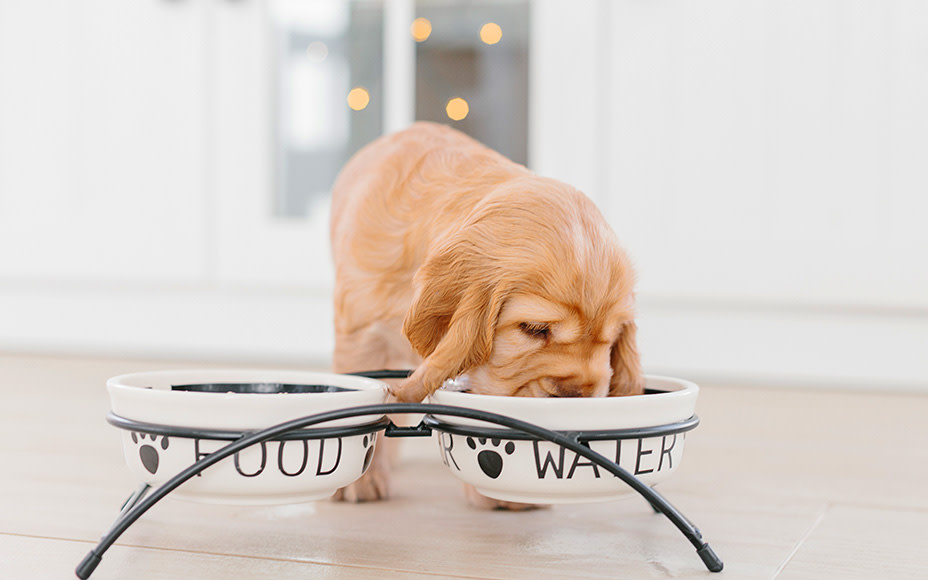
In the beginning, all puppies need special puppy food
With our Pets Deli Junior food, your little furball is provided with everything it needs for an adventurous day. A special food for puppies is essential until the 12th month of life because young dogs in growth require a different composition of proteins and nutrients than adult dogs. This optimally supports the growth of bones, muscles, and organs.
Healthy from Day One: Our Junior Food for Your Puppy
Your dog has parasites
Here too, the active sniffing nose and constant curiosity can be detrimental to your puppy: If your puppy occasionally eats →the feces of other dogs, spends a lot of time in the woods, or is around other dogs, there is a higher risk that your dog will become infected with parasites. Symptoms include diarrhea, but depending on the parasite, there can also be →itching, lethargy, and →loss of appetite. →Tapeworms and →roundworms manifest as the typically bloated "worm belly," and just sniffing the grass is enough for your puppy to get infected. But also →giardia, fleas, and →ticks can trigger various symptoms, including diarrhea.
Your dog is stressed
New home, new people, new food: Everything shines new, but a lot is spinning in your four-legged friend's head. They have recently had to leave their mom, their siblings, and their familiar surroundings and need a while to adjust to the new circumstances. All of this causes stress in dogs. →When stressed, the digestive system can quickly get out of order and reacts with diarrhea. Usually, this is a sign that your young dog should take it easy. Does he take rest periods on his own (e.g., →in his dog crate) or is he always on the go? Puppies →need to learn that they are not always on the go, should sometimes stay in their place for a few hours, and do not need to follow you everywhere.
Stress is also not always "negatively" visible: Puppies can experience stress if they are overly excited all day, are played with a lot, and get completely overexcited. Besides diarrhea, signs like restlessness, loss of appetite, and yawning can indicate stress.
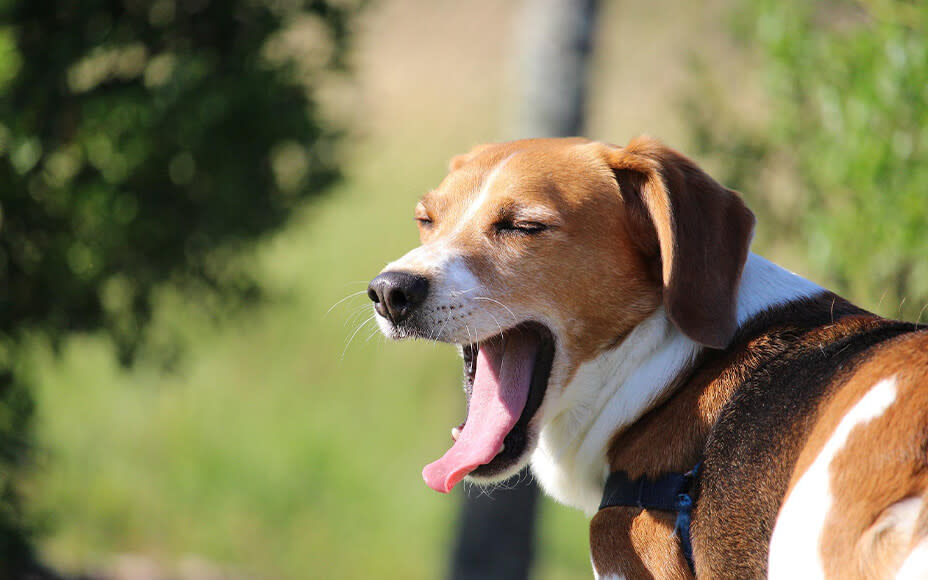
Yawning seems so normal, but it can be a clear sign of stress in your dog!
Infections of the gastrointestinal tract
Gastrointestinal infections do not spare our four-legged friends, and so it happens that our puppies catch viruses or bacteria that cause quite a stir. Usually, such infections pass within a few days. With the help of bland food, the stomach can be calmed, and your puppy will sleep a lot, as such an infection makes them really tired. Nevertheless, you should visit a veterinary practice for persistent diarrhea to clarify the situation.
Serious illnesses
Unfortunately, even in young dogs, diarrhea can sometimes be a sign of serious illnesses. The liver, →pancreas, stomach, and more can become ill and affect the entire body. If you find blood in your dog's stool (black, not red), that is an initial signal that a closer look should be taken in the practice. Blood tests and comprehensive diagnostics are then necessary. However, we can reassure you: Generally, diarrhea in puppies is a symptom that resolves on its own and does not hide a more serious cause.
When our four-legged friends get sick, we wish for support. What’s next, what can I do to help my dog? We are here with Pets Deli VET by your side - whether liver, kidneys, joints, or stomach: In addition to treatment, our special diet food brings joy to the bowl!
Supporting you during treatment: Pets Deli VET
My puppy has acute diarrhea - which home remedies help?
Sometimes it needs to be quick, and you would prefer to grab the first medication from your medicine cabinet. But caution: Many medications for humans can not only worsen the symptoms in dogs but can also be toxic to your four-legged friend and thus pose a real danger. So before you reach for diarrhea medication for humans, get veterinary advice.
A quick phone call is often enough, and then there is usually a green light for a tablet with activated charcoal that reliably stops the diarrhea. However, a conversation with the practice is always necessary for the exact dosage. Due to the significant fluid loss with diarrhea, you should ensure that your four-legged friend drinks plenty. If he refuses, you can try whether he prefers to drink from your hand or from a spoon.
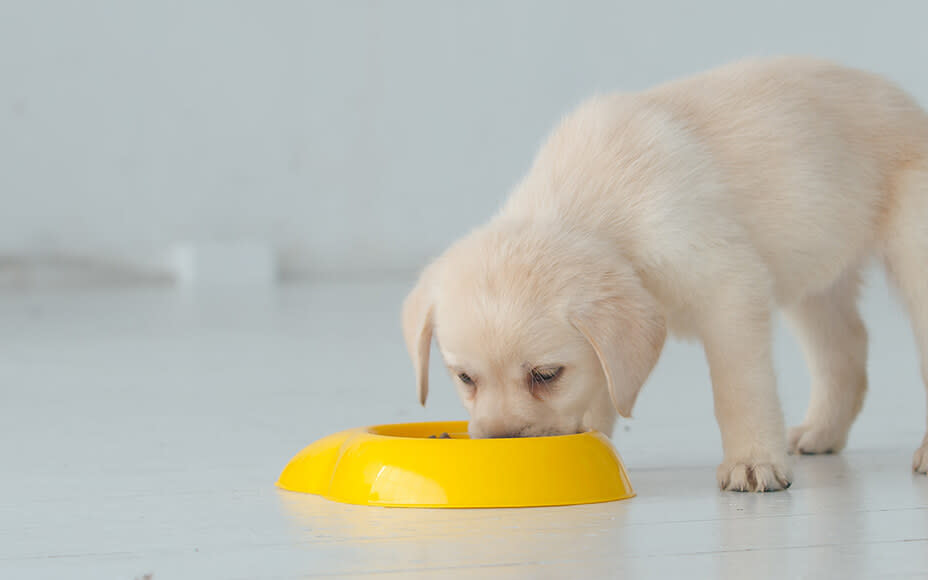
If your puppy has diarrhea, it's important to give their stomach a break. A little bland food soothes the digestive system and provides fluids lost due to diarrhea.
Bland diet for puppies with diarrhea
You can also help with the food if your little darling is not feeling well. For this, you can pause the usual food and feed some broth with possibly rice, chicken, and carrots for at least 3-5 days. The pieces should be very small and free of bones. You can also puree the soup and feed your dog small amounts. Especially with young dogs who are still practicing their →house training, the broth flows through quickly, and you should take your puppy outside right after the meal. Make sure not to use salt or other spices. With the bland diet, you also compensate for the fluid loss.
Are you looking for a ready-made, healthy soup that is species-appropriate and delicious? With our →VET Moro carrot soup, we ensure tail wagging even with diarrhea - this delicious treat helps your four-legged friend get back on their paws!
When should puppies see a veterinarian for diarrhea?
If your four-legged friend is happily bouncing around and you can't tell that they have a stomach upset in their daily life, that is not a cause for concern at first. Only when your puppy is lethargic and quiet, withdraws, and appears apathetic should you go to the practice immediately. Your four-legged friend loses too many nutrients in the long run and excretes everything they take in with acute diarrhea. If the diarrhea in your puppy does not improve after about 12 hours, a visit to the practice is the right decision.
Preventing diarrhea in puppies
Naturally, it is better if your puppy does not get diarrhea at all - but is that so easy to achieve? Not really, as you cannot keep an eye on your four-legged friend 24/7. In any case, you can ensure that your dog does not eat anything by properly storing toxic or incompatible foods. Also, toxic plants should be removed from your home when you make it →puppy-proof. Everything that your dog could potentially eat and cause stomachaches with diarrhea should be well and safely put away.
Also, when you are →out in the green, you can keep a better eye on your four-legged friend, as he snatches something off the street faster than you can say "puppy diarrhea." Here, an →early puppy training is worthwhile, where your dog learns that he only eats on command and does not pick up anything from the ground.
It is best to establish a routine in feeding your puppy. If you have slowly transitioned him to a food that your furball tolerates well, keep it up to not irritate the digestive tract. Is a visit to grandma and grandpa planned? The family should be clear that food from the table is taboo for dogs. This not only leads to habits like begging but has no place in a dog's stomach.
For parasites, it is advisable to apply a regular prophylaxis. There are [→various means against ticks and fleas](/magazin/hunde/hunde-gesundheit/floh-und