Why does my puppy breathe quickly in sleep?
Finally, the time has come and your →puppy has moved in with you. Along with exploring, playing, and having fun, →a lot of sleep is also part of a puppy's life. You notice that your puppy suddenly breathes quickly in sleep and you wonder if that is dangerous? Here’s the good news: In most cases, it is completely normal and harmless. Our Pets Deli veterinarian explains what’s behind it.
What is a normal breathing rate for puppies?
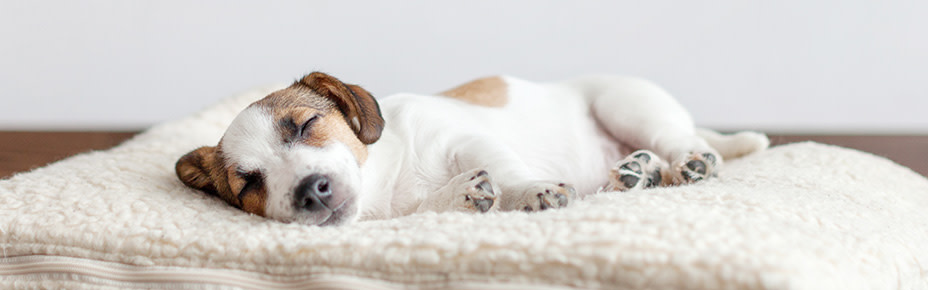
Puppies breathe about 15-40 times per minute at rest. This means their breathing rate is slightly higher than that of adult dogs, which is around 10-30 breaths. During sleep, the breathing rate can temporarily be significantly higher, at about 100 short breaths per minute. Such a high breathing rate occurs when your puppy is dreaming.

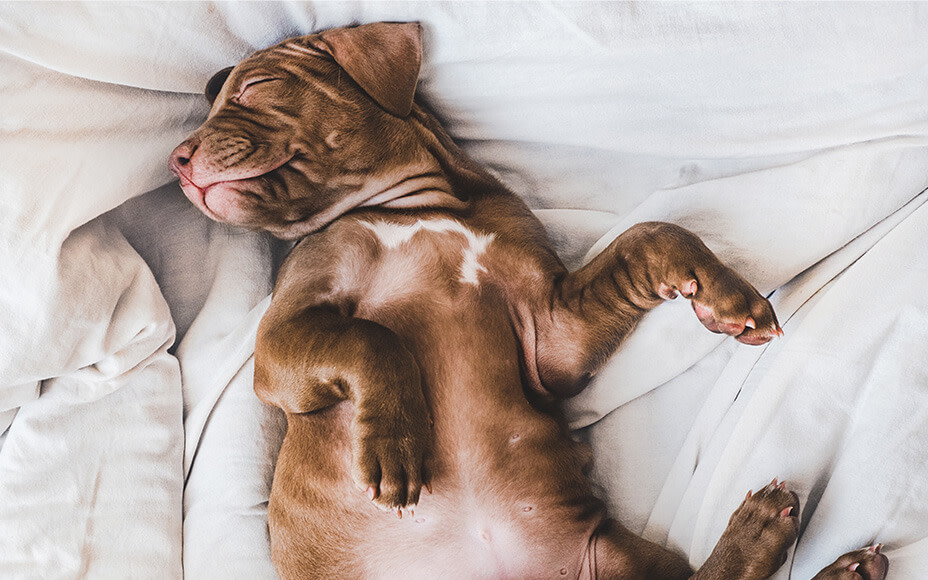
[TRANSLATION ERROR] Wenn Welpen im Schlaf schnell atmen, dann sind sie meist am träumen.
Do dogs dream?
Yes, you read that right: Dogs also dream. Perhaps your furry friend is dreaming of your first walk in the woods or about our irresistible →Junior Snacks? Our furry companions have similar sleep phases as we humans do: NON-REM sleep phases and REM sleep phases.
- In the NON-REM sleep phases, about half of the total sleep time is spent. Here, the brain can hardly process perceptions.
- In the REM sleep phases, intense dreaming occurs, and they are particularly important for processing what has been learned and experienced during the day.
The REM sleep phases account for about 10% of a dog's sleep, lasting approximately 2 - 3 minutes and occurring multiple times during sleep. Puppies and young dogs have more REM phases than adult dogs. The little whirlwinds experience so many new things every day that they need more REM phases to process them.
Why does my puppy breathe so quickly when dreaming?
Intense dreaming in the REM phases leads to irregular and rapid breathing. Often, dogs also twitch their legs and make noises like soft barking or growling. Both are completely normal and part of a healthy sleep.
Once the REM sleep phase is over, your four-legged friend's breathing normalizes again. So observe how long the breathing is so fast and whether it returns to the resting breathing rate of 15-40 breaths per minute.
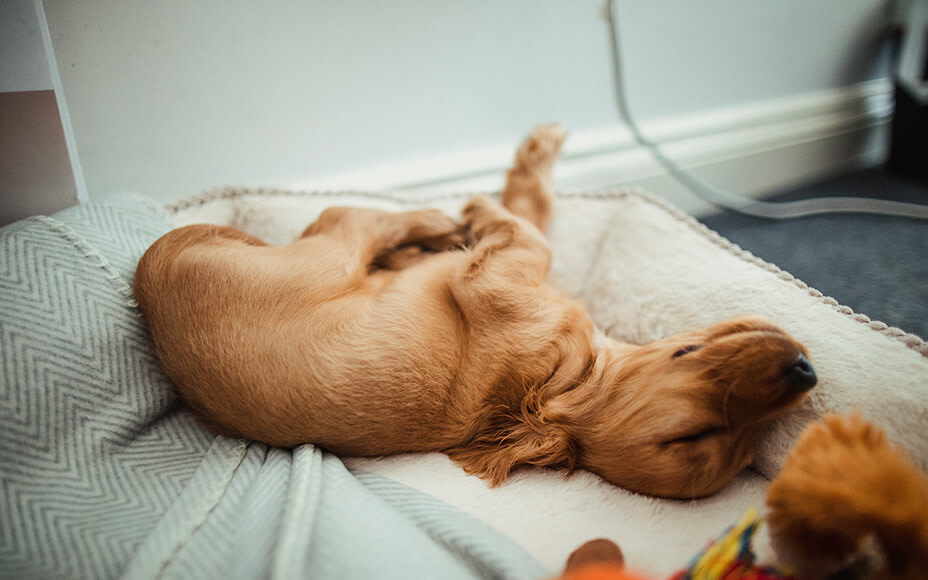
[TRANSLATION ERROR] Zuckt dein Welpe beim Schlaf wild mit den Beinen und macht quietschende Geräusche, hat er gerade einen wilden Traum.
How do I count my puppy's breathing rate?
To see if your puppy's breathing returns to the normal rate during sleep, you can simply count the breaths:
For this, you only need a stopwatch. Time for 60 seconds and count the number of breaths during that time. It’s best to watch the rise and fall of your puppy's chest, and you'll know what breathing rate your puppy has. You can also count for just 30 seconds and multiply your result by two.
Can rapid breathing in sleep be dangerous for puppies?
In most cases, the reason for your puppy's rapid breathing in sleep is a dream and is completely harmless. However, if your young furry friend is breathing rapidly for a very long time, has difficulty breathing, or shows other symptoms such as diarrhea, vomiting, drooling, or trembling, you should raise your alarm bells.
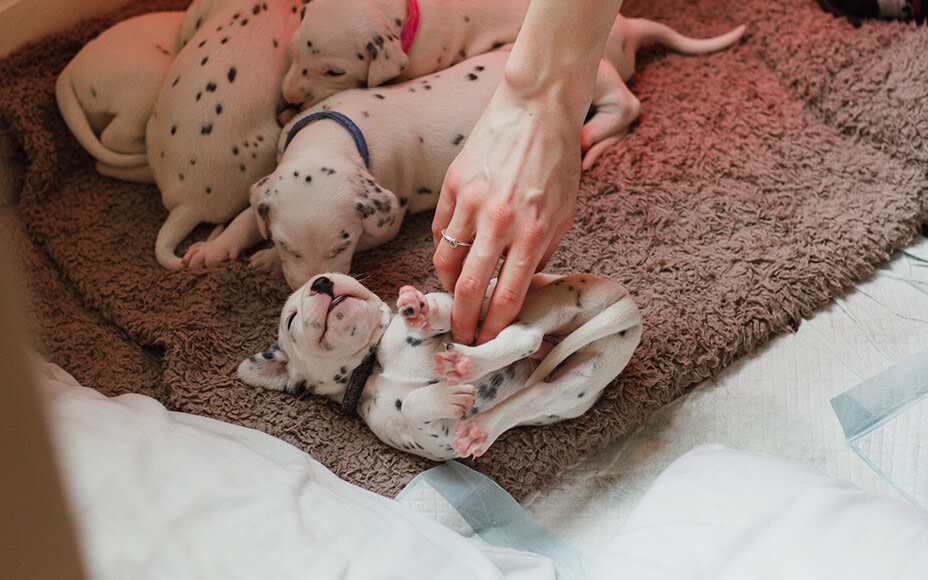
[TRANSLATION ERROR] Die kleinen Welpen haben öfter eine schnellere Atmung als adulte Hunde - kein Grund zur Sorge!
Rapid breathing due to heart disease
Heart diseases and congenital heart defects can also occur in our four-legged friends. Symptoms of congenital heart defects usually appear at an early age. Rapid breathing is one of the signs of a heart defect.
Other symptoms may include:
- Coughing
- Fatigue
- Weakness
So if you notice that your puppy is very weak, breathing rapidly, and coughing, you should seek veterinary advice.
Welpenkrankheiten:
Die häufigsten Krankheiten bei Welpen im Überblick
Rapid breathing due to poisoning
Every dog owner knows it: Just a moment of not looking, and the four-legged friend has picked something up off the ground. Not only can →poison bait be life-threatening for dogs, but also some →foods that are harmless to us humans. Chocolate, grapes, and garlic are absolute taboos for your puppy.
Poisoning can cause various symptoms depending on the toxin, such as trembling, drooling, restlessness, or seizures. Rapid breathing can occur as a companion symptom with many types of poison.
If you notice one or more of these symptoms, you should have your puppy examined by a veterinarian promptly.
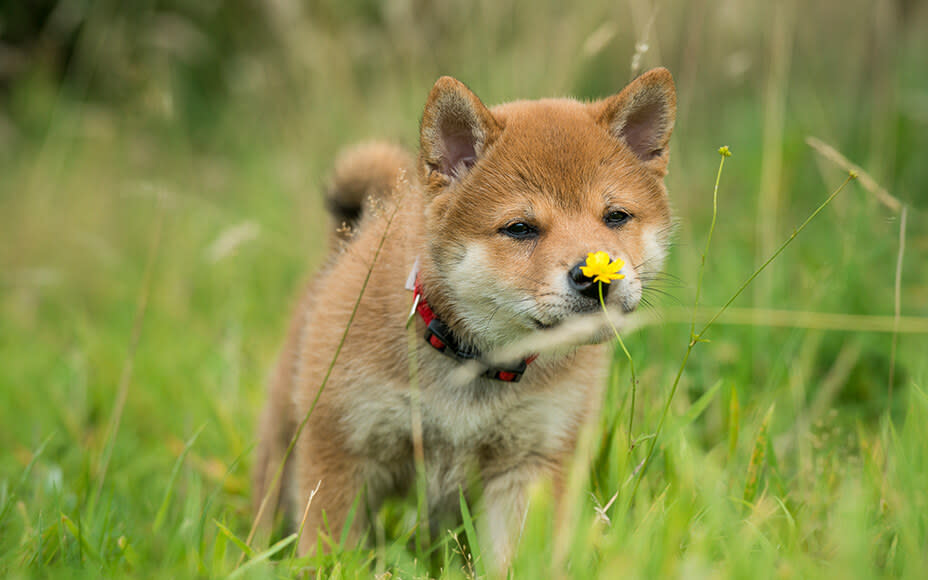
[TRANSLATION ERROR] Welpen nehmen alles ins Maul und am liebsten das, was sie nicht dürfen! Deswegen solltest du vor allem draußen immer ein Auge auf deinen Hund haben!
Rapid breathing due to respiratory diseases
Respiratory diseases such as pneumonia, nasal mucosa inflammation, or →kennel cough can also lead to an increased breathing rate. These diseases often come with additional symptoms, and your puppy would be breathing rapidly not just in sleep, but constantly.
Rapid breathing due to sleep apnea
Sleep apnea is a sleep disorder with breathing pauses. Affected puppies suddenly stop breathing, and after resuming breathing, a few rapid breaths follow.
In principle, any dog and any puppy can suffer from sleep apnea. It occurs particularly frequently in brachycephalic breeds such as pugs, French bulldogs, or boxers.
In general, if you are unsure whether your puppy's rapid breathing is normal, it’s better to call your veterinarian's office once too often than once too little. In most cases, however, you don't need to worry and can fully enjoy the waking hours with your puppy. You lay the foundation for a long, happy dog life with →healthy puppy food.