Buying a Kitten: Pay Attention to These Tips
You meet the furry friend of your dreams for the first time, it's love at first sight, and you already envision life with a purring soft companion by your side? Unfortunately, it's not that easy - and it shouldn't be. When buying a cat, there is a lot to consider. Surely, you don't want to support irresponsible breeders of cats or risky hobby breeding that do not deal with hereditary diseases, the well-being of mother animals, and the healthy nutrition of the kittens.
At first glance, it is not always easy to recognize who truly cares for the four-legged friends and who is just after quick money. This makes it all the more important to know before buying a kitten how to identify a reputable breeder and why you should scrutinize every ad on the internet more closely - only then is the →start with your kitten and its life as a four-legged friend carefree. With our checklists, we are here to assist you and provide you with tips to ensure you are well-informed and won't fall for any sales tricks!
Buying a Kitten from a Breeder
If you have a specific cat breed in mind, there is usually only the option to look for a kitten within a breeding facility. The problem here is that anyone can call themselves a breeder - even if the actually important requirements are not met.
But why requirements? In a verified breeding facility, breeding cannot simply be done at will. The parent animals must meet certain standards and - most importantly - only healthy animals are allowed for breeding. This will most likely prevent your kitten from suffering from a hereditary disease.
To adopt your cat from a verified breeding facility, it is important to pay attention to certain characteristics of the breeders. Only then can you be sure that it is not just about the mere breeding and selling of cats. For this reason, it is very important that you inform yourself sufficiently about the sellers before buying your kitten.

Beim Kauf eines Kitten ist eine gute Recherche das A&O, um nicht versehentlich Katzenhändlern oder Vermehrern in die Falle zu tappen.
Checklist: How to Identify Reputable Breeders:
- All kittens come with a microchip, a vaccination passport with the important → vaccinations, and proof of → deworming at the time of sale. You should also check if the stamps from the veterinary practice are included.
- Papers: Purebred cats from registered breeders receive the corresponding documentation and can theoretically be approved as breeding animals themselves.
- To ease the transition, you will receive enough food for the coming days, so your little cat doesn't have to adjust too quickly to everything. Reputable breeders provide you with a kind of starter package for your four-legged friend and explain breed-specific characteristics regarding feeding. Are you a breeder and want to send your little four-legged friends off with a tasty package? Then sign up for our →breeder program and save!
- In general, reputable breeders should be able to tell you everything about the cat breed - whether it’s →species-appropriate nutrition, →care, or possible diseases of a breed. It’s best to prepare a few questions and inform yourself in advance about the cat breed.
- Membership in a cat breed association: Some breeders are members of one or more associations where they exchange information with other breeding facilities. You can check in advance whether a person is in this association or not. While mere membership is not proof of a reputable breeding facility, it is at least an indication.
- The breeding facility has a breeding book and a breeder's certificate/breeding license. If there are more than two breeds and four litters per year, you should be cautious. The mother animal may be bred a maximum of two times in 12 months → and breeding breaks must be observed.
- In pairs: Reputable breeders know that cats are social animals and should not live alone. Ideally, they only sell the kittens (if the number allows) in pairs.
- Upon purchase, you receive a contract with all the details of the breeder and the purchase price.
- Reputable breeders want you to visit multiple times and give you the time to get to know your little four-legged friend before pick-up. They may even visit you at home to be sure.
- The mother animal is on-site and can be met.
- Your four-legged friend is lively, plays, and has clear eyes - these are initial signs of good socialization and health.
- The kittens and young cats do not grow up isolated in a kennel but in the house or in their own "cat paradise" with safe equipment and enough space.
- The environment in which the kittens grow up appears clean, bright, and warm. There should be enough clean litter boxes, food and water bowls, as well as toys available.
- The price should not be far below or above the average. Find out in advance what the breed of cat should cost and inquire if you notice any discrepancies.
- The breeders ask you about your situation: Financial, spatial, temporal, and personal resources are important. A good breeding facility wants to assess whether you can meet the demands of a cat and whether you are ready for your own cat.
- When picking up, your young kitten is at least 8 weeks old. Only then can it be separated from the mother animal. In general, reputable breeding facilities even release the kittens only at 12 weeks.
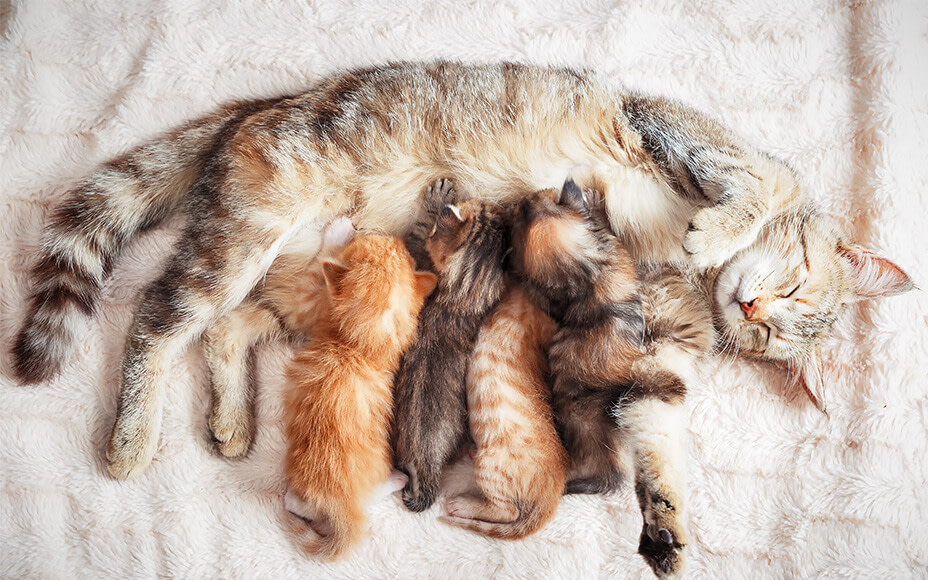
[TRANSLATION ERROR] Mit 8 Wochen sind junge Katzen in der Lage, selbstständig zu leben. Allerdings geben sehr gute Zuchtstellen die Tiere erst mit 10-12 Wochen ab. Untersuchungen zeigen, dass sich diese Kitten besser entwickeln und gesünder sind.
Little tip: Are you getting your kitten or young cat from a breeder? The little ones initially need →special food for juniors. Ask the previous owners what food they gave the kitten and continue with the familiar food for a stress-free →food transition. Later, you can switch to the new food.
The Best Start to a Four-Legged Life: Discover Our Healthy Junior Food


Buying Cats from Animal Rescue or Shelters
Why buy a cat from a breeder when there are so many stray four-legged friends in the world or those who press their noses against the fence at the shelter every day? You don't care if your cat belongs to a specific breed, and you are ready to give a kitten or a young or adult cat from rescue a home? Great! Nevertheless, you should also pay attention to some points here and the adoption facility should be well thought out and even better researched!
How to Identify Reputable Shelters and Animal Rescue Organizations:
- The organization must be registered and ideally non-profit. An "e.V." in the name stands for "registered association." You can find out more about the non-profit status on the website, which you will predominantly find with German animal welfare organizations.
- A look into the shelter: If there is a shelter near you, convince yourself of the conditions on-site. Many animal welfare organizations rely on donations, and it is normal that you may not find the latest equipment there. Nevertheless, all animals should appear healthy and have enough space, food, and other supplies.
- A personal conversation on-site: If you are interested, no reputable organization will give you a cat right away. First, you will be scrutinized more closely, where you must answer questions about your living situation, time capacities, and financial means. The landlord's approval may even be required.
- If your kitten comes from abroad, you can only find pictures on the website or, for example, on Instagram and Facebook.
- What do other owners say about the animal welfare organization? Reviews often show how satisfied others are with the conditions of an adoption.
- In the shelter or animal welfare organization, there are not only young kittens but also adult cats. If there are only young animals, you should be suspicious, as sometimes the parent animals are left to fend for themselves on the streets abroad because the placement is more costly and time-consuming.
- The organization is committed to other issues related to animal welfare in addition to placements and collects donations, participates in projects, and provides educational work on the website.
- Both domestically and abroad, you should adopt your kitten vaccinated, dewormed, and → microchipped. There are vaccination records and the chip number as proof. For kittens and cats from abroad, a check for various → diseases must be carried out, and you will receive an EU pet passport.
- On-site and also online, you can view the age, origin, character and traits, proof of medical history, and vaccinations of the kitten.
- The age: Just like with breeding, 8 weeks is the minimum age for adoption. If organizations place younger animals, it is a violation of requirements and indicates that it is more about money than a successful placement. Cats from EU countries may only leave at a minimum age of 15 weeks.
- Shelters want you to get to know the animal before pick-up and show interest. Multiple visits are often mandatory here. If it is an animal welfare organization abroad, you will regularly receive updates and pictures.
- There is a protection or purchase contract. The so-called protection fee ranges from 200 to 400 euros. You can have it explained what the fee for your four-legged friend consists of, and then you sign the contract upon takeover.
Ein liebevolles Zuhause ist für Katzen von der Straße der größte Traum. Doch auch einigen Tierschutzvereinen geht es manchmal nur ums Geld, statt um das Wohl der Straßenkatzen.
Especially for kittens from poor conditions, the new home for life is heaven on earth. Besides healthy food, the young furry friends also appreciate high-quality accessories that withstand their playful nature and bring joy.
Kuschelige Höhlen, spannendes Spielzeug und vieles mehr: unser Zubehör für Katzen


Buying Kittens through Classified Ads from Private Individuals
Sometimes you click through the search for a kitten on the internet and end up on private ads. You might then wonder if adoption is the right choice here and if there is not a risk of falling victim to breeders or foreign animal trade.
Of course, it is always better for your four-legged friend if they come from a controlled breeding or after a life on the streets into a new home.
In addition to sellers on online platforms who mean well, are knowledgeable, or are even reputable breeders, there are also some who are only out to sell kittens as quickly as possible and make money. The result is often sick animals, unprofessional handovers, missing vaccination records, and purchase contracts.
How to Identify Reputable Classified Ads from Private Individuals:
- The sellers use reputable and verified online platforms. Certain standards must be met and verified by experts.
- Sometimes it is not about young kittens but cats that may already be 6 months or older. Why do the individuals want to give up their kitten? Of course, an → allergy, a death, or another personal problem can occur. However, such excuses are often used as tricks.
- Private intermediaries are also interested in your circumstances to ensure the well-being of the kittens. They ask similar questions as breeders about whether you have enough space, time, and money for the furry friend. Sometimes they also conduct a visit to your home to be sure.
- How does the kitten appear on-site? It should be trusting, playful, and healthy. Cloudy, → watery eyes and a wet nose should be a red flag.
- Ask to see all documents regarding important vaccinations, deworming, and a microchip. Reputable providers do not give away their kittens without such proof. For purebred cats, a pedigree and breeding papers should be available. If none of this can be presented, the animal either comes from an unprofessional breeding operation or, in the worst case, from theft.
- You can visit the intermediaries multiple times at home and possibly even meet the mother animal. The environment should appear clean, bright, and cat-friendly.
- The same applies to the day of pick-up: If the sellers suggest a handover in passing or even outside in the open air, you can be sure that this is about illegal animal trade.
- The price is reasonable for the respective cat breed. If the offers are too cheap or too expensive, you can assume that the sellers want to profit from the animals and are not interested in finding a good home.
- Purchase contract: In any case, a contract should also be drawn up for a private sale. This way, you can prove that it is indeed your four-legged friend.
- Also, ask to see the previous purchase contract of the kitten if it was not born there and check it carefully.
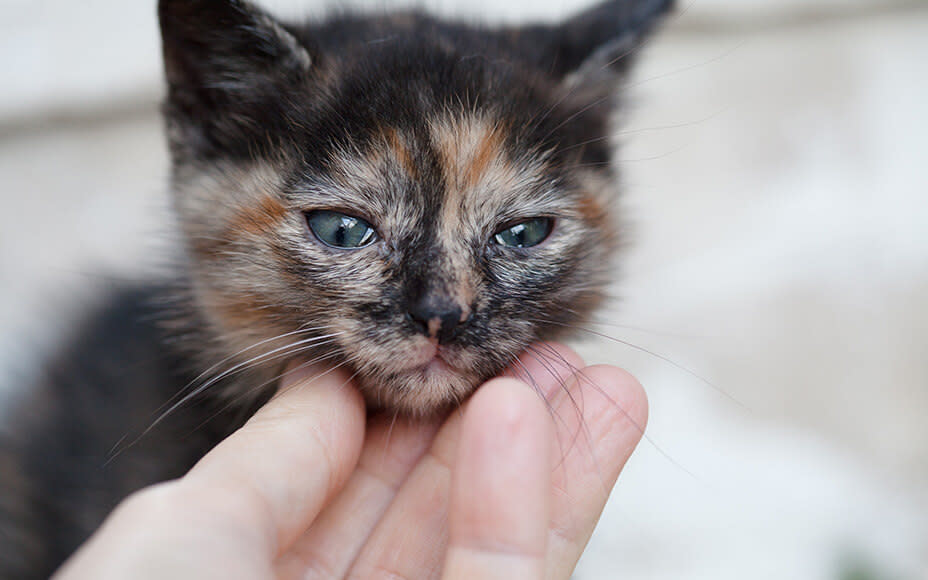
Ein Privatkauf von Kitten und Katzen ist möglich, wenn die Verkäufer*innen am Wohl der Vierbeiner interessiert sind und gewissen Bedingungen erfüllen.
These Documents and Papers You Receive When Buying a Kitten
Animal welfare, breeding, or private - a purchase contract is mandatory and should be concluded at the latest when the animal is handed over.
Take your time to carefully review the contract. It should not be missing:
1. Name, address, contact details of the buyers and sellers
2. Name and breed of the cat
3. Date of birth (usually estimated in animal welfare)
4. Breeding book number (only for breeding)
5. Data on the microchip
6. Handover date
7. Information on vaccinations and deworming
8. Purchase price and payment method
Take your time and check the contract carefully. Your kitten is a living being, and too often people try to get as much money as possible out of our beloved four-legged friends. Sometimes love at first sight can be misleading, and it may take a while until you find the reputable animal welfare organization or breeding facility you can trust.