
Understanding Your Cat's Heat Cycle
Perhaps your cat, as an outdoor cat, belongs to those who have already been neutered to prevent uncontrolled breeding. Cats from shelters are often already neutered as well. However, this is not always the case for indoor cats, adopted strays, or breeding cats, and the meowing-heartbreaking sound of your cat may push you to your limits on some nights.
But what is behind the cat's wail? We help you to understand your cat better during her next heat cycle, so that you both can get through this time stress-free.
What is heat in cats?
In principle, heat serves the purely biological reproduction of your cat. However, it differs significantly from the heat cycle of a dog.
While a dog's heat follows a specific pattern at regular intervals, the ovulation, that is the fertile phase in a cat's cycle, is only triggered by the act of mating itself.

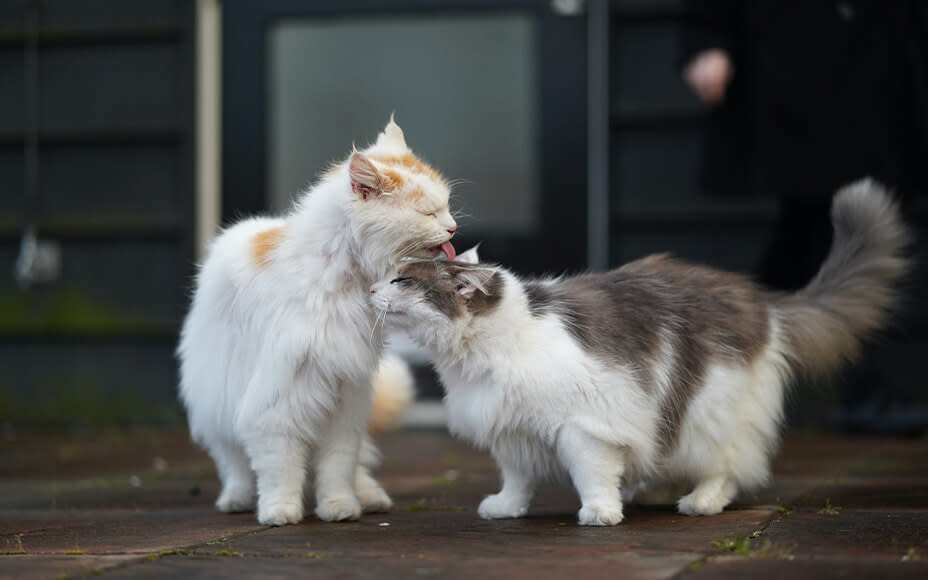
[TRANSLATION ERROR] Während der Rolligkeit sind Katzen besonders verschmust und liebebedürftig.
How can you tell if a cat is in heat?
The signs of a cat in heat can vary. A cat that is going into heat often behaves as follows:
- meows almost continuously
- rolls around a lot
- rubs against objects or you
- turns into a real cuddle bug
She is now hungry - hungry for love and she will make sure you feel it 24 hours a day. During this time, she would prefer to live on air, love, and cuddles all day long. Many cats also suffer from loss of appetite and refuse to eat - this is often referred to as "love sickness."
Deine Katze frisst nicht?
Tipps für mehr Appetit!
When does the first heat occur and how often does a cat go into heat?
Typically, a cat goes into heat for the first time between the fourth and twelfth month of life. In a year, cats will go into heat approximately twice, if they are mated. However, since the act of mating (i.e., the pairing of male and female) usually does not occur, she will go into heat again after about 3 weeks - and the wailing starts all over again.
A heat cycle lasts either 2-4 days (with mating) or up to 15 days if the cat is not mated. Your cat may even enter a persistent heat cycle. Also interesting: How often your cat goes into heat strongly depends on daylight. If she is a pure indoor cat exposed to light all day, she will often go into heat regardless of the season.
How can I help my cat when she is in heat?
Of course, such a heat cycle is not only stressful for you but - or especially - for your cat. The good news is: There are a few tips to help calm your cat during this time.
- If your furry friend enjoys being outside, keep her indoors during this time. This way, she won't encounter any tomcats, and unwanted offspring can be avoided.
- Some cat owners report that warmth helps, such as a lukewarm grain pillow on which your darling can make herself comfortable.
- If you are a fan of homeopathy and believe in its effects, there are →various oils that may relax your cat in heat.
- Catnip can also have a calming effect, which has an enchanting effect on many cats.
- Provide your cat with enough distraction by →playing with her and offering a scratching post where she can let off steam.
Keep in mind that all these tips only provide temporary relief, as sooner or later only neutering will help with cats.
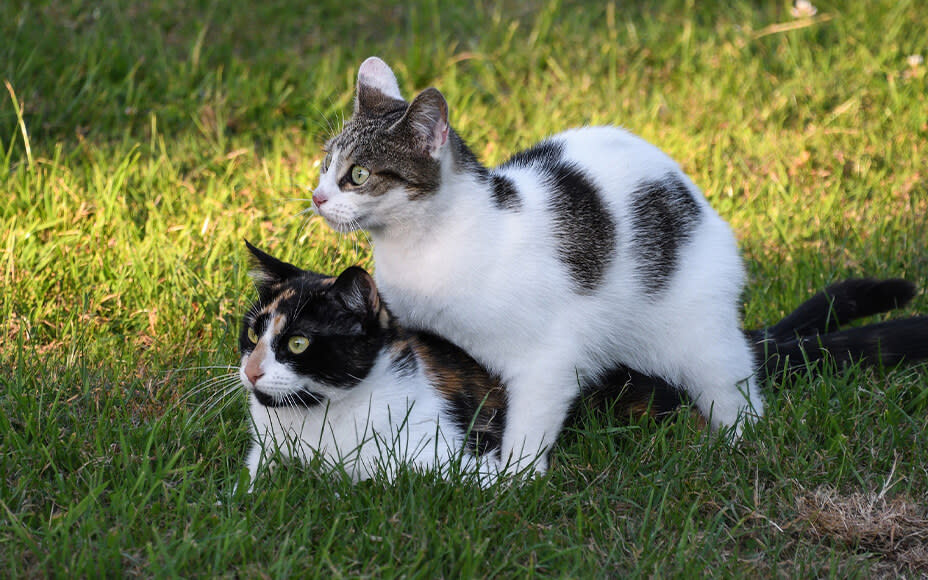
[TRANSLATION ERROR] Ist deine Katze auf der Suche nach ihrem Göttergatten, wird sie rollig und kündigt dies meist auch lautstark an.
Should I have my cat neutered?
If you notice that your furry friend tends towards persistent heat, the cries for a handsome tomcat never seem to end, and she starts marking in the apartment, you can seriously consider neutering.
The more often your indoor cat goes into heat and mating does not occur, the higher the likelihood of cysts on the ovaries, which can lead to tumor formation. An increased hormone level, as is the case with persistent heat, can promote uterine diseases in your furry friend.
If you are certain from the start that there will be no offspring, it is best to have your furry friend neutered from a veterinary perspective even before her first heat.
Katzen kastrieren lassen:
Das richtige Alter & weitere Infos
Neutering can also be beneficial for your tomcat. If he is an outdoor cat, you reduce the risk of unwanted pregnancies. If your indoor cat is neutered, he will not wander miles away from home in search of a mate and thus puts himself in less danger.
The risk of territorial fights with other intact tomcats also decreases. This means: Fewer injuries for your four-legged friend and minimized stress for both of you. Another tip for your neutered indoor cat: Due to the procedure, your darling may tend to gain weight, which you can counteract with a low-energy and low-fat, healthy diet.
Frequently asked questions about heat in cats
Do you have more questions about your cat's heat cycle? Then we may have the answers for you: