When is it considered a fever in cats?
Even your kitty won't be spared from illnesses throughout her life. It can happen that she catches something and develops a fever. But unlike us humans, cats have a higher normal temperature. It ranges between 38°C and 39°C. If the temperature rises above 39 degrees, it is considered a fever. If the body temperature reaches 41.4°C, it can even become life-threatening for your cat and quick action is necessary.
How can I tell if my cat has a fever?
If you want to find out whether your cat has a fever, you have to do more than just place your hand on her forehead. Also, hot ears are not a reliable indicator of fever! The best way is to actually take your cat's temperature. You can do this with an infrared ear thermometer. If you don't have one at home, a regular digital thermometer will also work.
You can also recognize possible fever in your cat by certain behavioral changes. Often, an elevated temperature is just a side effect and is expressed by the following symptoms:
extreme tiredness
lethargy
unusual aggression
excessive thirst
dry nose
shivering and chills
rapid breathing or panting
cat hides away

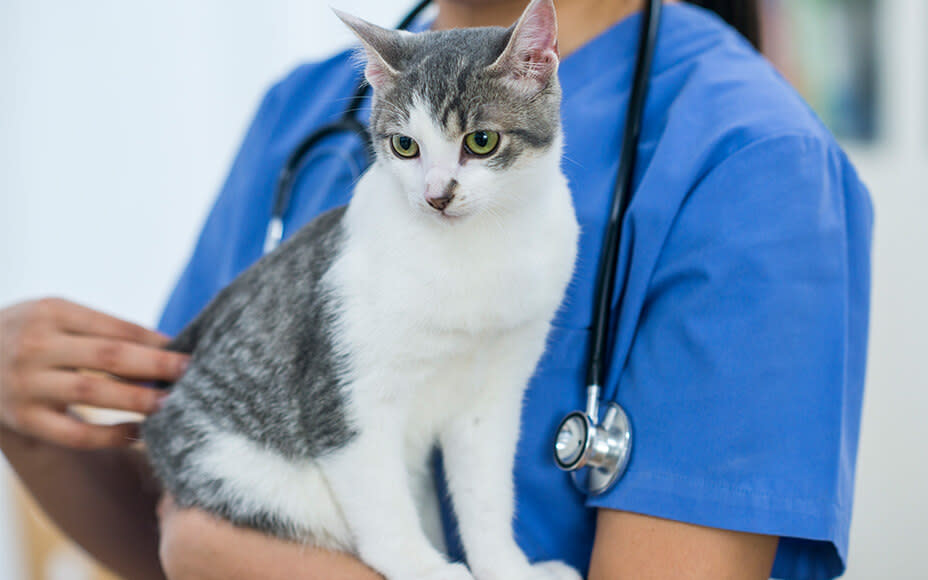
Unlike with dogs, you can't directly detect fever in cats. Observe your kitty closely and consult a veterinarian to be on the safe side.
How do I properly take my cat's temperature?
To find out exactly how high the temperature is and whether you should visit a vet, you need to measure your cat's temperature correctly for your pet. This is usually done rectally with a digital thermometer which most cats find quite unpleasant, so having a second person to help can be useful to hold your cat and distract her a bit.
Clean and disinfect the thermometer thoroughly before measuring.
One person gently but securely holds your cat, and if necessary, distracts her with a treat, like letting her lick some of our →Cream Snacks.
Lubricate the tip of the thermometer with Vaseline to make it more comfortable for your cat.
Carefully insert the thermometer a few centimeters into your cat's anus.
If your cat pushes hard against it, don't force it, but wait until she relaxes!
It's important to have mucous membrane contact when measuring. The tip should be held against the inside wall of the rectum, otherwise you'll only measure the warm air inside the intestine.
Clean and disinfect the thermometer thoroughly after measuring.
Reward your cat!
Especially if you or someone else is taking your cat's temperature for the first time, you should proceed carefully. Your cat may hiss, bite or try to scratch you. If she gets very upset, you should leave the temperature taking to the vet. During the process, you should give lots of praise and afterwards you can treat her to a tasty snack (if her health allows).
The tastiest reward for your kitty
How can I effectively reduce my cat's fever?
If your cat has a high fever, it's best to take her to an animal clinic or to your trusted veterinarian. If your kitty only has a slightly elevated temperature but is otherwise active and still drinking water, you can also wait a day and observe her for now.
To reduce your cat's fever, you can try the following:
Check your cat's body for injuries or wounds. If you find she is injured, go to a clinic.
Help your cat cool down by making her comfortable in a cool, darkened room.
Make sure there is enough fresh water available within reach. Cats with fever tend to become dehydrated.
Under no circumstances should you give your cat fever reducers or painkillers from human medicine! This could be fatal for your cat.
Sleep is still the best medicine – especially when your cat has a fever, she needs plenty of rest!
When should I take my cat to the vet if she has a fever?
If you feel that your cat's condition is getting worse, her temperature does not go down or even rises, she becomes listless or stops drinking fluids, a visit to the vet is essential. There, your kitty will usually be given a fever-reducing injection and checked to see if there's an underlying cause for the fever. In the case of a bacterial infection, for example, appropriate antibiotics must be prescribed.
How to prevent fever in your cat
Fever is often a symptom of another illness in your cat. So an elevated temperature is initially something normal if your cat is coming down with something, and it's a visible sign for you that something is wrong.
To prevent fever in your cat, it's important to have good protection against underlying diseases like cat flu or worms. The foundation for this is, on the one hand, a →healthy and species-appropriate diet and, on the other hand, a complete basic immunization, such as through regular vaccinations.
Also make sure to keep sleeping areas, litter boxes, food and water bowls clean. If you have multiple pets in your household, all animals should always be examined and treated if necessary in case of illness.