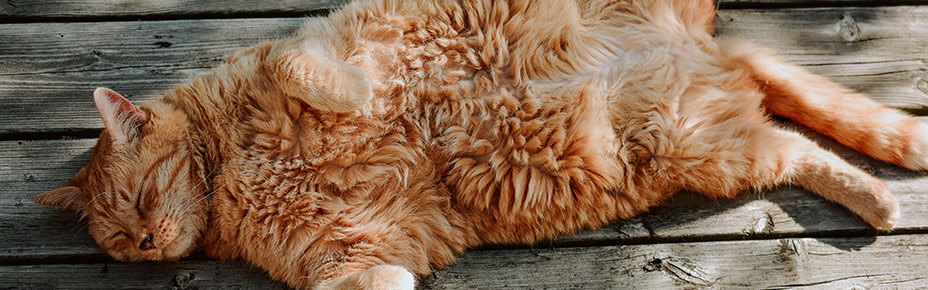
How can I tell if my cat is pregnant?
Congratulations! You suspect your kitty might be pregnant? That's wonderful news, and your cat is sure to be a great mom. But now it's time to head to the vet, because there an ultrasound will be used to check whether your suspicions of pregnancy are confirmed or if it was just a false alarm. At some veterinary practices, this can be determined as early as 15 days after mating. From the 40th day, you can even see how many kittens your cat is expecting.
Before you seek veterinary advice, you can also try to look for signs of pregnancy in your cat yourself. In the first few days, it will be hard to tell, but after two to three weeks you might notice the following signs of pregnancy:
swollen, pink to reddish nipples
a growing, bloated-looking belly
sensitivity in the belly area
occasional nausea/vomiting
increased appetite
more affectionate, seeking more attention
However, many of these signs can also be symptoms of illness such as →worm infestation. That's why it's very important to have your cat checked and not just assume she's pregnant.

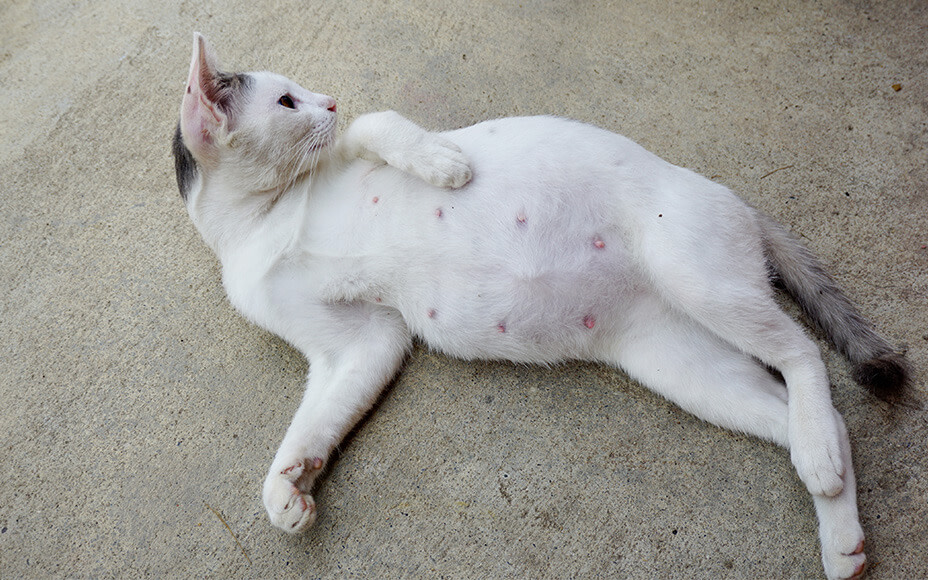
Round belly and pale pink nipples: Clear signs your cat is pregnant!
How many kittens can cats have?
Usually, cats have 3–6 kittens per litter. An exception is the first litter, where there are on average only 2–3 kittens. How many kittens your cat ultimately gives birth to depends on many factors, including breed.
What is the right food for pregnant cats?
Cats are usually pregnant for 8–9 weeks. This is a time when you can actively support her. During pregnancy, your cat has special needs. Since little kittens are growing and being nourished in her belly, she has a higher calorie and nutrient requirement than usual. During your cat's pregnancy, calcium, vitamin A, taurine, copper, and iron are especially important.
So instead of continuing to feed your kitty her usual food, you should gradually switch to a special food for pregnant and nursing cats. Alternatively, you can also →use kitten food, as this also contains higher protein and nutrient levels. But be sure to discuss her diet with your trusted veterinarian.
Our cat food: honest, healthy, delicious.
Are vaccinations or parasite treatments allowed?
Ideally, your cat is already fully vaccinated before her first pregnancy →fully vaccinated, because then she can pass all important antibodies directly to her kittens. If that's not the case, discuss your cat's vaccination plan with your vet. Some vaccinations are not suitable for pregnant cats.
If your cat suffers from a parasite infestation during her pregnancy, for example from fleas or worms you should still →treat her for it. However, it's also advisable to visit a vet first to make sure which medication can and should be given.
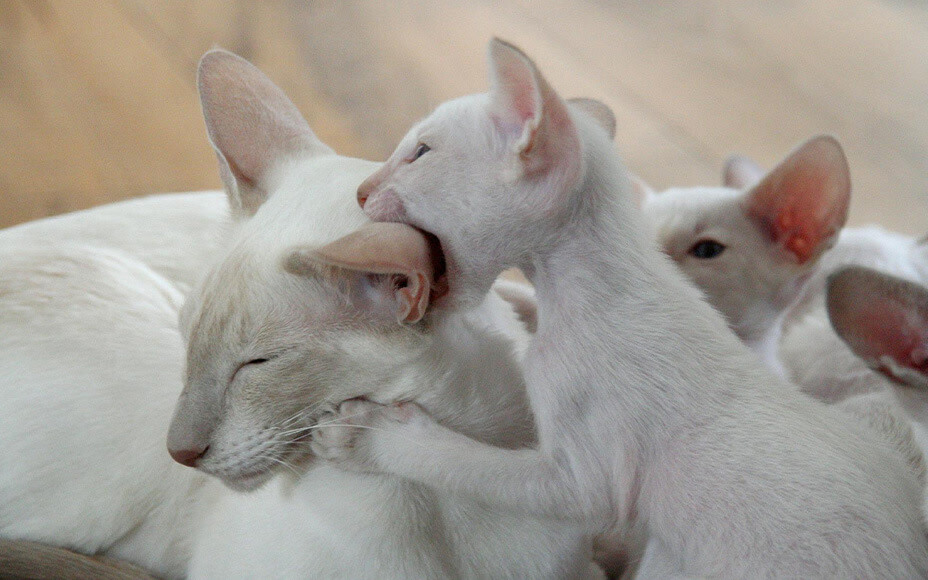
Ideally, your cat is fully vaccinated against parasites and other diseases before her first pregnancy and can pass the antibodies on to her kittens.
What else do I need to watch out for with a pregnant cat?
In addition to proper nutrition, lots of cuddles and plenty of closeness are important. Cats are usually quite affectionate during pregnancy and enjoy a little extra petting. However, you should not touch the belly area, as it is now especially sensitive. Pregnancy can also be quite stressful for your cat, so security and comfort are very important—and she will surely get plenty of that with you.
Possible complications during your cat's pregnancy
Even if you do everything for your cat, give her the best food and plenty of cuddles, complications can still arise during pregnancy. Not always are these really serious issues, but your cat will usually need veterinary help. Watch for sudden changes in behavior and the following symptoms:
restlessness, confusion
crying, obvious pain
increased licking of the genitals
loss of appetite
foul-smelling or bloody discharge
bleeding during pregnancy or birth
frequent visits to the litter box without urinating or blood in the urine
If you notice some of these symptoms, you should see a vet quickly. They will be able to help your cat.
Preparing for birth: Building a nesting box
If the pregnancy is advanced and your cat is about in the last two weeks of pregnancy, you can set up a so-called nesting box or birthing box for her. This is a cozy retreat during and for the first period after birth. Also make sure your cat stays indoors, so she doesn't unexpectedly give birth to her kittens outside.
For a nice nesting box, all you need is a large box or cardboard box, which you line with clean sheets, duvet covers, towels, or blankets. The box should be large enough for your cat to lie in comfortably and for all the kittens to have enough space later. At the same time, a certain height is important to prevent the little kittens from leaving the nest too early. Place the prepared box in a comfortable, quiet spot at room temperature.
Even if you've put in a lot of effort, it can happen that your cat chooses another place to give birth. That's not a problem, just make sure to have enough towels ready there as well. After the birth you can carefully move the kittens and your cat to the nesting box or make them comfortable right where they are.
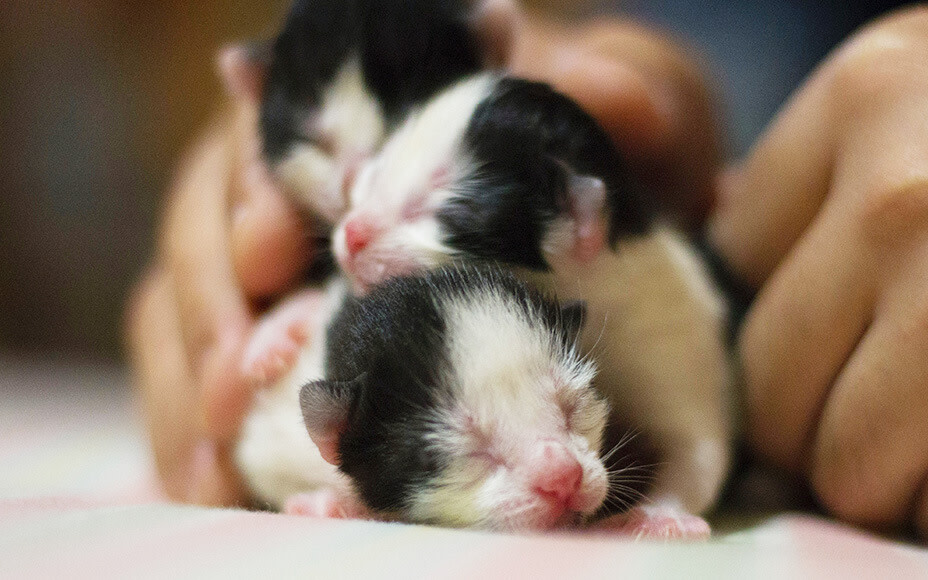
In a whelping box or nesting area, the mother animal and her newborn young can first settle down and rest.
Signs that birth is imminent
Don't worry, your cat is usually quite capable of handling the birth on her own. If you still want to be by her side, offer comfort, and help if needed, you can watch for the first signs that the cat birth is about to begin:
Your cat refuses food.
Your cat becomes restless and looks for a quiet place.
Your cat seems a bit louder and wants to groom herself constantly.
You can observe strong contractions in the lower abdomen (the belly becomes hard), followed by some vaginal discharge.
Note: If your cat has heavy, dark red vaginal discharge, go to a vet. In this case, the birth needs to be sped up and the kittens as quickly as possible delivered.
Warning signs during or after birth
Usually cat births go smoothly and without complications. Your cat usually doesn't need your help, but you should check on her regularly. That way, if you notice certain warning signs during or after birth, you can act quickly and call the vet.
Signs of problems during birth:
Even though your cat has had strong contractions for more than an hour, there are still no kittens born yet. You can recognize contractions by the hardening of your cat's belly area.
Within the past 24 hours after the start of labor, not all the kittens have been born yet.
The number of kittens does not match the number of placentas passed.
You can see a kitten at your cat's vulva, but it does not come out completely despite heavy straining.
Signs of problems after birth:
Your cat is trembling, restless, or agitated. These could be signs of eclampsia and require urgent treatment.
Your cat keeps straining, even though all the kittens have been born.
Your cat refuses food, vomits, or has a fever. Typical signs are loss of appetite, lethargy, reduced water intake, trembling, or rapid breathing.
The discharge from your cat smells bad or contains fresh blood. Blackish-red discharge is normal for a few weeks after birth.
The mammary glands become red, harden or are obviously painful to the touch.
Discharge from the nipples, which smells bad, is brownish, or bloody.
You notice weak, underweight "runts" among the kittens who have trouble nursing and gaining weight.
In such cases, veterinarians will do everything they can to help your cat and her kittens recover quickly. All you can do is be there for your kitty and make things as comfortable and pleasant as possible for her.