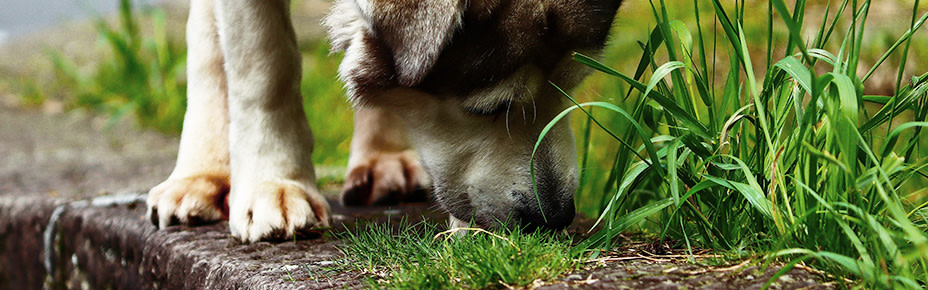
Why does my dog eat grass?
Have you noticed your dog eating grass outside from time to time? For the most part, nibbling a little grass on a walk or in the garden is not really a problem.
If you look at the wolf as the ancestor of the dog, this behavior seems to be in their genes. Wolves also enjoyed munching on juicy blades of grass during their journeys through nature. Sometimes, it's simply a learned behavior that our four-legged friends have picked up from their mother. Boredom or relieving stress can also be reasons for eating grass.
7 possible reasons why dogs eat grass at a glance:
Boredom
Relieving stress (displacement activity)
Triggering the urge to vomit or cleaning the gastrointestinal tract
Nutrient deficiency
Tastes good (especially fresh, young spring grass)
Thirst
So you see: The reasons are varied, and many of them are not scientifically proven, but rather based on years of experience.
A →healthy and species-appropriate diet for your dog not only lays the foundation for a long dog life, it also prevents a nutrient deficiency. And healthy AND tasty doesn't have to be complicated. Our high-quality dry food from Pets Deli proves that plenty of juicy meat, select fruits and vegetables, nutritious oils and fresh herbs can fit into a crunchy piece of dry food!
Delicious! Premium Dry Food for Your Dog
When is grass eating dangerous for dogs?
But how do you know if your dog simply finds the juicy grass tasty and is turning into a sheep, or if there is something more serious behind it? If you're unsure, just observe your furry friend for a few days.
If your dog gets frantic when eating grass or becomes restless, agitated or consumes both grass and even soil, you should have a vet and/or even a dog trainer take a look. It could be a sign of a illness, deficiency or even a behavioral issue at play. Also, if your dog eats a lot of grass but barely or →doesn't eat any food at all, something is wrong.
If your dog eats grass and also shows additional symptoms of illness such as fever, blood or mucus in the stool or →can't pass stool at all, you should visit a vet practice as soon as possible.


In most cases, grass eating in dogs is harmless. Many animals simply find it tasty!
What happens when my dog eats grass?
Your dog has once again stuffed himself with grass—now what? Unlike a properly balanced →vegetarian or vegan diet, our dogs can't break down certain plant components like grass very well. This means that the blades of grass are usually excreted undigested.
It can happen that a blade of grass gets stuck to your dog's stool or rear end. That's obviously uncomfortable for your four-legged friend, so they'll surely appreciate a helping hand from you. Just make sure to pull the blade out slowly and carefully to avoid small cuts from sharp blades.
If your dog has eaten a lot of grass, it can also happen that everything is excreted as a slimy bundle or your dog →gets diarrhea. In this case too: Observe your dog, and if things don't improve, visit a veterinarian's practice.