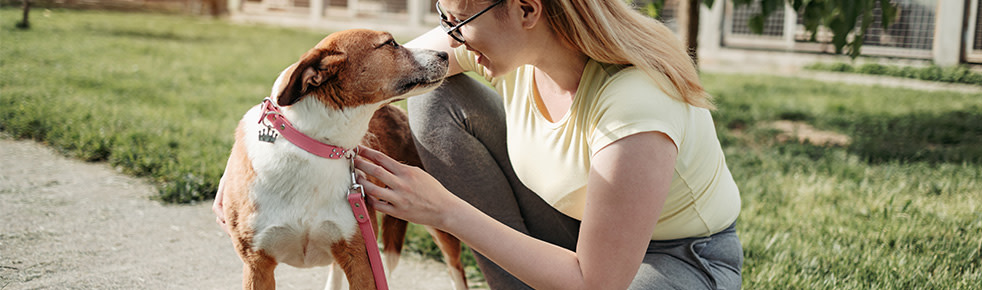
Help! Why is my dog suddenly scared and shaking?
Your dog suddenly tucks his tail, trembles, and doesn't want to walk any further. Such a reaction to fear can occur in dogs in the most varied situations . Fear of people, noises, objects, or even other dogs is not automatically a bad thing. In fact, your dog's reaction is normal and useful in tricky situations.
However, as with most things, it depends on the extent. On →New Year's Eve, for example, many dogs are afraid. But if you have trouble leaving your apartment, house, or car with your dog because he panics in everyday situations, it strongly affects both your quality of life. In this case, you should try to help your dog overcome his fear.
There can be many different reasons for fear. Find out now why your dog might be afraid.

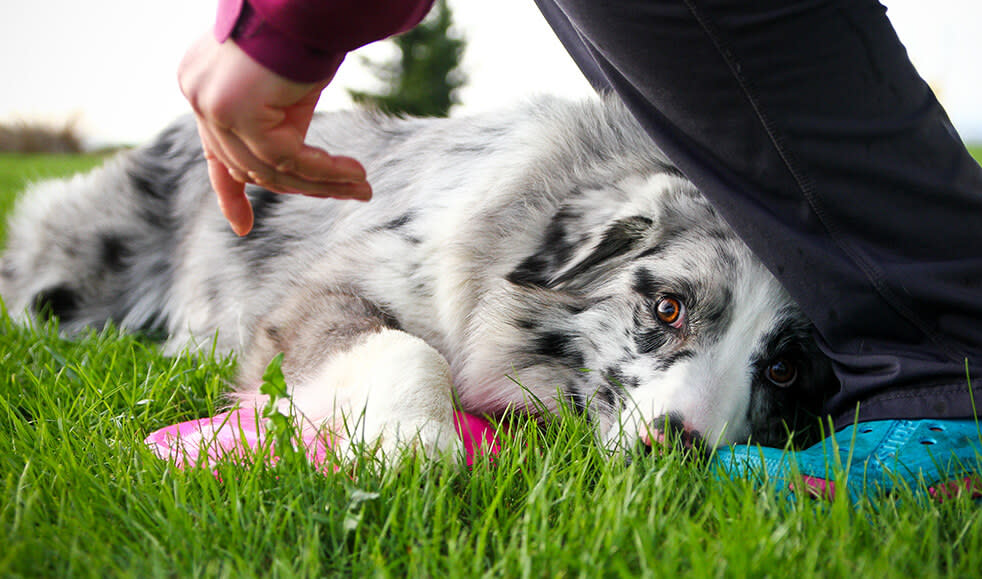
Experiences as a puppy
The experiences a dog has as a puppy are formative for him. In the puppy room, the little furry noses are already observing how their mother reacts to stimuli. Fear in certain situations or towards certain people is quickly copied. The early →socialization of puppies, which begins with the breeders, is therefore especially important for further development. Reputable breeders also make sure to breed environmentally stable dogs, who are not overly fearful, with each other. Difficult experiences in the so-called sensitive, early phase of life of a dog can influence the entire life of a four-legged friend. Leaving the mother too early can be a bad experience, for example.
But also lack of experiences or environmental stimuli affect the emotional state of a dog. For example, adopted dogs who have been rescued from the street often have bad experiences in their past. In addition, in animal shelters run by animal welfare organizations, due to the large number of dogs, little to no socialization can take place. Also, few environmental stimuli for street dogs in rural areas can, when moving to a noisy, hectic city lead to problems. You should be aware of this if you want to adopt a dog, but it should not stop you from wanting to give a →furry friend from a shelter a loving home! The right training and a good dose of patience are the most important things here.
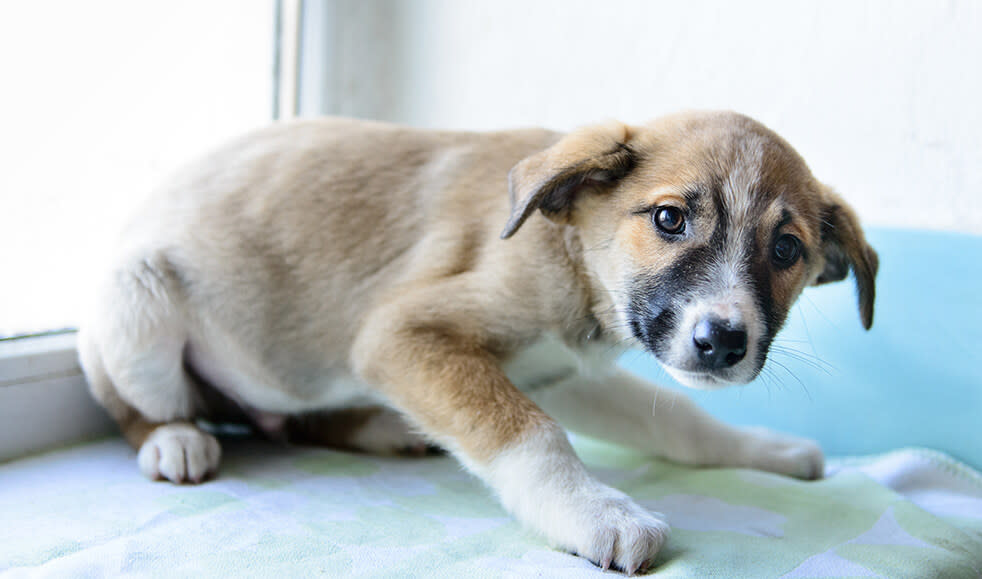
Trauma experienced as a puppy and also in adulthood can lead to fearful behavior in dogs. When it comes to →puppy training, it's important not to be rough or even violent with your puppy. So, start early to learn →how your dog tries to communicate with you to avoid misunderstandings.
Genetic predispositions
Whether your dog is more fearful or not also has to do with his genetic disposition . Among the different →dog breeds there are some dogs that are much calmer and →more relaxed than others. The →Australian Cattle Dog for example, is a herding dog who is exposed to many stimuli at work. This makes him a rather insensitive four-legged friend. The →Border Collie as a classic herding dog on the other hand, is more sensitive. He is much more quickly traumatized by overstimulation due to his inherited predispositions than a more robust character.
Physiological impairments
Even physiological impairments in your dog can lead to fear. These can be, for example, hormonal disorders, pain, or poisoning as well. Also, developing health impairments such as hearing or vision loss or deterioration can unsettle your dog and cause anxiety. Therefore, you should first visit your veterinarian and have your dog checked. The veterinary examination is especially important if the fearful behavior seems difficult to explain. An examination of the thyroid and blood count can quickly provide an explanation.

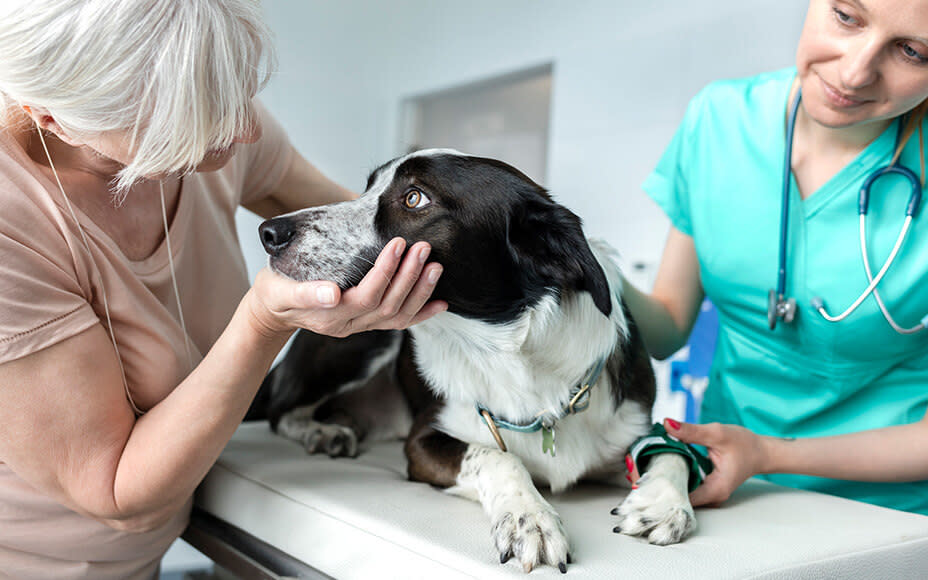
What symptoms does my dog have when afraid?
If your dog is in a very stressful or intimidating situation, various symptoms of fear can occur. These are different for every dog. The signs can vary greatly in their intensity and frequency and can be both behavioral and physical.
Behavioral symptoms
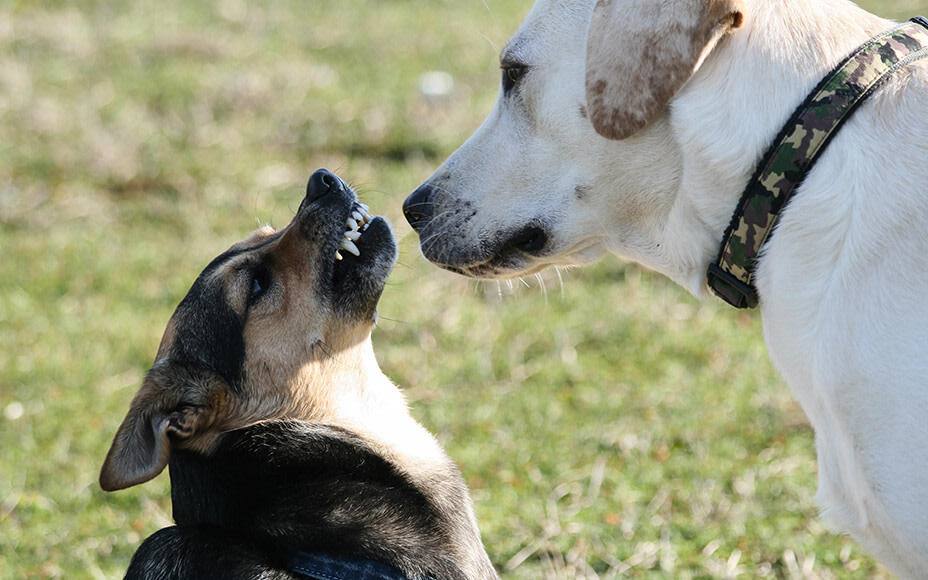
In a fearful situation, behavioral symptoms appear, which can occur in combination or individually. Also known as the four "F" of fear are:
Freezing (Freeze)
Fleeing (Flight)
Becoming aggressive (Fight)
Fooling around (Fool around)
Other coping mechanisms:
Inner restlessness, which manifests as increased water and food intake
Excessive licking of the body
Spinning in circles
Mounting/humping
Physical symptoms
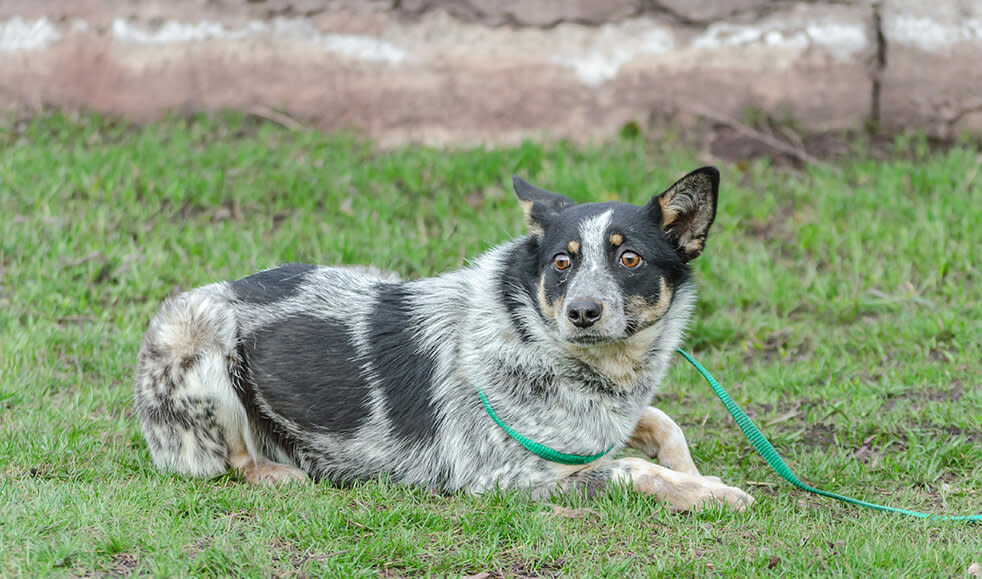
The body posture of your dog reveals a lot about his condition. You can observe the following physical symptoms in an anxious dog:
Tucked tail, possibly tucked all the way under the belly
Frozen, crouched body posture
Ears laid back
Wide open eyes and dilated pupils
Heavy panting and rapid breathing
Trembling
Sweaty paws
Increased blood pressure and rapid heart rate
If your dog suffers for a longer period of time from fear and stress, dandruff and hair loss can also become noticeable.
What to do during panic attacks in dogs?
With very severe fear or depending on the situation, your dog can suddenly have a panic attack, which can last up to 30 minutes. Your dog is then in an exceptional state, which is particularly intense and should not be underestimated. Physical symptoms such as trembling, drooling and panting as well as wide open eyes become apparent quickly.
In such a situation, your dog is not receptive to your comforting words or soothing petting. Therefore, if possible, you should remove your four-legged friend from the situation, so he can recover from the frightening stimuli at a distance. If this is not possible, you should wait it out and be there for your dog, so that your dog does not injure himself or others. A safety harness is very important in such a situation so your dog cannot break free and run away.
Do I have a fearful dog?
If recurring, severe fear behavior that negatively affects your dog's quality of life is present, a certain stage of fear has been reached. Such an anxiety disorder in dogs is triggered by bad experiences and makes them fearful dogs. Finding the exact trigger for fear in your dog is usually not so easy. There is unfortunately no ultimate method that will free your dog from his fear at the push of a button. A professional dog trainer is advisable in this case to help your dog as best as possible to overcome his fear.
Exercises for anxious dogs
If you know what triggers fear in your dog and you feel confident about the training, you can practice dealing with the trigger. Here are some helpful tips for you:
You and your dog should only approach the fear-inducing trigger to the point where your dog notices it but can still focus on you. focus on you can.
Playing in close proximity to the trigger can calm your four-legged friend. A familiar and favorite toy of your dog should not be missing. Something new could confuse him even more in such a situation.
Knowledge and understanding of your dog's body language are especially important in such exercises so you can take enough breaks during training.
The presence of a socially confident, adult dog during training can serve as orientation for your insecure dog.
→Nutritional supplements can provide more calmness: Giving the amino acid L-tryptophan or the milk protein product Zylkene.
Longer chewing is suitable as distraction and calming in stressful situations, as your dog enters a "relaxation mode". Our →delicious snacks provide a long-lasting chewing experience and also help clean the teeth.
Healthy snacking has never been so tasty!
A trusting relationship between dog and human is the basis for a harmonious life together. Affection, cuddles, and love are of course important. But especially for an anxious dog, clear rules and structure as well as predictable, confident actions provide more security than if everything is decided according to the dog's wishes. Your dog should be aware that you as the owner make the decisions and he submits to you. Then your four-legged friend can orient himself to you and your reaction in difficult situations and calm down more quickly.