No dog is born aggressive
Let’s get one thing straight: No dog is born aggressive. There are dog breeds that are genetically predisposed to have a stronger protective instinct and a lower stimulus threshold. But no dog bites without reason. Often, the causes of aggressive behavior in dogs are their environment and their owners. There is definitely no purely aggressive dog breed, but we’ll introduce you to some four-legged friends that may be more prone to aggression under certain circumstances.


These 13 dog breeds are considered especially aggressive
Which dogs are aggressive? If you’re researching dangerous or aggressive dog breeds, you’ll definitely come across the term "listed dogs". As the name suggests, there is a list that includes dogs that are said to have a particularly high potential for aggression allegedly have, such as →Pitbulls. The cause is usually genetic. These breeds may have originally been bred as fighting dogs or for hunting bears.
Each federal state in Germany decides for itself which dogs are considered so-called "listed dogs". However, the federal states of Lower Saxony, Schleswig-Holstein, and Thuringia no longer have any breed lists at all.
The aggressive dog breeds are divided into two categories:
Animals that are considered "most likely dangerous".
Animals that are considered "presumably dangerous".
The following dog breeds are most frequently classified as aggressive:
Bull Terrier
Fila Brasileiro
Mastin Espanol
Mastino Napoletano
Mastiff
Tosa Inu
Strong dogs need something to really bite into. With our →3-2-1 BARF concept you can give your four-legged friend a fresh, balanced diet with bite!
You'll love to try BARF!
Crossbreeds of these breeds, that is, mixed breeds, also count as listed dogs. But just as a listed dog isn’t necessarily more dangerous, other breeds can also show aggressive behavior.

Am I allowed to own an aggressive dog breed?
If you’re interested in owning a fighting dog, you should definitely check the regulations in your federal state before getting one. If you comply with certain requirements, it may be permitted to keep listed dogs. There are no uniform regulations on this, but according to the →fine catalog there are some similarities among the federal states:
Owners must be of legal age.
A certificate of good conduct must be provided by the owner, proving their sense of responsibility and trustworthiness.
The dogs may have to pass a competency test .
The dogs may have to pass a temperament or behavioral test.
Aggressive behavior is part of canine communication
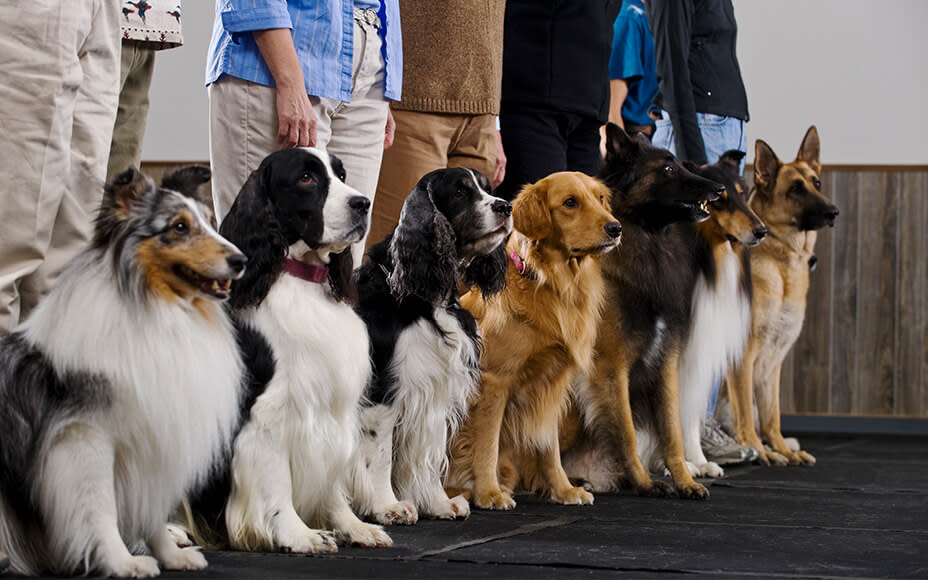
Just like with humans and other living beings, aggression is genetically anchored in every dog. There are no exceptions, not even for sweet Goldens or Labradors. It is part of normal behavior and communication for dogs. However, there are differences in arousal levels. Aggressive behavior is divided into so-called escalation levels, which are categorized according to the colors and areas of a traffic light:
Green zone – everything is fine: Behaviors such as yawning, shaking, turning the head away, or licking the nose are in the green zone.
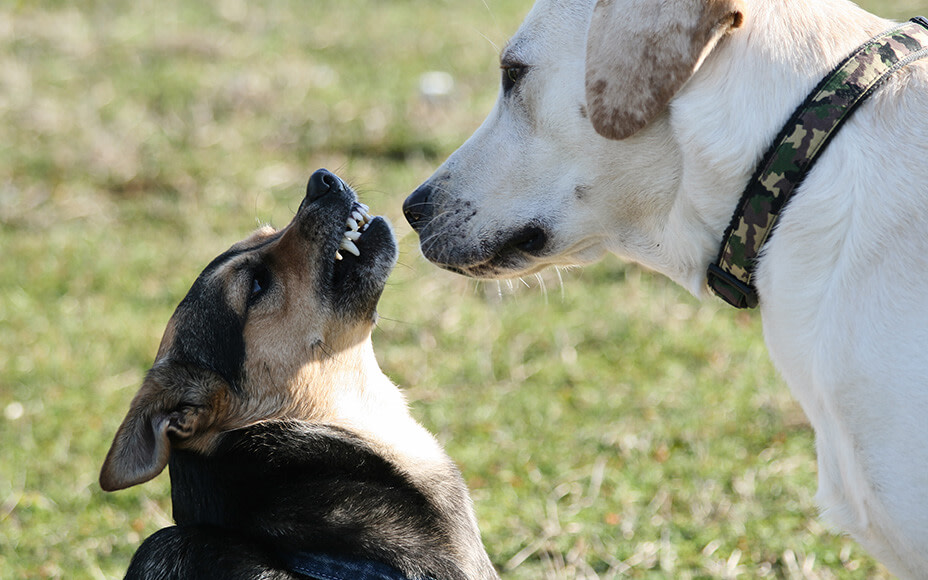
Yellow zone – be alert: Behaviors such as barking, raised hackles, or biting the leash are still in the yellow zone.
Red zone – pull the emergency brake: Behaviors such as snapping at the air, inhibited biting up to uninhibited biting are in the red zone.
How can I reduce my dog’s aggression?
Is your dog aggressive toward other dogs? If your four-legged friend likes to act out, then it’s high time to engage with your →dog’s body language in detail. Correctly interpreting body language helps you understand your dog and respond appropriately. You should also look for a suitable dog trainer. There are also trainers who specialize in aggressive dog breeds or behaviors out there. It’s very important that you take action and don’t just hope everything will work out. Especially with aggressive dogs, it’s crucial to protect your dog, the environment, other animals and owners, as well as yourself.