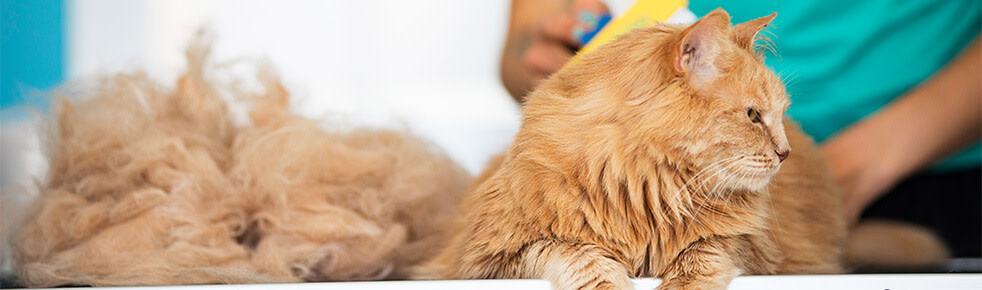
Why do cats shed their fur at all?
You’ve just cuddled and petted your cat, and now countless hairs are sticking to your clothes. That’s actually quite normal. The fact that your house cat sometimes loses even more fur is due to shedding. All cats experience shedding,all cats, not just those with long fur. Their internal clock or hormonal changes, triggered by changes in light and temperature, cause your kitty’s hair growth to change.
Shedding occurs in spring and autumn and ensures your cat has the optimal adaptation to the weather. This way, it’s not too hot during the warm summer months, she’s protected from UV rays and also she doesn’t get cold during the colder winter months. The dense, warming winter coat with pronounced undercoat grows during the cold season and is shed before the warm season. The colder it is, the denser and warmer your cat’s winter coat becomes.
The process of hair growth is always the same for your kitty and occurs regularly:
Anagen phase: From the hair root, the new hair grows in the so-called growth phase.
Catagen phase: In the transition phase the hair continues to grow and is supplied with nutrients.
Telogen phase: Once the hair growth is complete, the hair is in the so-called resting phase.
Exogen phase: The supply of nutrients stops, so the hair then falls out.
The hair growth cycle speeds up many times over during shedding – so your kitty loses significantly more hair than usual.

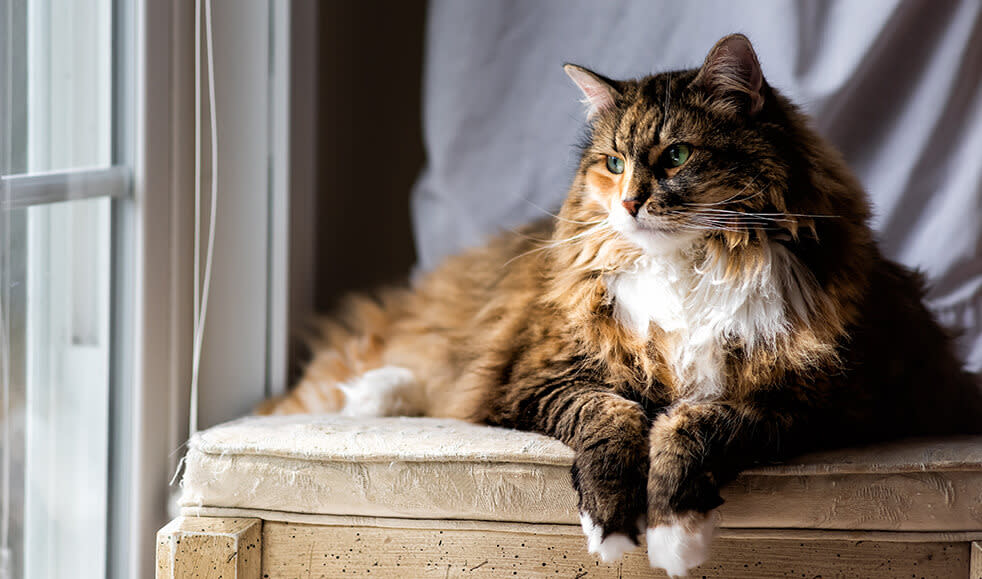
Your cat's fur can make up to a quarter of its body weight, and this proportion changes significantly depending on the season.
How often do cats shed their fur?
Since shedding takes place in spring and autumn, cats shed their fur twice a year. During this time, your cat loses even more hair than usual when she grooms, rubs, plays, or is petted. That’s because your cat’s fur constantly grows back and falls out again.
The natural shedding of your cat can also be influenced by certain external circumstances: If your kitty spends a lot of time outdoors and is therefore exposed to greater temperature fluctuations, her shedding is much more pronounced. For indoor cats the shedding can be much less pronounced. The artificial lighting conditions and the usually constant temperature, on the other hand, can cause your kitty to shed evenly throughout the year.
When does shedding end?
In autumn, your cat’s fur becomes thicker and longer as protection against the cold. In spring, however, the topcoat becomes shorter and your kitty loses the thick woolly hairs of winter again. This transitional period in both spring and autumn lasts about 6 to 8 weeks. After that, the speed of hair growth has leveled out again and the perceived hair loss, depending on your cat’s fur length, is a bit more manageable. Over the course of the year, your kitty loses the most hair between April and October, that is, during the warmer months, the most hair.
Difficulties during shedding: How to support your cat
The shedding period can be especially exhausting for your cat. That’s because, during regular grooming, she licks the loose hairs off her body. By swallowing the hairs the formation of hairballs in your kitty increases, which leads to more frequent retching and vomiting. We’ll tell you what you can do to make the shedding period easier for your cat.
How to support your cat during shedding:
1. A balanced, healthy diet is essential
A →balanced diet for your cat is not only important for her health. Adequate vitamin supply has a positive effect on the hair growth cycle. That’s because vitamins and nutrients absorbed with food stimulate hair growth. They also ensure healthy skin and a shiny coat, which makes shedding easier for your cat.
Our cat treats are packed with high-quality proteins, crisp fruits and vegetables and essential nutrients. So your cat feels good all around.
Our cat food: honest, healthy, delicious.
2. Oils as a dietary supplement for the coat
Adding high-quality oils, such as →salmon oil or →linseed oil, promotes hair growth due to the unsaturated fatty acids they contain. Additionally, the oils make it easier to pass swallowed hairs and your kitty has especially many of those during shedding.
3. Cat grass helps fight swallowed hairballs
The structure and texture of cat grass promotes the retching process in your cat and acts as a digestive aid. This helps your kitty pass swallowed hairs and counteracts hairballs. At the same time, planting cat grass is a treat for your kitty. You can give her free access to cat grass, as cats intuitively eat only as much of the plant as they need.
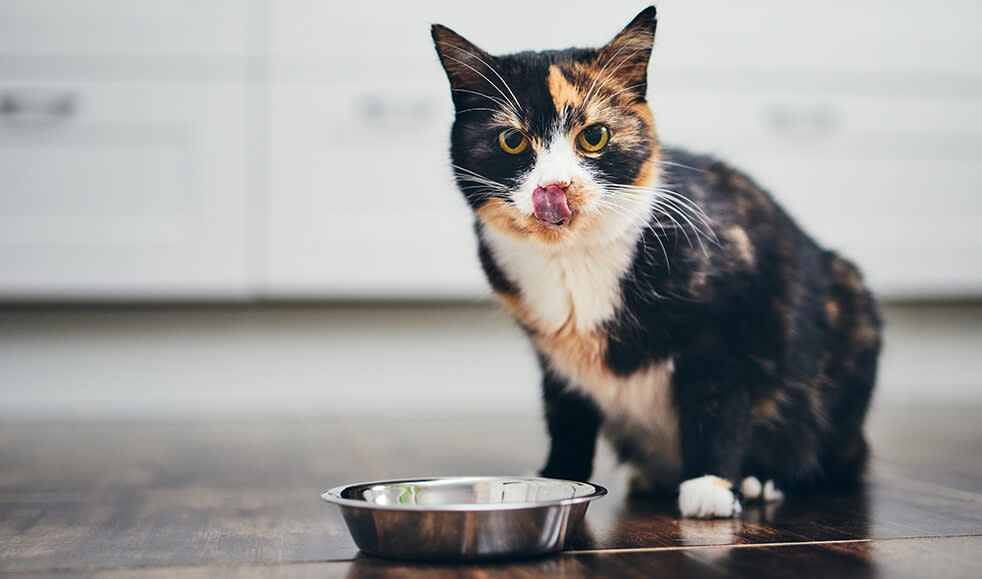
There are several important factors to consider for healthy cat nutrition: Our feeding recommendations give you a clear overview!
4. Daily brushing cares for and cleans
Daily brushing your cat not only serves her grooming, health, and strengthens your bond. Daily brushing also promotes shedding, as it stimulates blood circulation, hair grows faster and already dead hairs are removed. So, with daily brushing, you especially help long-haired cats and outdoor cats, who have a denser undercoat due to greater temperature fluctuations. You also prevent matting at the same time.
As a positive side effect, regular brushing prevents at least in part the spread of loose hairs throughout the home in the whole home – which means less vacuuming or sweeping for you, so it’s a win-win situation.