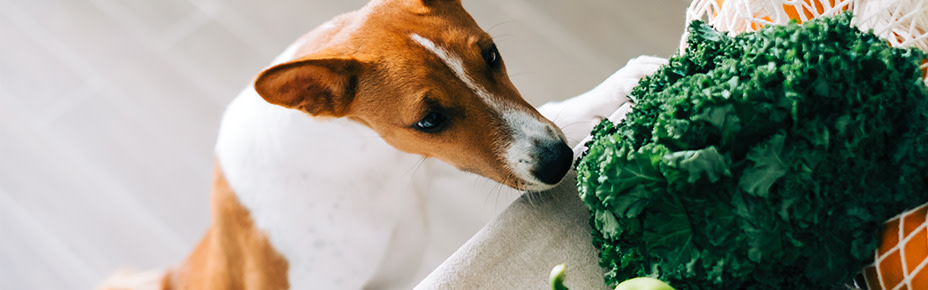
The 5 Biggest Misconceptions About Dog Nutrition
Surely, you’ve been at the point where you thought: Which tips for feeding my dog can and should I actually take seriously - and which ones are total nonsense?
Whether it’s nutritional wisdom, amateur advice, or a blunt “In the past, our dogs were healthy without all this fuss” - we’re clearing up the myths about dog nutrition and explaining which recommendations you should better not listen to.
1. "Dogs only need meat"
Contrary to what one might initially assume, dogs are not pure carnivores. Rather, an important development has taken place over time compared to their wolf ancestors: Through the domestication of these four-legged predecessors, the digestive tract of dogs has adapted to the utilization of other starchy food components, such as plant-based foods in the form of potatoes and also →grains.
And even if we take a closer look at the diet of today’s wolves, it becomes clear that it does not consist solely of meat. Wolves consume, among other things, the stomach along with the contents of their prey, which is filled with grasses, berries, and other plant-based foods. That’s why wolves are referred to as meat-omnivores (Carni-omnivores).
Dog food that consists of 100% meat is not only rare but is also contrary to scientific findings. A balanced menu of meat, vegetables, fruits, herbs, and oils is appropriate in any case.
2. "In the past, our dogs ate everything"
...said Grandma Hildegard and accidentally dropped the piece of sausage under the table. To understand why feeding leftovers is not beneficial for your furry friend’s health at all, let’s take a look at the nutritional components needed per day:
Proteins that our furry friends derive from meat and plant components, carbohydrates, fats, vitamins, and minerals. And this in a balanced ratio to each other, adapted to the size, weight, and activity of each four-legged friend. This need is regularly covered by a so-called complete feed - mostly in the form of wet or dry food, sometimes also through →BARF.
Everything that comes in between - a piece of grilled sausage, a bite of bread here, a corner of cake there - throws the daily intake of balanced food components out of balance. Overweight, sugar intake, and a suffering education are the consequences - and that’s just the first point.
The physical conditions make the difference
The stomach and digestive tract of dogs are completely differently structured than those of humans, and only some of what we can tolerate can also be utilized by our four-legged friends. Fatty, seasoned foods, like those that land on our plates at lunch, definitely have no place in your furry friend’s bowl. Surely, he would enjoy the leftover roast pork with red cabbage topping and wouldn’t collapse on the spot.
In the long run, such feeding is likely to lower your furry friend’s life expectancy. Fatty, sugary foods not only promote obesity but can also cause other illnesses: Diabetes or cardiovascular diseases may be the result. It should also be noted that some foods are →highly toxic to our four-legged friends.
3. "Cheap dog food undergoes tests and is therefore healthy"
But let’s take a look at what “cheap” food actually means. Those who produce cheaply and spend little money on raw materials can also sell dog food at a low price.
Cheap food therefore contains cheap raw materials, which means: meat from poorly treated animals or even meat from →slaughter waste (K-3 material) and a high grain content, because it saves money. And therein lies the problem: Studies show that all types of grains together have the highest allergy potential among food components.
The meat content usually consists of several types of meat, so there is no trace of monoprotein. An intolerance to food components of this kind occurs relatively frequently and does not always manifest immediately. Dull fur, itching, diarrhea, or bloating can be the first reactions to the high grain content. To make such food attractive for dogs, a lot of coloring and flavoring agents are needed, which are anything but healthy.
The question of quality
But what about quality? And why does even cheap dog food pass nearly every inspection? Testing institutes examine pet foods solely for the coverage of vitamins and nutrients that an animal theoretically needs. Nowadays, almost all nutrients can be artificially added.
Moreover, such tests do not check the quality of the raw materials, such as the value of the contained meat. Additionally, pet food is legally defined as not being food, and dogs are legally considered objects. This means that inferior raw materials can end up in the food to save costs, and no one can legally take action against it.
If you feed your furry friend cheap dog food, he won’t complain, will still eat it, and will also get full. Your dog is unlikely to say: “Hey, something’s wrong here - hey, is this even healthy, what I’m eating every day?!” and that’s why it’s in your hands which food quality you want to offer your four-legged friend.
4. "Garlic helps against ticks and fleas"
Let’s say one thing about this: No.
Regardless of whether ticks and fleas find the smell of garlic unattractive or not: Allium plants of any kind - which include garlic - lead to poisoning symptoms in dogs even in small doses. Aside from that, our four-legged friends would need to be able to exude the smell, as we humans do. Since dogs have fewer sweat glands, the smell cannot escape through the skin and thus cannot be perceived by ticks or fleas.
Next, please!
5. "Home-cooked food is best for dogs"
A little chicken with rice here, a vegetable stir-fry there, and you’ve provided your furry friend with the best food? As simple as it sounds, it unfortunately isn’t. Dog food is always specifically tailored to the nutritional needs of a dog, so that your four-legged friend’s daily needs are optimally met.
If you now put together a menu for your dog based on feeling, it can quickly backfire without the necessary knowledge. On the one hand, it’s important that the food covers your dog’s nutritional needs, and on the other hand, →not every food that is good for you is suitable for your dog.
Balance also plays a role: Meat, vegetables, oils, herbs, and minerals should be included in the food in the right ratio. Similar to →BARF, precise weighing is especially necessary at the beginning. If you don’t want to feed offal, you need to supplement with a mineral mix to ensure that your darling does not suffer from nutrient deficiencies. If you don’t consider these factors and cook cheerfully by feeling, the meal for your dog is anything but healthy.