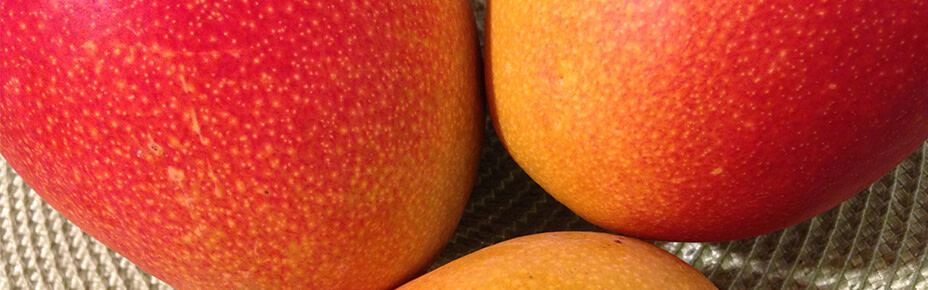
Exotic Fruits in the Bowl: Can Dogs Eat Mango?
Hardly any human can resist the heavenly sweet and fruity taste of a mango. So why shouldn't our four-legged friends also benefit from the vitamin-rich tropical fruit? Good news for your furry companion: Dogs can eat mangoes and often tolerate them very well, as the vitamin bomb contains little acid and is very mild. We explain what you should consider when feeding, why the skin has no place in the bowl, and which fruits can also serve as toppings.
The Ripeness of the Mango Matters
No one likes to bite into a hard, unripe piece of fruit. Not only are many unripe fruits bitter and quite hard to chew, but they can also lead to stomach aches. While your dear furry friend won't get poisoned by a piece of unripe mango, only a ripe mango is suitable for pure fruit enjoyment.
Keyword fruit enjoyment: Both in our wet food and in our dry food, we use fresh fruit varieties that refine the menus in a healthy and delicious way, providing your four-legged friend with vitamins. Take a sniff!
Unser Futter für Hunde: gesund, ehrlich, lecker.


The same goes for an overripe mango: Due to the fermentation process, the mango begins to ferment, produces alcohol, and tastes sour and inedible. Here too, stomach aches, nausea, and diarrhea can be the result.
So when it comes to the question of how to best feed your dog mango, the answer is: Peeled, in a ripe state, and in small pieces. This way, the ripe mango provides your dog with plenty of magnesium and potassium as well as important vitamin C and beta-carotene - the mango definitely deserves a place in your dog's →diet.

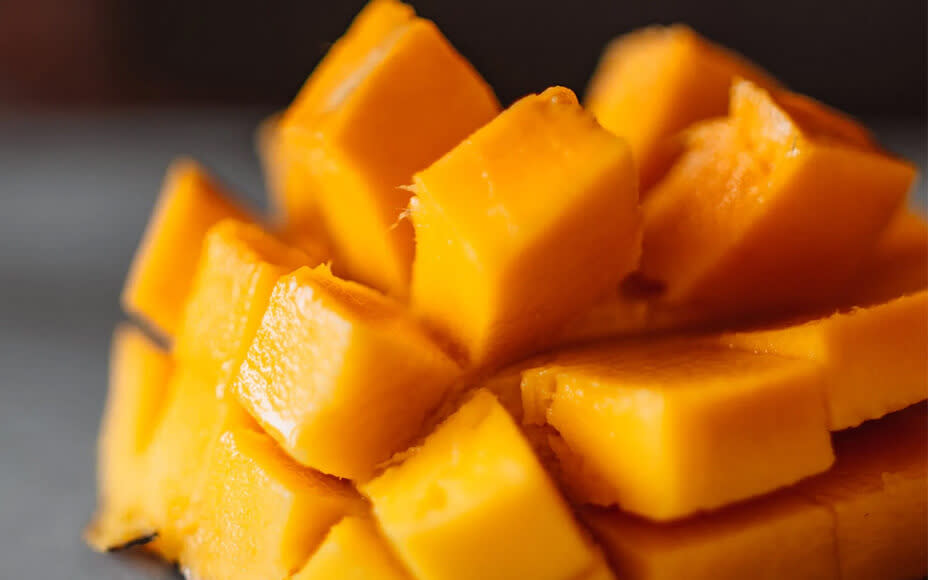
[TRANSLATION ERROR] Reife Mangos sind für die meisten Hunde gut verträglich und schmecken herrlich fruchtig. Dabei sollte die Frucht weder zu hart noch matschig sein.
But: Due to the high fruit sugar content, your dog should definitely not eat a whole mango, and as is often the case, it is wise to feed the delicious fruit in moderation and not in large quantities.
Caution: Is the Skin of the Mango Toxic for Dogs?
Peeled, not stirred - because the skin of the mango can lead to some strong reactions in dogs. The reason is the substance urushiol, which is not toxic but is considered an allergen. Ingestion can lead to rashes, itching, fever, and severe pain.
The waxy, very firm skin of the mango is therefore not only hard to chew but also unhealthy for your dog.
Are Mango Pits Toxic for Dogs?
The pit of mangoes is, unlike the →avocado, not toxic. However, due to the fruit flesh, it is extremely slippery and you should not let your four-legged friend just chew on it, as there is a risk of splintering or choking.
Does your dog need something for a sparkling clean set of teeth? Our →Denta Snacks support thanks to Macrogard® the removal of tartar, are irresistibly delicious, and provide extra long chewing fun!
Tolle Belohnungen für fleißige Hunde - unsere Snacks
Which Fruits Can Dogs Eat?
In addition to mango, your dog can definitely enjoy other delicious fruit varieties. →Cherries are very popular due to their fruity taste. As with any fruit, you should only feed a few fruits here as well and always ensure that your dog does not eat the pit, as it contains toxic substances.
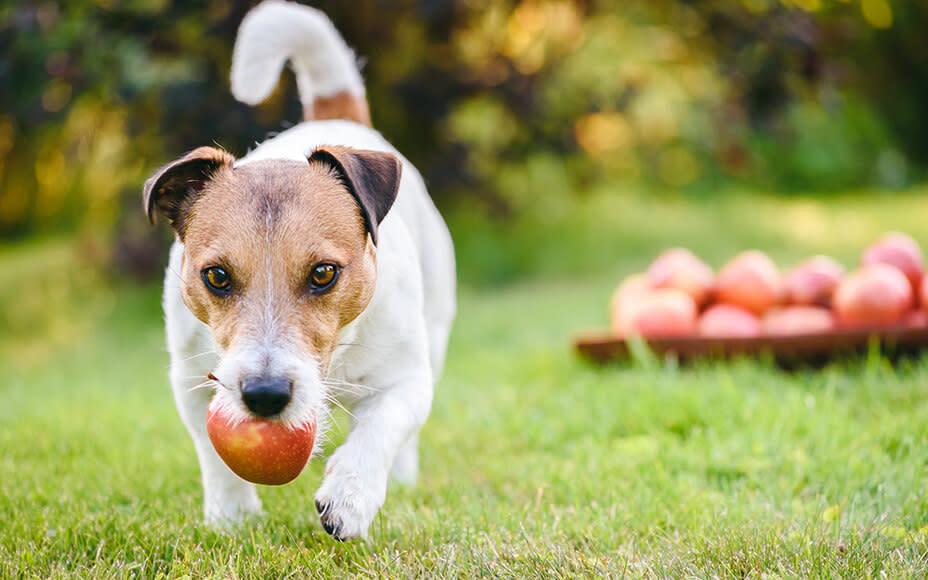
Auch Steinobst wie Apfel, Pfirsich, Aprikose & Co. ist für Hunde gesund. Hier muss allerdings beachtet werden, dass die Kerne giftige Blausäure enthalten!
Cool fruit on hot days? The →watermelon is a true all-rounder for our dogs: It provides hydration, cools your four-legged friend down, and tastes really good.
Also, →strawberries provide your furry friend with important vitamins and are a flavor hit for our furry companions. Berry delicious is also the case with →blueberries and →blackberries, which come in convenient sizes and are sure to please our four-legged friends. Other fruits that dogs can eat include apples, pears, plums, bananas, gooseberries, pineapples, figs, kiwis, oranges, or papayas.
For the amount, you can orient yourself to 1-3 small pieces - depending on the size of your dog. To avoid diarrhea, weight gain from fruit sugar, or stomach aches, start with very small amounts.
Which Fruits Are Not Suitable for Dogs?
Not everything suits the dog's stomach as well as it does ours. →Some foods are toxic to dogs and range from stomach upset to life-threatening situations. For example, many dogs react to the oxalic acid in →grapes - but not all. Nevertheless, you should stay away from feeding your dog grapes, as there is a chance that your four-legged friend will show signs of poisoning.
Other fruits that are toxic to your dog include currants, rhubarb, and you should also be cautious with star fruit.
With the abundance of suitable fruit varieties for dogs, however, your four-legged friend can occasionally enjoy a sweet treat that provides important vitamins, minerals, and trace elements!