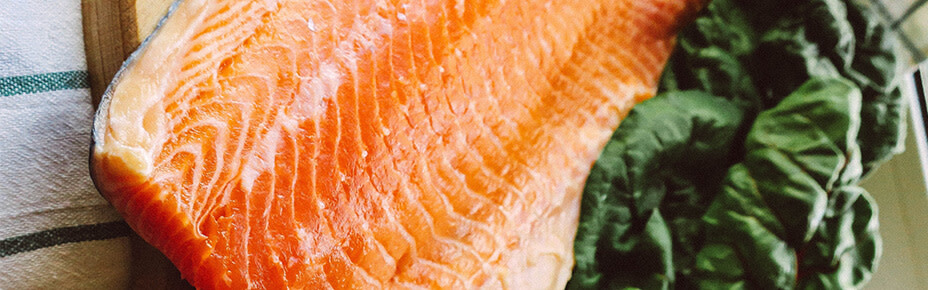
Is salmon allowed and healthy for dogs?
Salmon is fresh and healthy - or rather fish and healthy. From our meal plan with its numerous health benefits, you may wonder if your dog can eat salmon too? Yes, dogs can eat salmon in addition to →sprats - even daily. Salmon is an ideal source of protein in food and provides your dog with important nutrients. What you should consider when feeding and why salmon is so super healthy for your furry friend, you can find out here.
Why is salmon so healthy for dogs?
In addition to healthy protein for the necessary energy in everyday life, salmon brings other important vitamins and minerals for your four-legged friend:
- Omega-3 fatty acids: The essential fatty acids are needed by the body for life (such as for brain function and the immune system) but cannot be produced by the body itself. Therefore, intake through food is essential. The fatty acids are also important for →skin and coat health, for a healthy cholesterol level, and for alleviating inflammation.
By the way! If your dog suffers from skin and coat problems like excessive hair loss, itching, dandruff, or a dull, lifeless coat, an appropriate food can help.

Bei Haut- und Fellproblemen:
Futter zur Stärkung von Haut und Fell
- Vitamin D: Salmon also provides important vitamin D, which supports bone metabolism. A deficiency can lead to →joint problems and osteoporosis. Dogs with a deficiency in vitamin D are also more susceptible to infections, as vitamin D protects the immune system.
- Vitamin B12: For the formation of new blood cells and nerve cells, your dog's body needs vitamin B12. A deficiency can lead to limitations in nerve function - weakness, anemia, and disturbances in the central nervous system can be the result.
- Vitamin E: This important vitamin helps the body protect against free radicals. In particular, skin cells are protected and strengthened by vitamin E.
- Vitamin A: Vitamin A benefits healthy cell growth and vision.
Even during training, your four-legged friend can benefit from the advantages! Our salmon snacks are not only super tasty but also provide important fatty acids, vitamins, and minerals!
Gesund snacken war nie so lecker!
Which salmon is best for dogs?
Not all salmon is the same - the fishy-fresh delicacy is divided into wild salmon, farmed salmon, and coley.
Wild salmon is - as the name suggests - salmon from free waters. Raised actively and naturally in its habitat, this salmon is by far the healthiest choice for your dog. Free from medications, with the best taste and low fat. The only risk of parasites it carries. However, these can be rendered harmless by cooling, cooking, or frying.


[TRANSLATION ERROR] Zuchtlachse wachsen in einer Fischfarm in norwegischen an Fjorden auf. So idyllisch und natürlich die Haltung erstmal erscheint, kommt diese Variante mit weniger Omega-3-Fettsäuren und mehr Fett daher.
Farmed salmon - and you can already hear it here - can be understood as the opposite of wild salmon. Over generations, the salmon has been altered so much that it differs significantly from the tasty wild salmon. Like poultry in battery farming, farmed salmon has little space, making it inactive and possessing a high fat content. While your four-legged friend cannot contract parasites through antibiotics used in farming, it does absorb parts of the medications through food, and the content of important omega-3 fatty acids is lower here.
Coley is the salmon that would like to be one but simply isn't. You could say that this is a genuine substitute salmon. So, when you see "Alaska coley" in the supermarket next time, you now know what it actually is: A cod in salmon's clothing. Huh? Exactly, because in appearance, the pink-orange chemically dyed cod meat resembles salmon, which is why it is often traded as a substitute.
The balance of the three types is clear, wild salmon is probably the winner here - both due to its natural development and its nutrient composition. However, it is also the most expensive, which means you have to dig a little deeper into your pocket.
Raw or smoked: How do I feed salmon to my dog?
The fresher, the better - or something like that! Salmon and fish in general should be fed as fresh as possible. If the good sea creature has been stored for a while, there is a risk that bacteria and germs will form, which can be transmitted to your dog.
Salmon can be fed raw without any problems - but only with continuous cooling and for direct feeding. Especially with BARFing, it is about the fresh feeding of meat or fish, refined with fruits, vegetables, herbs, and →oils.


No flax - no dog wants old salmon! If the fish is not quite so fresh anymore but still edible, you can offer it to your dog cooked or fried. Keep in mind that the bones must be removed beforehand and spices should be avoided. For your four-legged friend, the pure taste of natural salmon is very appealing anyway!
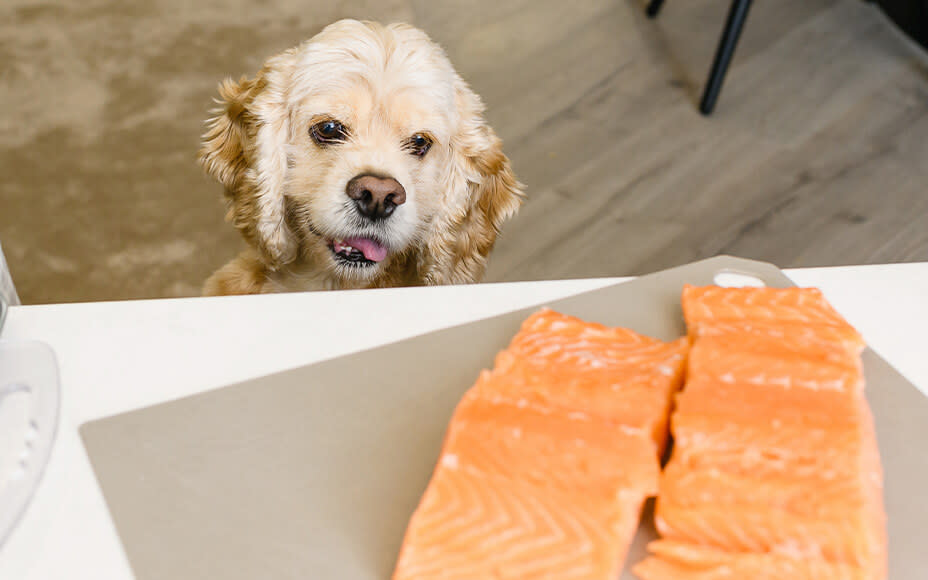
[TRANSLATION ERROR] Unsere Vierbeiner vertragen am besten frischen Lachs, der natürlich gehalten wurde oder in freier Wildbahn aufgewachsen ist.
And what about smoked salmon? It is far too highly salted in large portions for your dog. Additionally, harmful substances enter the meat through the smoking process, making this salmon unsuitable for regular feeding. A small bite here and there won't hurt and is not toxic, but it's best to stick to fresh salmon.
Most four-legged friends totally love the intense taste of salmon. If you don't want to change the food, our →salmon oil can perfectly enhance the meals and provide your furry friend with valuable polyunsaturated fatty acids!
How often can my dog have salmon?
Salmon can be included in your dog's meal plan every day as desired. You can choose a healthy complete feed for your four-legged friend, such as our →wet food salmon with rice, peas, and potatoes or the →dry food with Scottish salmon, dill, spinach, and fennel. Here you can be sure that your four-legged friend is provided with the best delicacy and can enjoy the health benefits of salmon!
If you feed salmon in addition to the regular food, you do not need to adjust the amount of food for one to two pieces right away. However, to avoid overfeeding and →overweight, you should reduce the amount of food according to the feeding recommendations.
Can my dog eat salmon skin?
Salmon skin represents a particularly vitamin-rich treat for your dog. But be careful: Four-legged friends with more love handles should not indulge too much in the tasty skin, as it is very high in fat. With our delicious →salmon skin rolls, your four-legged friend has extra long chewing fun!